
December 28, 1065,
A Sacred Landmark of English History
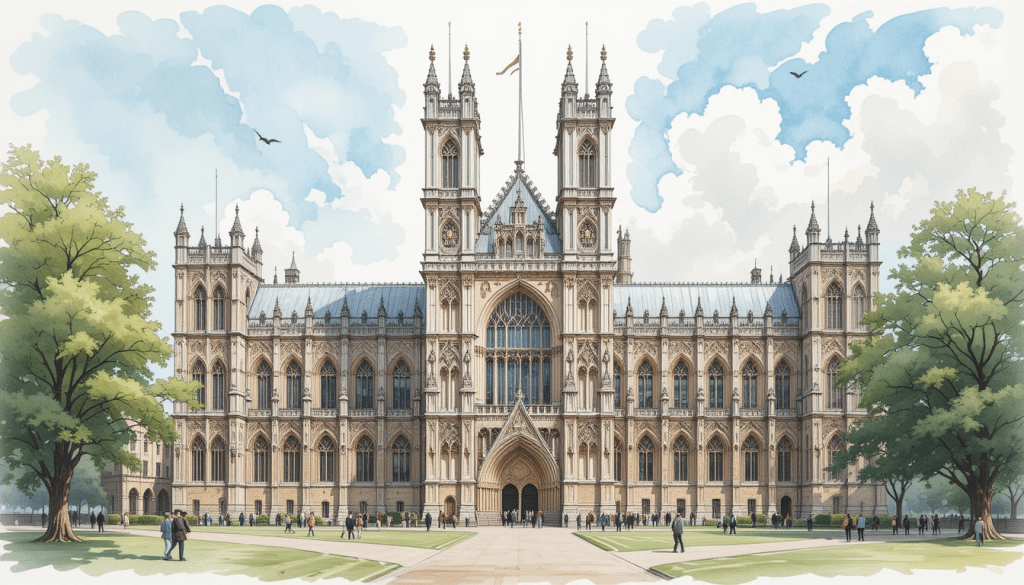
On December 28, 1065, Westminster Abbey was consecrated under the reign of Edward the Confessor, mere days before his death in January 1066. This iconic structure, built in the Romanesque style, was envisioned as a place of worship, royal ceremonies, and the resting place of monarchs. Over time, it became one of the most significant landmarks in English history, serving as the coronation site for almost every English and later British monarch since William the Conqueror.
The Abbey’s historical and cultural role extended beyond its religious significance. As a center for royal and ecclesiastical activity, it profoundly influenced English cultural and linguistic development, particularly during the Middle Ages. Its ceremonies, chronicles, and the records kept by its clergy became a reflection of the evolving English language and society.
Shaping the English Language Through Ceremony and Record-Keeping
Westminster Abbey’s consecration and subsequent history played a key role in shaping Middle English and its transition into Early Modern English.
- Religious Vocabulary: The liturgical practices conducted in the Abbey introduced and popularized numerous terms into English related to church ceremonies and theology. Words such as “coronation,” “consecration,” “vespers,” and “sacrament” gained prominence, reflecting the Abbey’s role in royal and religious life.
- Administrative Influence: As a center of royal documentation and ecclesiastical governance, the Abbey contributed to the development of administrative English. Terms such as “abbot,” “chapter,” “monastery,” and “decree” became integral to describing the operations of both religious and royal institutions.
- Language of the Chronicles: Westminster Abbey’s clerics maintained chronicles and records, which documented significant events in English history. These records not only preserved historical events but also influenced the development of written English, providing a bridge between Old English and Middle English.
A Center of Cultural Exchange and Linguistic Evolution
Westminster Abbey was not only a place of worship but also a site of cultural convergence. Its role in hosting state and religious ceremonies meant that it became a meeting point for different traditions, languages, and ideas.
- Latin and Old English Interaction: The consecration of Westminster Abbey occurred during a period when Latin was the dominant language of the church and governance, while Old English was the language of the common people. The blending of these linguistic traditions at the Abbey influenced the vocabulary and syntax of Middle English.
- Norman Influence: Following the Norman Conquest of 1066, Westminster Abbey became a focal point for the integration of Norman French into English. Words related to governance, law, and ceremony—such as “royalty,” “crown,” and “fealty”—became more prevalent in English, highlighting the Abbey’s role as a cultural and linguistic bridge.
- Religious and Cultural Symbolism: The Abbey’s enduring significance as a spiritual and royal landmark introduced metaphors and idioms into English that continue to resonate today. Phrases like “pillar of the church” and references to Westminster Abbey as a “beacon of faith” reflect its lasting cultural impact.
The Abbey’s Enduring Linguistic Legacy
Westminster Abbey’s consecration marked the beginning of a legacy that would shape not only English culture but also the English language itself. Its influence is visible in several ways:
- Codifying Religious and Legal Language: The Abbey played a central role in formalizing the language of royal ceremonies, ecclesiastical practices, and legal documentation. These linguistic traditions became embedded in the broader lexicon of English governance and culture.
- Preserving Historical Narratives: The chronicles and records kept at Westminster Abbey provided some of the earliest written examples of Middle English, offering invaluable insights into the language’s evolution.
- Symbolizing English Identity: The Abbey’s status as a site of coronations, royal weddings, and funerals tied it intrinsically to English national identity. Words and phrases associated with the Abbey evoke a sense of tradition, continuity, and reverence.
A Monument of Words and Heritage
Westminster Abbey, consecrated on December 28, 1065, stands as more than just an architectural marvel; it is a cornerstone of English cultural, religious, and linguistic history. The ceremonies, records, and traditions associated with the Abbey reflect the interplay between language and society, highlighting its role in shaping the English lexicon.
As Westminster Abbey continues to serve as a site of royal and religious importance, it reminds us of the enduring connection between history, culture, and language. Its influence on English remains a testament to the power of sacred spaces to shape not only traditions but also the very words we use to describe them.
Originally published on December 28, 2024, on The-English-Nook.com.
 What Happened on This Day?
Leave a comment