
January 12, 1879
The British-Zulu War and Its Lingual Legacy
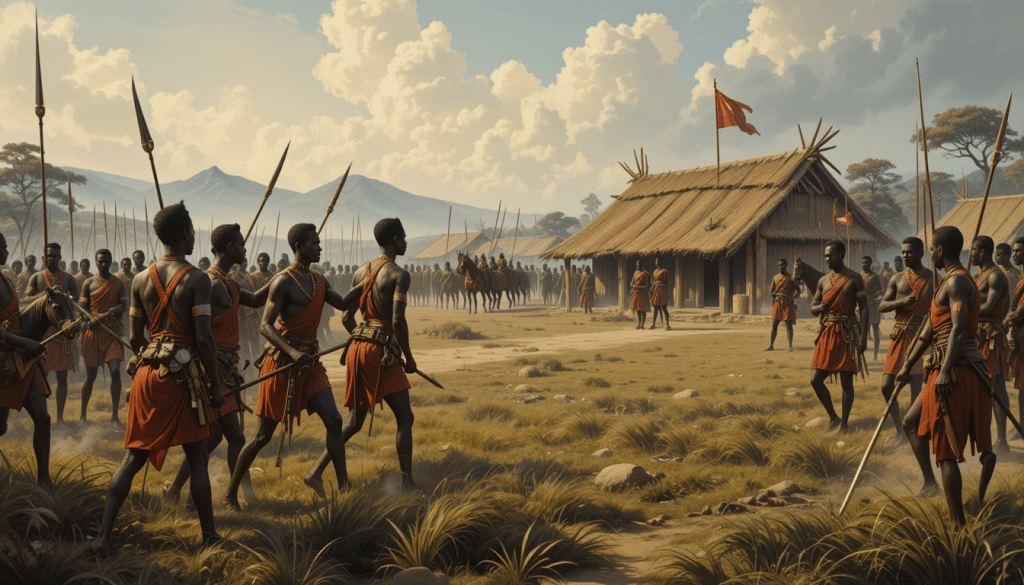
On January 12, 1879, the British Empire launched its invasion of the Zulu Kingdom, sparking the British-Zulu War. This clash between imperial forces and the fiercely independent Zulu nation was not only a pivotal moment in colonial history but also an event that enriched the English language. Words like “impi” (Zulu for a regiment), “assegai” (a type of spear), and “kraal” (a traditional enclosure or village) entered English, reflecting the cultural exchanges and tensions that marked this conflict.
The War and Its Historical Significance
The British-Zulu War arose from the British Empire’s ambitions to consolidate its control over southern Africa. The Zulu Kingdom, under the leadership of King Cetshwayo, presented a formidable obstacle to these plans. The war began with an ultimatum issued by British authorities, demanding the disbandment of the Zulu military system—an ultimatum designed to provoke conflict.
Despite their technological superiority, the British faced significant setbacks in the early stages of the war, most notably at the Battle of Isandlwana, where Zulu forces overwhelmed a well-armed British column. This victory demonstrated the strategic brilliance of the Zulu impi system, a disciplined and highly effective military formation.
While the British ultimately defeated the Zulu Kingdom, the war exposed the limits of imperial power and highlighted the complexities of colonial encounters.
Linguistic Legacy of the Conflict
The British-Zulu War left an indelible mark on the English language, introducing terms that carried the weight of cultural exchange and conflict:
- “Impi”: Referring to a Zulu regiment, this word encapsulated the discipline and organization of the Zulu military system.
- “Assegai”: This type of spear, central to Zulu combat, became emblematic of the Zulu warrior tradition in English accounts.
- “Kraal”: The word for a traditional Zulu homestead or village entered English as a way to describe the unique architectural and social structures of the Zulu people.
These words not only expanded English vocabulary but also offered a window into the cultural and military practices of the Zulu Kingdom.
Cultural Exchange and Representation
Beyond its immediate linguistic impact, the war influenced English literature, journalism, and historical writing:
- War Correspondence: British newspapers and letters from soldiers popularized terms like “impi” and “assegai,” often romanticizing or dramatizing the conflict.
- Historical Narratives: The British-Zulu War became a subject of fascination in English-speaking cultures, inspiring works of history, fiction, and film. The 1964 film Zulu brought the war—and its associated vocabulary—to global audiences, cementing its place in popular imagination.
- Colonial Perspective: While many of the terms that entered English were filtered through a colonial lens, they remain valuable for understanding the cultural dynamics of the time.
Broader Linguistic and Cultural Impacts
The British-Zulu War underscored the role of language as a tool of cultural exchange during colonial encounters:
- Military Terminology: The incorporation of Zulu military terms into English reflects the respect and fascination that even adversaries could hold for each other’s systems and traditions.
- Cross-Cultural Understanding: Words like “impi” and “kraal” serve as reminders of the rich cultural heritage of the Zulu people, offering opportunities for deeper engagement with their history and traditions.
- Global English: The war exemplifies how English has absorbed words from diverse cultures, creating a language that reflects global interactions and histories.
A Lingering Influence
The British-Zulu War remains a significant chapter in colonial and military history, but its linguistic legacy is equally noteworthy. The words and ideas it introduced into English continue to evoke the resilience and complexity of the Zulu people, as well as the broader dynamics of imperial expansion and resistance.
A Conflict Written in Words
The events of January 12, 1879, and the war that followed, resonate not just through history but also through language. By enriching English with terms drawn from Zulu culture, the British-Zulu War exemplifies how conflict and interaction can leave lasting imprints on how we communicate and understand the world. Through words like “impi” and “assegai,” the story of the Zulu Kingdom lives on, reminding us of the power of language to preserve and share the legacies of the past.
When words like ‘impi’ join English, history speaks louder than cannons.
Originally published on January 12, 2025, on The-English-Nook.com.
 What Happened on This Day?
Leave a comment