
December 24, 1914
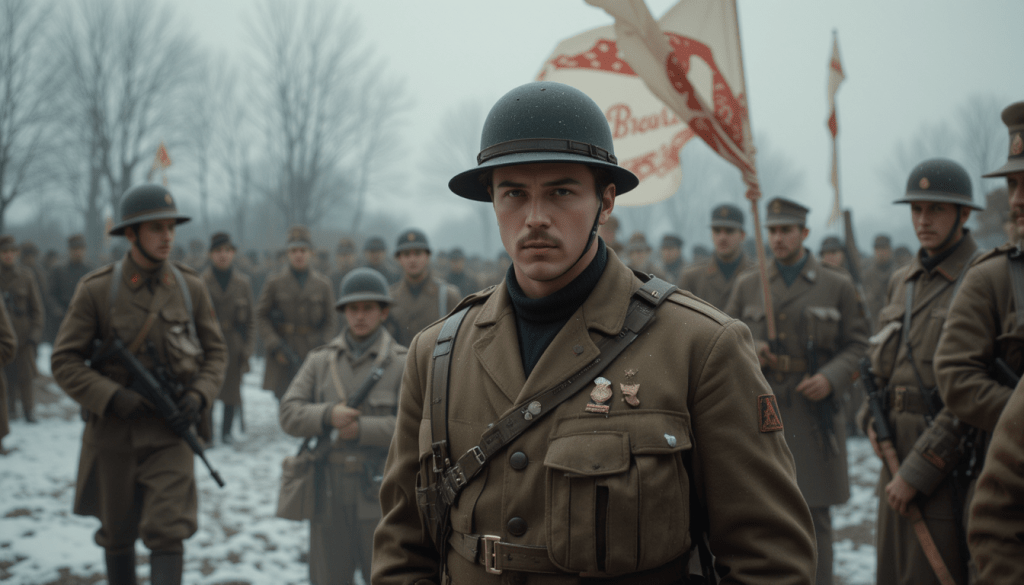
On December 24, 1914, amidst the horrors of World War I, one of the most extraordinary moments in modern history unfolded on the Western Front. Soldiers from opposing sides—German, British, and French—spontaneously laid down their weapons, stepping out of their trenches to celebrate Christmas together. This unofficial ceasefire, known as the Christmas Truce, symbolized a rare moment of shared humanity and peace during one of the deadliest conflicts in history. The event profoundly influenced English language and culture, introducing and popularizing terms like “truce,” “no-man’s-land,” and other expressions associated with reconciliation and peace amid warfare.
The Event: An Unlikely Ceasefire
The Christmas Truce was not the result of any official negotiation or directive from military leadership. Instead, it emerged organically as soldiers, weary from the unrelenting violence and suffering of trench warfare, sought to honor the spirit of Christmas. Reports from the time describe how German soldiers began singing carols like Stille Nacht (Silent Night) from their trenches, which were soon echoed by British and French troops with their own songs. Lanterns and small Christmas trees appeared along the trenches, breaking the monotony of mud and destruction.
In some areas, soldiers cautiously ventured into the perilous stretch of land known as no-man’s-land, meeting their enemies face-to-face. They exchanged greetings, handshakes, and small gifts, including cigarettes, chocolates, and souvenirs. Impromptu soccer matches broke out on the frozen ground, creating an atmosphere of camaraderie that starkly contrasted with the brutality of the war. For a brief moment, the shared experience of humanity eclipsed the divisions of nationalism and conflict.
Key Terms and Language Influenced by the Christmas Truce
Truce
The word “truce,” already a part of English vocabulary, gained deeper emotional and symbolic resonance through the Christmas Truce. It came to represent not just a temporary cessation of violence but also the possibility of peace and understanding, even in the most hostile circumstances. The term is now frequently used in political and literary contexts to evoke themes of reconciliation and hope.
No-Man’s-Land
The phrase “no-man’s-land” took on added significance through its role in the Christmas Truce. Traditionally used to describe the desolate area between opposing trenches, it was transformed—if only for a brief moment—into a space of connection and shared humanity. The term remains a powerful metaphor for uncertainty, danger, and the possibility of bridging divides.
Expressions of Peace and Solidarity
The Christmas Truce introduced enduring narratives of peace and goodwill into war-related discourse. Terms like “peace in the midst of conflict” and “shared humanity” became central to how this event is remembered and written about in English. These ideas have been immortalized in songs, films, and literature, reinforcing the notion that even in the darkest times, the human spirit can find ways to connect.
Cultural and Linguistic Impact
Literary and Historical Legacy
The Christmas Truce has been immortalized in countless works of literature, poetry, and film. Writers and historians have used the event to explore themes of peace, solidarity, and the absurdity of war. The truce is often cited as a poignant reminder of the common humanity that underlies even the most entrenched conflicts, and its story has inspired generations to reflect on the possibility of peace in a divided world.
The event has also enriched the English language with evocative imagery and symbolism. Phrases like “a moment of peace in war” and “the spirit of Christmas” are frequently used to describe instances of unexpected kindness and understanding in adverse circumstances.
Symbol of Hope and Goodwill
The Christmas Truce has become a powerful symbol of hope and goodwill, especially during the holiday season. Its story is often shared as a reminder of the potential for empathy and connection, even in the face of deep divisions. This enduring legacy has ensured that the truce remains a central part of discussions about war, peace, and the human capacity for compassion.
The Truce in Popular Culture
The Christmas Truce has been depicted in numerous cultural works, from the poignant Silent Night film to moving songs and stage productions. It serves as an enduring reminder of the power of shared traditions, such as Christmas, to bring people together. Each retelling emphasizes the truce’s unique ability to highlight the contrast between humanity’s capacity for violence and its equal potential for kindness and connection.
The event also inspired humanitarian efforts and peace movements, particularly during times of global conflict. Its memory continues to be invoked as a call for reconciliation and understanding, making it a cultural touchstone for discussions about war and peace.
Legacy of Peace Amidst War
The Christmas Truce of December 24, 1914, remains one of the most remarkable moments in history—a testament to the power of shared humanity and the enduring spirit of Christmas. The terms and ideas associated with this event, from “truce” and “no-man’s-land” to expressions of solidarity and goodwill, have left a lasting imprint on English language and culture. As carols and stories of the truce are revisited each holiday season, they remind us of the profound connections that unite us, even in the most challenging circumstances.
Originally published on December 24, 2024, on The-English-Nook.com.
 What Happened on This Day?
Leave a comment