
December 26, 1941
The Speech That United Allies
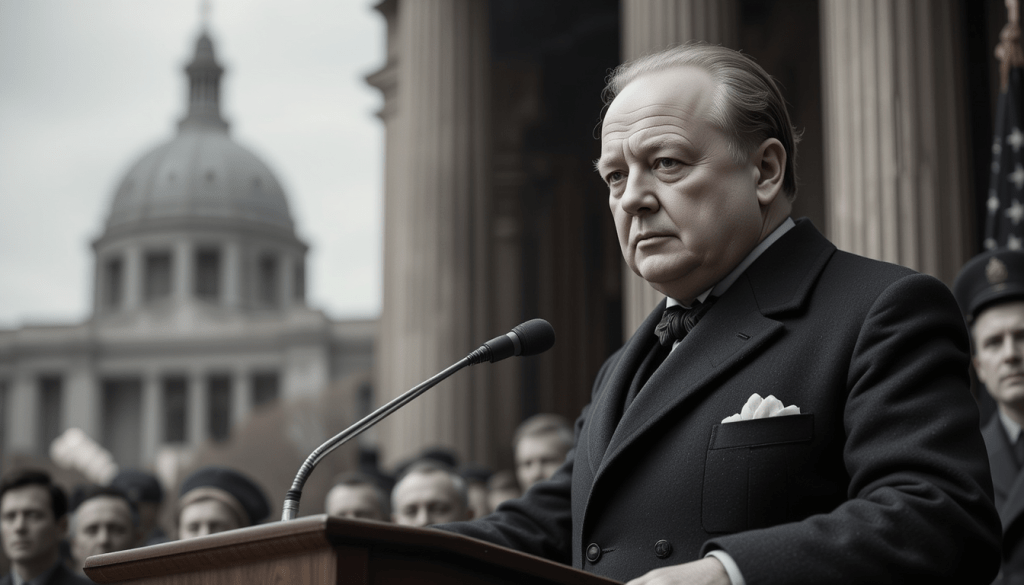
On December 26, 1941, Winston Churchill, the British Prime Minister, stood before the United States Congress to deliver one of the most pivotal speeches of World War II. It was a moment of historical significance, coming just weeks after the attack on Pearl Harbor and the United States’ formal entry into the war. Churchill’s address was not only a call to arms but also an eloquent testament to the enduring partnership between the United Kingdom and the United States. He spoke of shared ideals, mutual determination, and the unyielding resolve to defeat tyranny.
The speech solidified the U.S.-U.K. alliance, marking the beginning of what Churchill would later call the “special relationship” between the two nations. But beyond its immediate political and military impact, Churchill’s address had a profound effect on the use of English as the dominant global language for diplomacy, international cooperation, and political discourse.
Churchill’s Command of the English Language
Winston Churchill’s speechwriting and oratory skills are legendary, and his address to Congress exemplified his ability to use language as a tool of leadership, persuasion, and inspiration. Churchill understood the power of words to galvanize action and create a shared vision, and he used his mastery of English to achieve this in remarkable ways.
- Memorable Phrases That Endure: Churchill’s speeches are often remembered for their unforgettable phrasing. His address to Congress was no exception, as he used language that was both poetic and direct, filled with phrases designed to resonate deeply with his audience. Churchill had an instinct for coining expressions that would endure, such as the idea of the “special relationship,” which would define U.S.-U.K. ties for generations.
- Bridging Cultures Through Language: In his speech, Churchill appealed to the shared cultural and historical bonds between the United States and the United Kingdom. By invoking common values such as liberty, democracy, and resilience, he used language as a bridge, fostering a sense of unity between the two nations. This rhetorical strategy not only strengthened the Allied partnership but also demonstrated the capacity of English to serve as a medium for cross-cultural connection.
- Emotion, Logic, and Morality: Churchill’s rhetoric combined emotional resonance, logical arguments, and moral conviction. This tripartite approach ensured that his words appealed to both the intellect and the spirit of his audience. His ability to infuse urgency with optimism made his speeches particularly compelling, showing how the right use of English could inspire action and build consensus in the most challenging of times.
The Relevance of English in Diplomacy and Global Influence
Churchill’s speech to Congress occurred during a critical moment in history, one that underscored the rising prominence of English as the language of diplomacy and global leadership. Before World War II, English was already an influential language, particularly due to the expansion of the British Empire and the growing power of the United States. However, Churchill’s eloquence and the role of the Allied nations in the war helped to further cement English as the dominant international language.
- English as the Language of Allied Unity: Churchill’s words highlighted the utility of English in creating a shared narrative among the Allies. His speeches helped to unify diverse nations under a common purpose, showcasing how the language could serve as a tool for building coalitions and articulating collective goals.
- Shaping Political Vocabulary: Churchill’s speeches introduced and popularized key terms and phrases that became part of the global political lexicon. For example, his articulation of the “special relationship” between the U.S. and U.K. became a defining concept in international relations. His references to freedom, democracy, and resilience in the face of adversity also reinforced these ideas as central tenets of English-speaking political culture.
- The Evolution of Modern English: Churchill’s speeches exemplified the adaptability and richness of the English language. By blending formal rhetoric with conversational accessibility, he demonstrated how English could be both authoritative and relatable. His speeches set a standard for modern political communication, influencing how leaders use language to connect with both domestic and international audiences.
Churchill’s Linguistic Legacy
The linguistic impact of Churchill’s address to Congress extends far beyond the context of World War II. His speeches have become a source of inspiration for leaders, educators, and writers, and his use of English as a unifying and motivational force has left an indelible mark on the language.
- The Power of Simplicity and Precision: Churchill’s speeches were known for their clarity and directness. His ability to distill complex ideas into memorable phrases demonstrated the effectiveness of simplicity in communication. This approach has influenced how English is used in political and public discourse, setting a precedent for concise, impactful messaging.
- Global Adoption of English: The prominence of Churchill’s speeches during the war, combined with the pivotal role of the English-speaking Allies, helped to elevate English as the global language of diplomacy and international relations. This legacy continues today, as English remains the dominant language in global politics, business, and cultural exchange.
- A Source of Inspiration: Churchill’s mastery of English has inspired countless speakers and writers, who look to his speeches as examples of how language can be used to inspire, persuade, and lead. His words continue to resonate in modern times, reminding us of the enduring power of well-crafted rhetoric.
Cultural and Linguistic Influence of Churchill’s Address
Churchill’s address to Congress was not just a political event; it was a cultural milestone that reinforced the role of language in shaping history. The speech’s themes of resilience, unity, and shared purpose resonated deeply with audiences on both sides of the Atlantic, and its impact on English language and culture is still felt today.
Churchill’s words helped to define the narrative of World War II, creating a shared vocabulary for discussing the conflict and its challenges. Terms and phrases popularized by his speeches—such as “special relationship,” “iron curtain,” and “never surrender”—have become integral to how we understand and articulate the history of the 20th century.
A Legacy of Words and Leadership
Winston Churchill’s address to the U.S. Congress on December 26, 1941, stands as a testament to the power of language to inspire and unite. His eloquence not only strengthened the Allied war effort but also elevated English as the dominant global language of diplomacy and leadership. Churchill’s ability to use words as tools of persuasion and inspiration continues to influence how leaders communicate in times of crisis, reminding us of the enduring importance of language in shaping the course of history.
Originally published on December 26, 2024, on The-English-Nook.com.

 What Happened on This Day?
Leave a reply to Herald Staff Cancel reply