
January 6, 1066
Harold’s Coronation: A Turning Point in English History
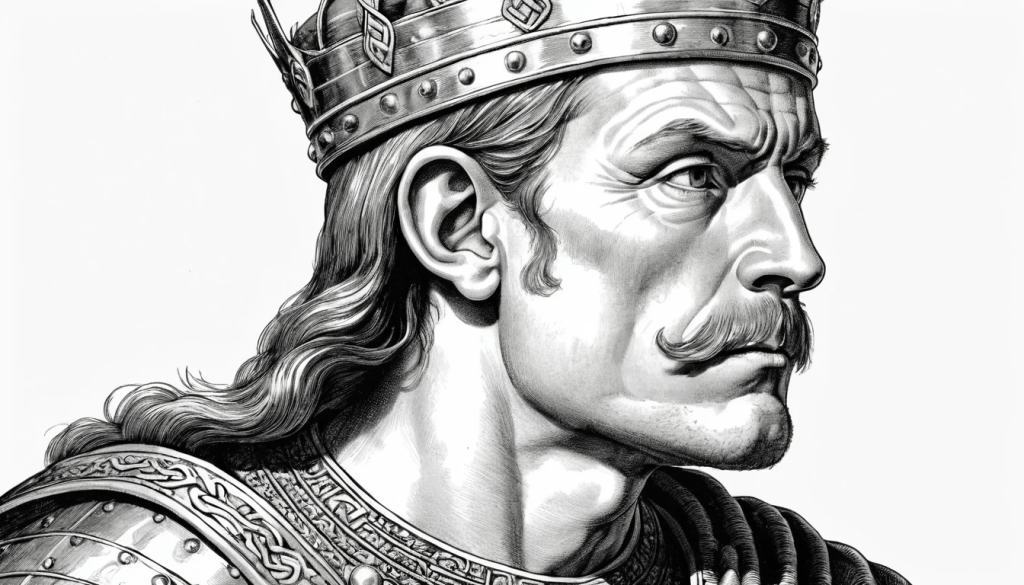
On January 6, 1066, Harold Godwinson, the powerful and respected Earl of Wessex, was crowned King of England following the death of Edward the Confessor. His coronation was a critical moment in English history, occurring in Westminster Abbey amid both optimism and looming conflict. Harold’s swift ascension to the throne was supported by the Witenagemot, the Anglo-Saxon council of nobles, who recognized him as the most capable leader to succeed Edward. However, Harold’s reign was fraught with challenges, as his claim to the throne was contested by formidable rivals, including Harald Hardrada, King of Norway, and most significantly, William, Duke of Normandy.
Harold’s time as king lasted less than a year, ending with the Battle of Hastings on October 14, 1066, where he was defeated by William the Conqueror. This decisive Norman victory marked the beginning of a new era for England, with consequences that extended far beyond politics and governance. The Norman Conquest, directly triggered by Harold’s coronation and subsequent defeat, catalyzed a profound transformation of the English language, blending Old English with Norman French and reshaping English into the rich, dynamic language we know today.
The Norman Conquest: A Linguistic Revolution
The Norman Conquest, ushered in by William’s victory over Harold, was more than a political shift—it was a cultural and linguistic upheaval. William brought with him not only a new ruling class but also a new language, Norman French, which became the language of the court, administration, and aristocracy in England. The impact of this transition was monumental, marking the evolution of Old English into Middle English and laying the groundwork for modern English. The linguistic changes that followed the Norman Conquest can be understood in several key ways:
- Vocabulary Expansion:
The Norman rulers introduced thousands of French loanwords into English, particularly in fields where they exercised control. These included terms related to law (justice, attorney, verdict), governance (council, authority, parliament), religion (abbey, clergy, prayer), and culture (fashion, art, feast). Even everyday vocabulary absorbed French words, such as dinner, beef, pork, and mutton. This influx of new words greatly enriched the English lexicon, creating layers of synonyms with nuanced distinctions, such as ask (Anglo-Saxon) and inquire (French) or kingly (Anglo-Saxon) and royal (French). - Dual-Language Society:
For centuries after the Norman Conquest, England was a bilingual society, with Norman French spoken by the ruling elite and Old English (or Anglo-Saxon) used by the common people. This duality created a linguistic hierarchy, where French terms often carried connotations of authority, refinement, or sophistication, while English words reflected the practical, earthy concerns of everyday life. Over time, the two languages blended, forming the hybrid linguistic structure of Middle English. - Legal and Administrative Language:
The introduction of Norman French terms into the realm of law and governance permanently altered English political and legal discourse. Words like jury, tenant, bailiff, crime, and treason reflect the Norman influence and remain central to modern legal vocabulary. This integration of French legal terminology laid the foundation for England’s legal system and influenced the language of law globally. - Cultural and Religious Influence:
The conquest also transformed English religious and cultural language. Norman French introduced ecclesiastical terms such as pulpit, sermon, and monastery, enriching the lexicon of religious discourse. The Norman emphasis on chivalry and courtly traditions also brought new concepts to English culture, including words like knight, chivalry, and heraldry. - Linguistic Evolution:
The structural changes to English went beyond vocabulary. Norman French influenced the grammar and syntax of English, contributing to a simplification of Old English’s complex inflectional system and making English a more flexible and adaptable language. These shifts set the stage for the development of Middle English, which flourished between the 12th and 15th centuries.
Harold’s Role in a Transformative Era
While Harold’s reign was brief, his coronation and subsequent defeat at Hastings were pivotal moments that led to the Norman Conquest and the ensuing linguistic transformation of England. Harold himself remains a symbolic figure of Anglo-Saxon resistance, but the true legacy of 1066 lies in the cultural and linguistic fusion that emerged from Norman rule. This blending of Anglo-Saxon and Norman elements gave rise to a uniquely diverse and expressive English language.
The fusion of these linguistic traditions also reflected broader societal changes. The incorporation of Norman French into English mirrored the integration of Norman and Anglo-Saxon cultures, as intermarriage, trade, and shared governance gradually created a unified society. By the end of the Middle English period, the linguistic distinctions between Norman French and Old English had largely dissolved, resulting in a single, cohesive language that would go on to become one of the most widely spoken and influential languages in the world.
The Norman Legacy in Literature and Culture
The Norman Conquest not only reshaped English as a spoken and written language but also influenced its literary traditions. While pre-conquest Anglo-Saxon literature, such as Beowulf, focused on heroic tales and oral traditions, post-conquest literature introduced new genres and themes inspired by Norman French culture:
- Chivalric Romance:
Norman French brought with it the themes of chivalry, courtly love, and adventure, which became central to English medieval literature. Stories of knights, quests, and romantic ideals, such as those found in Arthurian legends, blended Norman and Anglo-Saxon traditions. - Religious Writings:
The integration of French religious terminology influenced English religious texts and sermons, leading to a richer vocabulary for discussing spiritual and theological concepts. - Emerging National Identity:
The blending of Anglo-Saxon and Norman French elements helped forge a distinct English identity, reflected in the language’s unique capacity for borrowing and adaptation.
The Linguistic Legacy of 1066
The events set in motion by Harold Godwinson’s coronation on January 6, 1066, transformed the English language in ways that continue to resonate today. The Norman Conquest introduced a wealth of vocabulary, altered linguistic structures, and laid the foundation for English’s evolution into a global language. The legacy of this period can be seen in the legal, cultural, and everyday language of modern English, which bears the marks of its Anglo-Saxon and Norman heritage.
Harold’s coronation, though short-lived in its political impact, indirectly ushered in one of the most profound linguistic transformations in history. The fusion of Old English and Norman French created a dynamic and versatile language that remains one of the most expressive and influential in the world.
Harold Godwinson’s Coronation: The Dawn of English Linguistic Transformation
The coronation of Harold Godwinson on January 6, 1066, set the stage for the Norman Conquest and the linguistic revolution that followed. By blending Anglo-Saxon and Norman French elements, this period forged a new chapter in the history of English, leaving an enduring legacy of richness, adaptability, and global influence.
From Harold to Hastings: How 1066 Revolutionized English Forever!
Originally published on January 6, 2025, on The-English-Nook.com.
 What Happened on This Day?
Leave a comment