
January 15, 1559
The Dawn of the Elizabethan Era
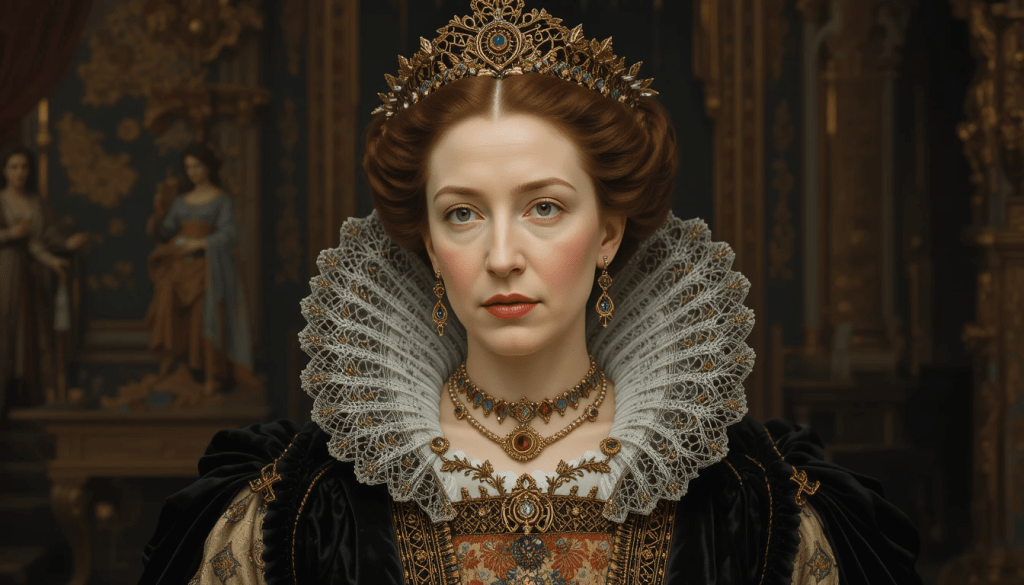
On January 15, 1559, Elizabeth I was crowned Queen of England in a ceremony steeped in grandeur at Westminster Abbey. Her ascension to the throne heralded a transformative era that would come to be known as the Elizabethan Era. Renowned for its flourishing arts, exploration, and cultural achievements, this period profoundly shaped the English language, establishing it as a tool of national identity, intellectual advancement, and creative expression.
Historical Context and Significance of Elizabeth’s Coronation
The Political Landscape
Elizabeth I ascended the throne following a tumultuous period in English history:
- Religious Conflict: The reigns of her half-siblings, Edward VI and Mary I, were marked by radical swings between Protestantism and Catholicism, causing political and social unrest. Elizabeth’s coronation signaled a fresh start, promising unity and stability.
- Succession Crisis: As the last Tudor monarch with no direct heir, Elizabeth faced immense pressure to secure England’s future. Her coronation emphasized her legitimacy and the hope for a prosperous reign.
The Ceremony Itself
Elizabeth’s coronation combined traditional grandeur with symbolic gestures to connect with her subjects:
- The procession through London showcased her as a queen of the people.
- The use of English in parts of the ceremony underscored her alignment with the Protestant Reformation and the growing importance of the vernacular.
Elizabethan Era: A Golden Age of Language and Culture
Elizabeth I’s reign set the stage for one of the most dynamic periods in English history, particularly in the realms of language, arts, and education.
1. A Renaissance in Literature and Drama
The Elizabethan Era is synonymous with a flowering of literary and dramatic works that elevated English as a literary language:
- Shakespeare’s Contributions: William Shakespeare’s plays and sonnets enriched the English lexicon with new words, phrases, and idioms. Words like “bedazzled,” “majestic,” and “assassination” owe their prominence to his works. Idiomatic expressions such as “break the ice” and “love is blind” became embedded in everyday speech.
- Dramatic Innovation: The era also saw the rise of other playwrights, including Christopher Marlowe and Ben Jonson, who pushed the boundaries of theatrical storytelling and language use.
- Poetic Achievements: Edmund Spenser’s The Faerie Queene exemplified the grandeur of Elizabethan poetry, blending mythology, allegory, and national pride.
2. Standardization of the English Language
Elizabethan England saw significant advancements in the standardization of English:
- Print Revolution: The printing press made English texts widely available, fostering a shared linguistic identity.
- Grammar and Vocabulary: The growing body of English literature and official documents helped establish consistent grammar, spelling, and vocabulary norms.
- Education and Literacy: An increase in grammar schools and the availability of books promoted literacy among a broader population, embedding English as a language of learning and communication.
3. Expansion of Vocabulary
The Elizabethan Era was marked by an influx of new words into English:
- Borrowed Terms: Words from Latin, Greek, Italian, and Spanish entered English, reflecting the influence of the Renaissance and England’s growing global connections. Examples include “carnival,” “scenario,” and “infinite.”
- Trade and Exploration: As English merchants and explorers ventured abroad, they brought back words from the New World, Asia, and Africa, such as “tobacco,” “canoe,” and “hurricane.”
Elizabeth’s Personal Influence on Language
Elizabeth I herself was a masterful communicator and a pioneer in using language as a political tool:
- Oratory Skills: Her speeches, such as the famous Tilbury Address during the Spanish Armada crisis in 1588, displayed her ability to inspire loyalty and courage through eloquence.
- Rhetorical Precision: Elizabeth’s choice of words reflected her intelligence and political acumen, often blending firmness with diplomacy to address sensitive issues.
- Symbolic Imagery: Elizabeth’s deliberate cultivation of her image as the “Virgin Queen” was steeped in metaphor and symbolism, reinforcing her role as a divine, unifying figure.
The Elizabethan Legacy in Language and Culture
The cultural and linguistic transformations of the Elizabethan Era laid the foundation for the English language’s future dominance:
Global Influence of English
- Cultural Exports: The works of Shakespeare and his contemporaries became enduring symbols of English literary excellence, studied and performed worldwide.
- Colonial Expansion: The era’s early colonial ventures, such as those in Ireland and the Americas, began spreading English beyond its native borders.
Enduring Phrases and Idioms
Many idioms and expressions that originated or gained prominence during this period remain central to modern English:
- “All that glitters is not gold”
- “Foregone conclusion”
- “The world’s mine oyster”
Shaping English Identity
The Elizabethan Era established English as a language of art, governance, and intellect, reinforcing its status as a cornerstone of national identity.
Crowning the English Language: The Legacy of Elizabeth I
The coronation of Elizabeth I on January 15, 1559, marked the start of a golden age that transformed English society, culture, and language. Under her leadership, the English language evolved from a regional dialect into a literary and political force, setting the stage for its global prominence. Elizabeth’s reign not only shaped the linguistic legacy of her time but also inspired generations to view English as a language of creativity, power, and unity.
From Westminster to the World: How Elizabeth I Crowned the English Language with Global Brilliance.
Originally published on January 15, 2025, on The-English-Nook.com.
 What Happened on This Day?
Leave a comment