
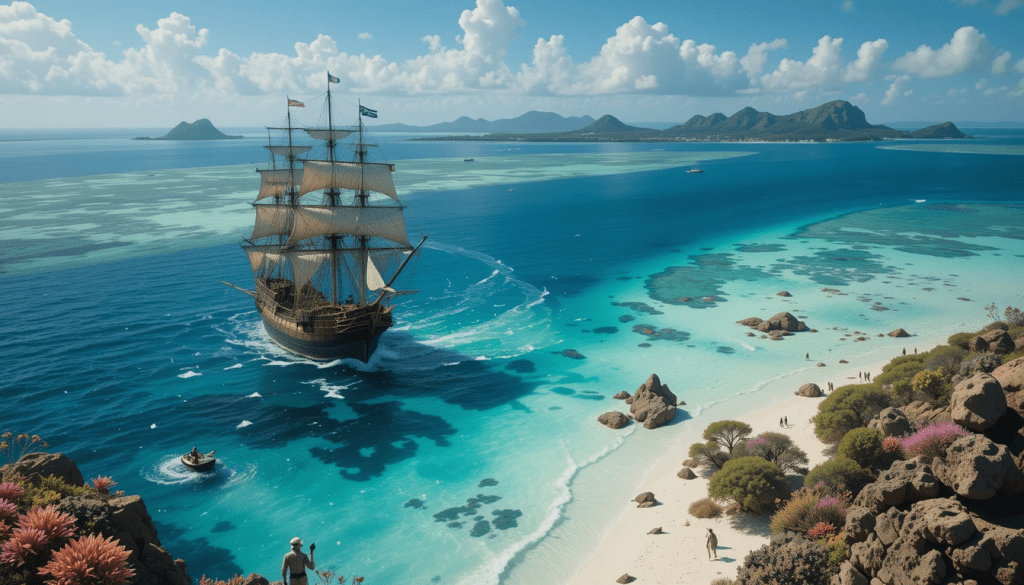
June 11, 1770
Captain James Cook Discovers the Great Barrier Reef
A Landmark in English Exploration and Language
On June 11, 1770, Captain James Cook’s ship, HM Bark Endeavour, struck the Great Barrier Reef off the coast of what is now Queensland, Australia. This dramatic moment in English maritime history became more than a tale of shipwreck and survival—it marked a turning point in the English-speaking world’s understanding of geography, science, and language.
Expanding the English Nautical and Geographical Vocabulary
Language of discovery – Cook’s voyages expanded the English lexicon with nautical terms like “reef,” “shoal,” and “soundings,” and introduced names that are still part of English-language maps and culture: Botany Bay, Cape Tribulation, and the Endeavour River.
Geographic precision – English gained new terms for the natural wonders Cook encountered—coral atolls, barrier reefs, and Pacific archipelagos—transforming English from a regional tongue into a global language of cartography and natural history.
Colonial-Era English Idioms and Narratives
Language of empire – Cook’s explorations added to the imperial vocabulary of 18th-century English, with words like “terra incognita” and “claiming sovereignty” entering common usage in English descriptions of overseas “discoveries.”
Colonial narratives – His journals and official accounts, published in English, shaped how English speakers described indigenous cultures and natural landscapes—often in ways that reflected the Eurocentric biases of the time.
Cultural Exchange and English’s Global Reach
Translating cultures – Cook’s voyages brought English into contact with Indigenous Australian and Polynesian languages, introducing English speakers to new cultural concepts and place names that remain part of English discourse today.
Botanical and zoological vocabulary – Through his encounters with unfamiliar flora and fauna, English expanded to include words like “kangaroo,” “booby,” and “coral polyp,” blending scientific curiosity with linguistic growth.
A Legacy in English Literature and Imagination
Adventure and peril – Cook’s Pacific voyages inspired countless English adventure narratives—sea journals, travelogues, and maritime fiction—infusing English prose with the drama of exploration and the perils of the unknown.
Language of resilience – The Endeavour’s collision with the reef and Cook’s skillful repairs added to the English vocabulary of seamanship and survival, capturing the spirit of perseverance that has long been celebrated in English storytelling.
A Global English Imprint
The story of the Great Barrier Reef’s “discovery” by Cook is also a story of how English itself became a global language—recording and framing new worlds in words that would travel back to London, Boston, and beyond.
This moment also marked the beginning of a complex relationship between English-speaking cultures and the natural environments they encountered—a relationship still visible today in environmental discourse and debates.
Captain Cook’s English Legacy
Captain Cook’s encounter with the Great Barrier Reef is more than a footnote in maritime history—it is a chapter in how English adapted to a wider world. His detailed logs, maps, and observations enriched the English language with precision, curiosity, and an imperial perspective that would define an era of global exploration.
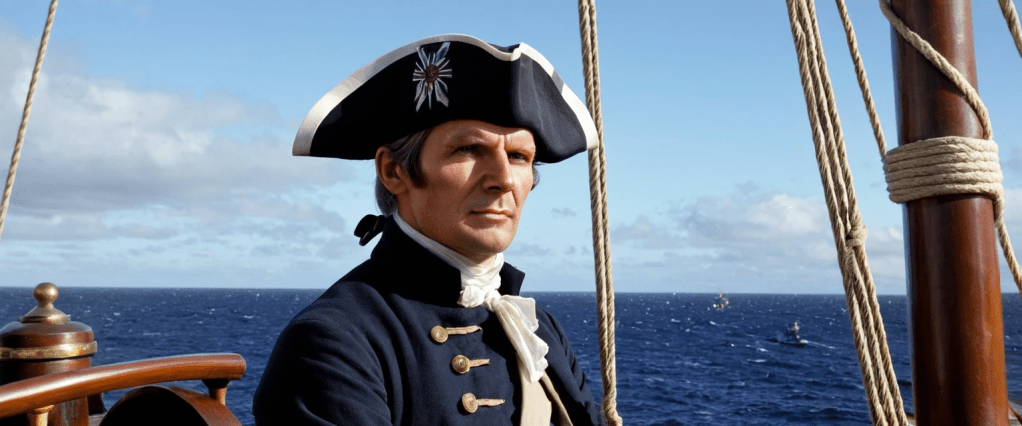
He didn’t just chart the reef—he redrew the boundaries of the English language.
 What Happened on This Day?
Leave a comment