
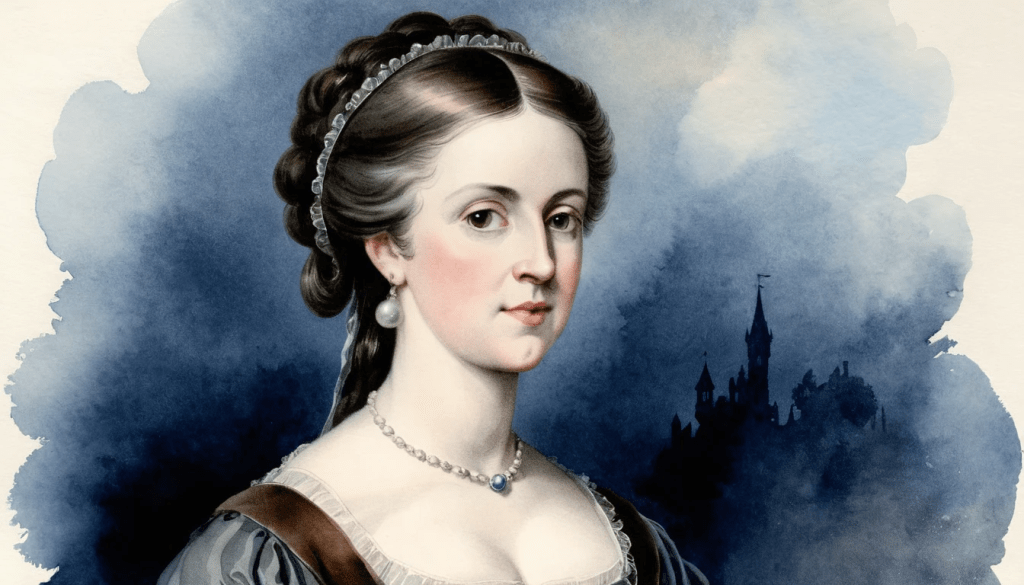
July 9, 1764
Birth of Ann Radcliffe (1764–1823)
Pioneer of Gothic Fiction and Architect of English Literary Atmosphere
Born on July 9, 1764, Ann Radcliffe is widely considered the founding mother of Gothic fiction in English. Her novels, especially The Mysteries of Udolpho (1794), The Romance of the Forest (1791), and The Italian (1797), helped define the Gothic as a genre of psychological suspense, sublime landscapes, and emotional interiority. Her writing created a vocabulary and style that left a lasting mark on English literary history, influencing Romanticism, Victorian literature, and even modern psychological thrillers.
Inventing the Language of Gothic Terror
Radcliffe’s prose ushered in a powerful new expressive mode—“Gothic terror”—distinct from straightforward horror. Unlike blood-soaked tales of violence, her stories relied on suggestion, atmosphere, and psychological depth.
Her works contributed enduring elements to English literary vocabulary:
- “Sublime terror” – She helped refine the English use of “sublime” as not only aesthetic but emotionally overwhelming—terrifying yet beautiful.
- “Ruined castle,” “secret passage,” “midnight revelation” – These became iconic Gothic tropes with a distinct English literary flavor, often imitated or parodied in later works.
- “Melancholy,” “phantom,” “haunted,” “dread” – Words that Radcliffe helped popularize in emotionally and sensorially heightened narrative contexts.
Psychological and Sensory Language in English Fiction
Radcliffe enriched English fiction by focusing on emotional landscapes and psychological tension, especially from a female perspective:
- Her heroines experienced “nervous agitation,” “silent apprehension,” “delicate sensibility,” and “irrational fear”—expanding how English could portray internal states of unease.
- She popularized long, lyrical descriptions of setting, bringing into English literary usage terms like “gloaming,” “twilight obscurity,” “moonlit silence,” and “picturesque desolation.”
- Her unique blend of interior monologue and scenic narration became foundational for later explorations of subjective reality in English novels.
Influence Across Generations
Ann Radcliffe’s stylistic and thematic innovations became a template for Gothic fiction and beyond:
- Jane Austen both admired and playfully mocked Radcliffe’s conventions in Northanger Abbey, introducing terms like “Radcliffean heroine” and “Gothic fancy” into the English satirical lexicon.
- Later authors such as the Brontë sisters, Edgar Allan Poe, Mary Shelley, and even modern suspense writers inherited and adapted her atmospheric and psychological style.
- She shaped the English idiom of haunting, gloom, awe, isolation, and repressed emotion, influencing how English literature approached not only fear but the poetic expression of fear.
Legacy in the English Language and Literary Education
Radcliffe’s works were widely read, taught, and imitated, embedding her phrases and patterns deeply into English literary culture:
- Words and motifs like “veiled threat,” “sublime horror,” and “romantic ruin” became standard in Gothic and Romantic criticism.
- Her ability to combine narrative suspense with philosophical reflection made her a bridge between 18th-century rationalism and 19th-century emotionalism in English prose.
- Modern usage of terms such as “Gothic revival,” “atmospheric dread,” or “psychological Gothic” owe a direct debt to Radcliffe’s influence.
Ann Radcliffe redefined what English could do emotionally and atmospherically in prose.
Her writing brought fog, echo, fear, and awe into the literary imagination, not just through plot, but through language itself. She empowered English to express the unspoken and the invisible, elevating Gothic fiction from lurid storytelling to a lasting literary art form.
Her legacy echoes in every English story where fear is beautiful and mystery shimmers in moonlight.
 What Happened on This Day?
Leave a comment