
October 30, 1938
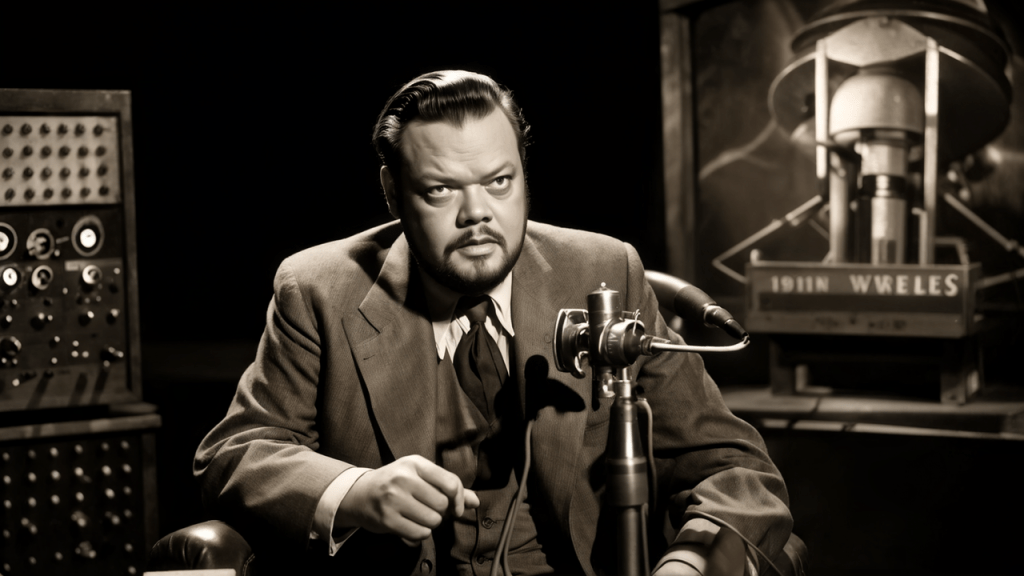
On October 30, 1938, Orson Welles and the Mercury Theatre on the Air performed an infamous radio adaptation of H.G. Wells’ The War of the Worlds. Presented as a series of live news bulletins reporting an alien invasion, the broadcast was so realistic that many listeners believed it to be a genuine emergency. This event introduced new vocabulary into English and influenced the language surrounding mass communication, media ethics, and public perception. Phrases like “broadcast panic” and “mass hysteria” became prominent, underlining the power of radio as a media platform and setting the stage for critical discussions about media trust and responsibility that remain relevant today.
Shaping Media Vocabulary: Panic and Perception
The immediate aftermath of the War of the Worlds broadcast left a mark on the English lexicon, particularly through terms that describe public reaction and media influence:
- Broadcast Panic: As news spread about the confusion caused by the broadcast, “broadcast panic” emerged as a term to describe the impact of media on public anxiety. It underscored the unprecedented power of radio to incite real-world responses, a concept that has since been applied to discuss the influence of new media technologies.
- Mass Hysteria: The broadcast highlighted the potential for media to shape collective emotions and even incite panic, leading “mass hysteria” to gain traction as a term. It has since been used to describe instances where large groups react to media or events in an overly intense manner, emphasizing the capacity of mass communication to generate strong public emotions.
These terms helped form the basis for a new vocabulary of media criticism, addressing both the potential and the risks of mass communication.
Highlighting the Power of Radio and Media Ethics
The War of the Worlds broadcast illuminated the unique power of radio, then a leading source of information and entertainment. The realistic “news bulletin” format of Welles’ adaptation demonstrated that media could blur the lines between fact and fiction in compelling ways, raising questions about the ethical responsibilities of broadcasters. Discussions about media ethics began to include considerations of the potential impact of misleading or dramatized reporting on public trust and safety, creating new frameworks for understanding responsible journalism.
As a result, terms like “media trust,” “credibility,” and “news verification” entered public discourse more prominently. This incident established a precedent for the scrutiny of news sources and highlighted the need for media literacy among the public, reinforcing the importance of discernment in an era when information was increasingly delivered through powerful media channels.
Long-Term Influence on Media Language and Public Trust
The War of the Worlds broadcast underscored how media can both inform and manipulate, a duality that continues to be central to discussions on public perception. Concepts such as “fake news” and “information verification” have their roots in the lessons learned from incidents like Welles’ broadcast, where audience trust in media was tested. The terms and ideas surrounding media influence, including “responsible journalism” and “public perception,” evolved as a result of the broadcast, setting the tone for how the media’s role in shaping reality would be discussed in the decades to come.
This broadcast also prompted greater public awareness of media’s potential to sway collective emotions and beliefs, emphasizing the importance of media literacy and critical engagement with news sources. In doing so, it laid the groundwork for a language of media influence that continues to shape conversations about the role of news, entertainment, and digital platforms in modern society.
A Legacy of Media Awareness and Language Evolution
Orson Welles’ War of the Worlds broadcast on October 30, 1938, remains a landmark event in media history. It underscored both the power and the potential pitfalls of mass communication, helping shape a vocabulary that reflects our complex relationship with media. Terms like “broadcast panic” and “mass hysteria” persist in discussions about media impact, while the legacy of this event has influenced the language of media ethics, responsibility, and public trust.
By exposing the influence of media on public perception, the broadcast left a lasting impact on English discourse, fostering a language of critical media awareness that has become increasingly essential in the age of rapid, far-reaching digital information. This historic event serves as a reminder of the media’s profound role in shaping collective reality and its responsibility to the public.
Originally published on October 30, 2024, on The-English-Nook.com.
 What Happened on This Day?
Leave a comment