
November 17, 1558
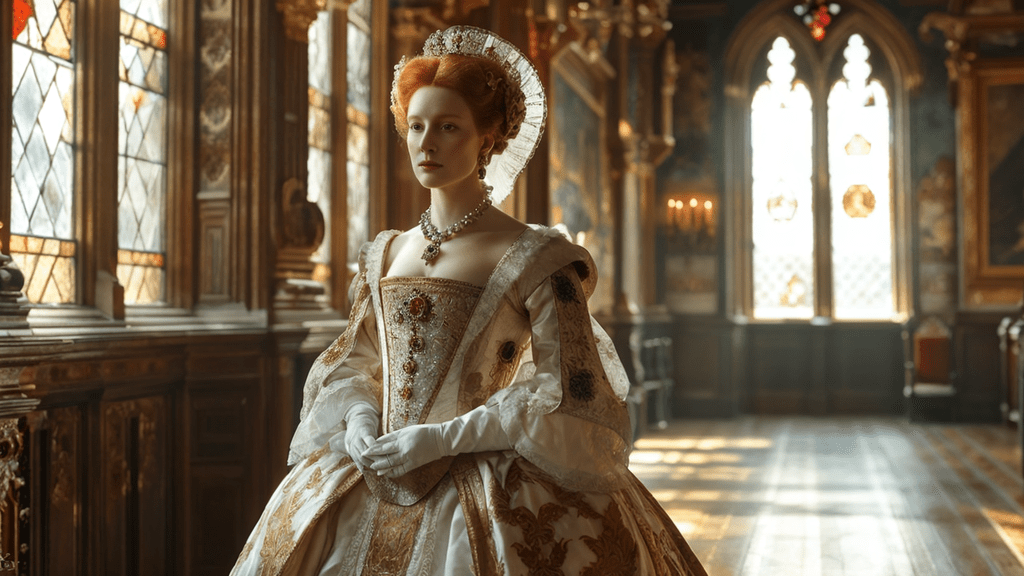
On this day, Queen Elizabeth I ascended to the English throne, heralding the beginning of the Elizabethan Era, a transformative period in English history that profoundly shaped the English language. Often referred to as a “Golden Age” for English culture, her reign (1558–1603) saw significant advancements in literature, exploration, and national identity. This era not only enriched the vocabulary and idioms of English but also established its importance as a medium for artistic expression, governance, and global communication.
Key Contributions to the English Language During the Elizabethan Era
1. The Flourishing of English Literature and Drama
The Elizabethan Era was a time of extraordinary literary achievement, and it left an indelible mark on the English lexicon and rhetorical traditions.
- William Shakespeare, the preeminent playwright of the time, introduced more than 1,700 new words to English, as well as countless phrases and idioms still in use today. Examples include:
- Words: “assassination,” “lonely,” “majestic,” “exposure.”
- Phrases: “fair play,” “in a pickle,” “wear one’s heart upon one’s sleeve,” “break the ice.”
- Christopher Marlowe, another literary giant, helped popularize blank verse (unrhymed iambic pentameter), which became a cornerstone of English poetry and drama.
Drama of the period was written in Early Modern English, a form of the language that began to standardize grammar and vocabulary. This literature influenced both formal and informal English, embedding artistic and emotional expression into the language.
2. Expansion of Vocabulary Through Exploration and Trade
The Elizabethan Era coincided with the Age of Exploration, during which English navigators like Sir Francis Drake and Sir Walter Raleigh ventured into new territories. These interactions introduced numerous words into English from foreign languages, enriching its vocabulary:
- From Spanish and Portuguese: Words like “cigar,” “cargo,” and “avocado.”
- From indigenous languages of the Americas: Words like “canoe,” “barbecue,” “hammock,” and “potato.”
- The rise of the East India Company facilitated the introduction of words from Asian languages, such as “shampoo” and “bungalow.”
3. Development of National Identity Through Language
Elizabeth I’s reign helped establish English as a language of governance, culture, and national pride, displacing the dominant role of Latin and French in formal and academic settings.
- The Queen’s speeches, such as her famous Tilbury Speech during the threat of the Spanish Armada, demonstrated the power of English in uniting the people:
- “I know I have the body but of a weak and feeble woman, but I have the heart and stomach of a king, and of a king of England too.”
- This speech epitomized the rhetorical flourish of Elizabethan English, inspiring patriotism and loyalty.
The rise of English as a national language also spurred the development of grammar books and dictionaries, which began standardizing spelling and definitions.
4. Influence on Religious and Philosophical Language
Elizabeth I’s reign was deeply influenced by the Protestant Reformation. Under her rule, English translations of religious texts gained prominence, fostering the development of a rich religious vocabulary.
- The groundwork laid during her era culminated in the publication of the King James Bible in 1611, which introduced numerous phrases into English, such as:
- “The powers that be”
- “By the skin of one’s teeth”
- “Let there be light.”
These phrases enriched the moral and philosophical lexicon of English, making the language more expressive in discussions of faith, ethics, and human nature.
5. The Role of Elizabethan Theater in Shaping Everyday Language
Theater became a popular cultural force during Elizabeth’s reign, with the establishment of iconic playhouses like the Globe Theatre in London. The accessibility of plays brought new expressions and rhetorical techniques to the common people, integrating them into everyday English.
- Elizabethan theater introduced figurative language, including metaphors, similes, and rhetorical questions, that became staples of English communication.
- Soliloquies and asides, which allowed characters to express their inner thoughts directly to the audience, influenced narrative techniques in English literature for centuries.
6. Codification of English as a Language of Learning and Scholarship
Elizabeth I’s support for education and the arts fostered a climate where English supplanted Latin in many intellectual and scholarly domains.
- The founding of institutions like Gresham College ensured that English was used in lectures and writings on science, mathematics, and philosophy.
- Academic terms like “gravity,” “orbit,” and “experiment” began to enter the language, setting the stage for the scientific revolution that followed.
Lasting Legacy on the English Language
The accession of Queen Elizabeth I marked the beginning of a cultural and linguistic renaissance that has left a permanent legacy on the English language. The Elizabethan Era enriched English with:
- Idioms and phrases still in use today.
- An expanded vocabulary incorporating terms from exploration, science, and commerce.
- A standardized form of English suitable for literature, government, and everyday life.
The language that flourished under Elizabeth’s reign became the foundation for Modern English, influencing how it is spoken, written, and thought of globally. Her legacy remains an enduring testament to the power of language in shaping culture, identity, and history.
Originally published on November 17, 2024, on The-English-Nook.com.
 What Happened on This Day?
Leave a comment