
December 13, 1577
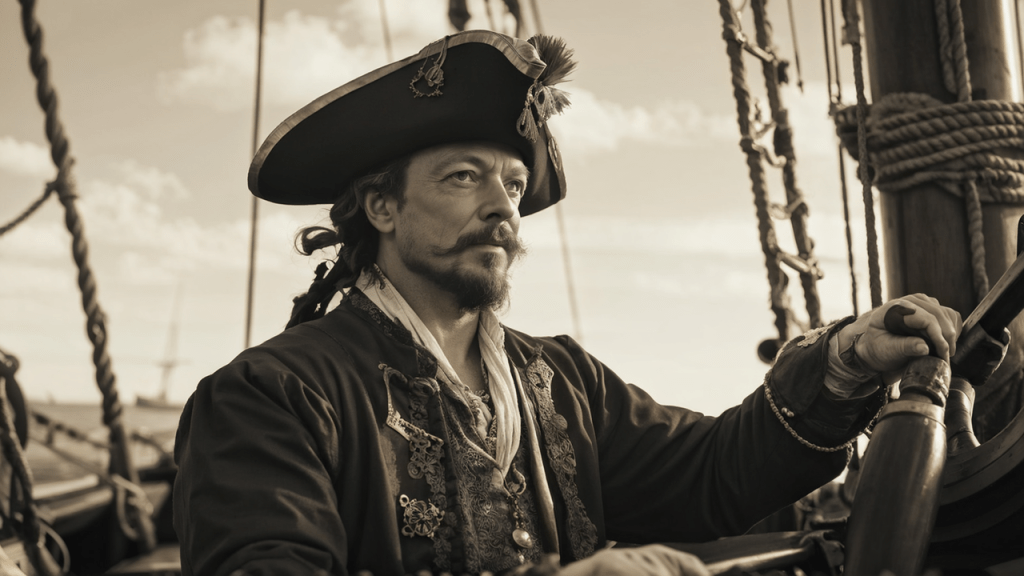
On December 13, 1577, Sir Francis Drake embarked on his historic voyage to circumnavigate the globe aboard the Golden Hind. This journey not only marked a milestone in the Age of Exploration but also left a profound imprint on the English language. As Drake and his crew charted unknown waters and encountered diverse cultures, they brought back terms and concepts that expanded English vocabulary, particularly in the realms of geography, navigation, and cultural exchange.
The Voyage That Enriched the English Lexicon
Drake’s circumnavigation introduced English speakers to a wealth of new words, drawn from the places he explored, the navigational challenges he faced, and the interactions with Indigenous peoples and European rivals.
Navigational and Geographic Terms
- “Archipelago”
- Derived from Italian and Greek roots, this term refers to a group of islands. Encounters with regions like the Pacific islands popularized this word in English geography.
- Example: “Drake navigated through the challenging archipelagos of the Pacific.”
- “Strait”
- A narrow waterway connecting two larger bodies of water, often crucial for navigation. Drake’s passage through the Strait of Magellan popularized its use in English.
- Example: “The Strait of Magellan became a key route for explorers following Drake’s voyage.”
- “Latitude” and “Longitude”
- While these terms predated Drake, their application in detailed navigation and exploration gained prominence during his era.
- Example: “Precise latitude and longitude measurements were vital to Drake’s success.”
- “Circumnavigate”
- This term, meaning to travel entirely around something (typically the Earth), became synonymous with daring exploration.
- Example: “Drake was celebrated as the first Englishman to circumnavigate the globe.”
Loanwords and Cultural Enrichment
Drake’s journey contributed to the adoption of foreign words into English, reflecting the diverse cultures and languages encountered during the expedition.
Influence of Spanish and Portuguese
- Terms like “armada”, “galleon”, and “plunder” became part of English vocabulary, reflecting the maritime rivalries of the period.
- Example: “Drake’s encounters with the Spanish Armada were legendary.”
- Words like “barbecue” (from the Taíno via Spanish) and “canoe” (from the Carib) began appearing in English, brought back through encounters in the Americas.
Indigenous Loanwords
- Indigenous languages contributed terms that described unfamiliar flora, fauna, and cultural practices. While specific words associated with Drake’s voyage are debated, his era opened English to words like “hammock”, “maize”, and “tobacco.”
Impact on English Discourse
The success of Drake’s circumnavigation shaped how English speakers discussed exploration, geography, and cultural encounters.
Exploration and Adventure
- Words like “voyage”, “expedition”, and “pioneer” gained prominence, framing the era’s spirit of discovery.
- Example: “Drake’s expedition set a precedent for future explorers.”
Piracy and Maritime Conflict
- Drake’s dual role as an explorer and privateer brought terms like “privateer”, “corsair”, and “pirate” into sharper focus in English, reflecting the era’s complex maritime politics.
- Example: “As a privateer, Drake’s actions against Spanish ships were both celebrated and controversial.”
Economic and Colonial Vocabulary
- The wealth acquired during Drake’s voyage popularized words like “treasure,” “spices,” and “gold bullion”, which became symbols of the economic motivations driving exploration.
- Example: “Drake’s treasure from the Spanish galleons made him a hero in England.”
Cultural and Linguistic Legacy
Drake’s circumnavigation had lasting effects not only on the geopolitical landscape but also on the English language and its cultural imagination.
Geographic Naming
- Drake’s explorations contributed to the naming of places, such as “Drake Passage”, the waterway between South America and Antarctica, commemorating his daring journey.
Metaphors of Exploration
- Phrases like “uncharted waters” and “voyage of discovery” gained metaphorical significance in English, used to describe any endeavor into the unknown.
- Example: “Launching a startup is like navigating uncharted waters.”
The Romanticization of Exploration
- Drake’s status as a national hero popularized the language of adventure, with terms like “intrepid,” “heroic,” and “undaunted” used to describe explorers and their feats.
- Example: “Drake’s intrepid spirit inspired generations of adventurers.”
A Legacy That Spanned Continents and Centuries
Sir Francis Drake’s circumnavigation of the globe, launched on December 13, 1577, was a transformative event for both history and language. By expanding English with terms like “archipelago,” “strait,” and “circumnavigate”, and by introducing loanwords from the cultures he encountered, Drake’s journey enriched the language of exploration, geography, and cultural exchange. His voyage remains a testament to the enduring power of discovery to shape how we speak, think, and connect with the world.
Originally published on December 13, 2024, on The-English-Nook.com.
 What Happened on This Day?
Leave a comment