
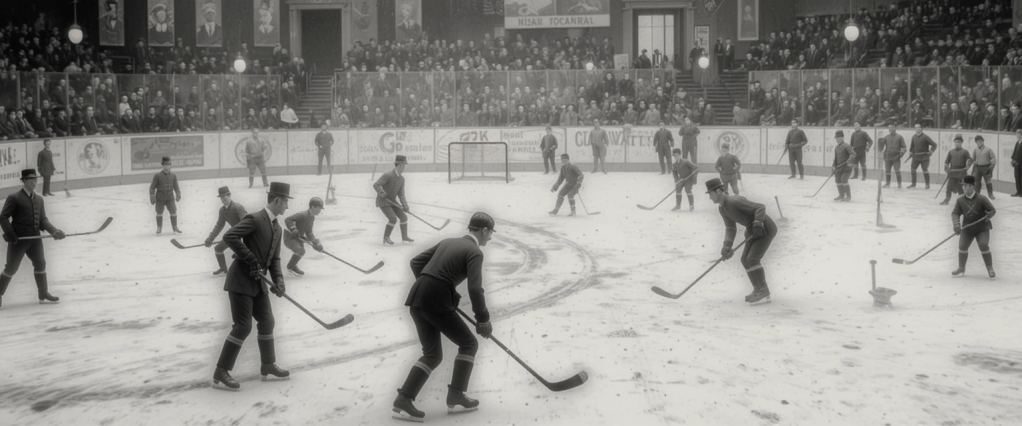
March 3, 1875
A Legacy in Language
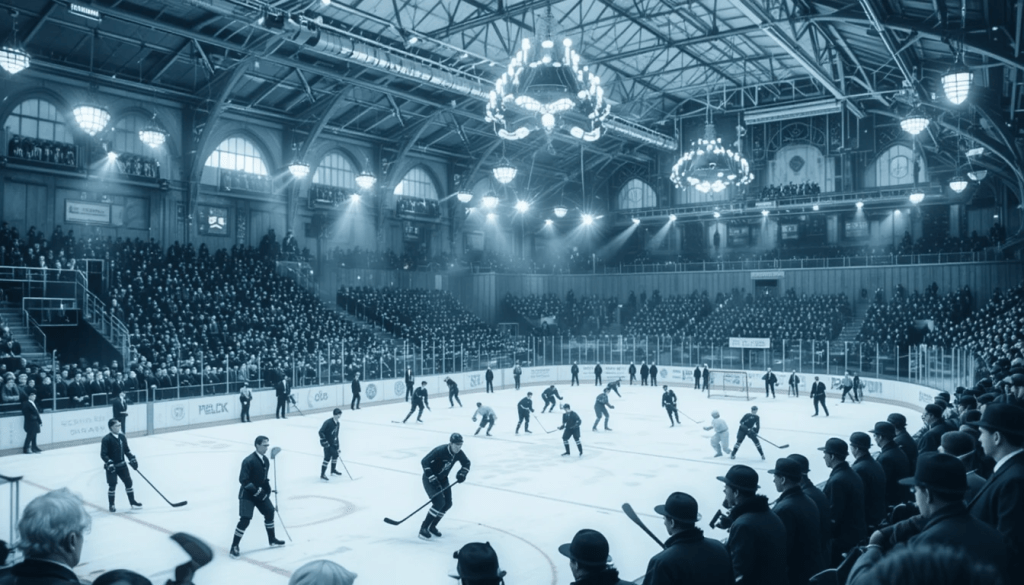
On this day, the first organized indoor ice hockey game was played at the Victoria Skating Rink in Montreal, Canada. While this event is a landmark in sports history, it also had a profound and lasting impact on the English language. As hockey evolved from a local pastime into a globally recognized sport, it introduced a specialized vocabulary that shaped not only sports terminology but also idiomatic expressions, business jargon, and everyday speech.
Hockey’s linguistic contributions range from fundamental gameplay terms to metaphorical phrases used in leadership, competition, and strategy. The widespread popularity of the sport—particularly in North America and parts of Europe—has ensured that its terminology continues to be used far beyond the rink.
The Core Vocabulary of Hockey in English
Every sport develops a unique lexicon, but hockey has been especially influential due to its fast-paced nature and intense competition. Many of its terms have found their way into broader English usage, often applied to situations that have nothing to do with ice or pucks.
Fundamental Hockey Terms That Became Everyday Words
- Puck – Derived from the Scottish Gaelic puc (meaning “to poke” or “to strike”), this word is now universally associated with the small rubber disk used in ice hockey. Outside the sport, “puck” has occasionally been used to describe small, round objects or as a playful reference to movement and precision.
- Hat Trick – Originally from cricket, this term describes the impressive feat of scoring three goals in a single game. Today, “hat trick” is widely used beyond sports to signify achieving three major successes in a row, whether in entertainment, business, or personal achievements.
- Faceoff – A critical moment in hockey where play resumes as two opposing players fight for control of the puck. The term has been adopted in general English to mean any confrontation, debate, or competitive encounter.
- Power Play – When a team gains a temporary advantage due to an opponent’s penalty, they are on a power play. The phrase is now commonly used in business and politics to describe strategic moves where one party holds a significant, often temporary, advantage.
- Slapshot – A powerful, full-force hockey shot using a distinctive wind-up motion. In everyday speech, “taking a slapshot” can imply an aggressive or bold action, especially in decision-making.
Metaphors and Expressions Derived from Hockey
Hockey’s rich vocabulary has given rise to many expressions that extend beyond the game itself. These phrases, once confined to the rink, have been adopted in corporate boardrooms, political speeches, and casual conversations.
- “Skating on thin ice” – This phrase, meaning to take a risky or precarious action, originates from the danger of skating on weak ice that may crack under pressure.
- “Drop the gloves” – In hockey, players drop their gloves before engaging in a fight, signaling an open confrontation. In broader usage, the phrase signifies engaging in an unfiltered, no-holds-barred argument or competition.
- “Go top shelf” – In hockey, shooting the puck into the upper part of the net is called “going top shelf.” This phrase is often used metaphorically to describe aiming for excellence or achieving a high-quality outcome.
- “A game-changer” – Borrowed from hockey and other sports, this phrase describes a pivotal moment that alters the outcome of a situation, whether in business, technology, or personal endeavors.
- “Pulling the goalie” – Hockey teams sometimes remove their goaltender in favor of an extra attacker as a last-ditch effort to score. The phrase has come to symbolize taking a bold, high-risk action in critical moments.
- “Grinding it out” – Referring to the tough, physical play of grinding-line players in hockey, this expression now describes perseverance and determination in the face of challenges.
- “Take one for the team” – In hockey, players may block shots or accept penalties to benefit their team. This phrase is now used broadly to describe someone enduring hardship for the greater good.
- “Drop the puck” – Signaling the start of play in hockey, this phrase is now used figuratively to mean getting started on a task, project, or event.
The Global Spread of Hockey Terminology
As ice hockey grew in popularity, particularly in Canada, the United States, Russia, and Northern Europe, its vocabulary spread along with it. The National Hockey League (NHL), founded in 1917, played a crucial role in standardizing the game’s terminology in English. By the mid-20th century, hockey’s influence had expanded into everyday speech, and its metaphors became deeply embedded in business, politics, and media.
For example, sports commentators frequently use hockey terms to describe political strategies, corporate decisions, and competitive dynamics. Business leaders talk about “power plays” in negotiations, journalists describe election debates as “faceoffs,” and individuals aiming for success are advised to “go top shelf.”
Hockey’s Lasting Influence on the English Language
The first indoor hockey game in 1875 was more than just a sporting milestone—it also set in motion a linguistic legacy that continues to influence the way we communicate. From idioms that convey competition and resilience to strategic terms that define power and risk-taking, hockey has contributed a rich and dynamic set of expressions to the English language.
As the sport continues to grow in popularity worldwide, so too does its impact on the way people speak, write, and think. Whether discussing sports, business, politics, or life’s challenges, the language of hockey has become an enduring part of English vocabulary.
From the rink to real life—hockey’s language keeps the game going.
Originally published on March 3, 2025, on The-English-Nook.com.
Visit my page to find out ‘What Happened on this Day?‘ and learn ‘The Word of the Day‘—you’ll find it here first and all in one place!
If you’re a language enthusiast, you’ll have access to a variety of resources, including short stories in English and Spanish, interesting readings, vocabulary, and much more—not just for English, but also for Spanish. Come check it out!
 What Happened on This Day?
Leave a comment