
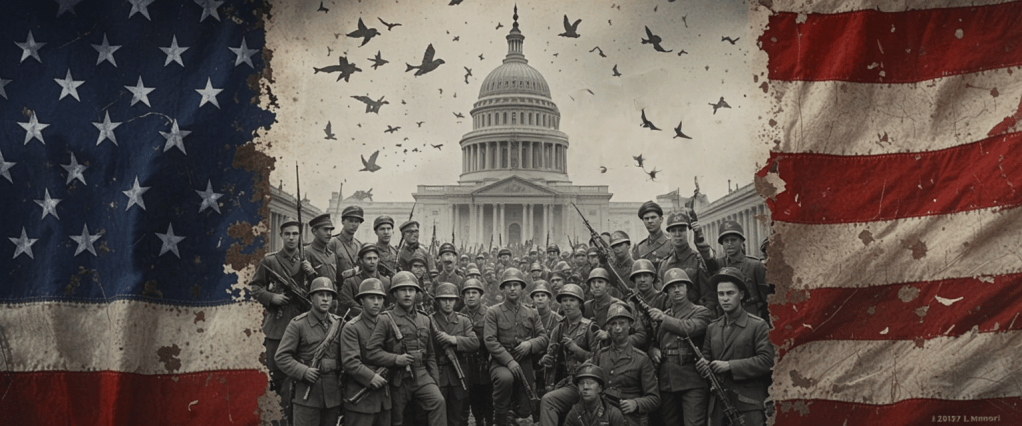
On April 6, 1917
A Nation Joins the Fight
On April 6, 1917, the United States formally entered World War I when Congress declared war on Germany. While the war had already raged in Europe for nearly three years, America’s involvement signaled a turning point in both the conflict and its cultural and linguistic reverberations. The mobilization of American society for war introduced a host of new terms, expressions, and idioms into the English language, many of which still echo in modern speech. From military slang to homefront slogans, the war shaped how Americans—and English speakers worldwide—talked about combat, patriotism, sacrifice, and global politics.
New Military Terminology: From “Doughboy” to “Over There”
One of the most enduring linguistic legacies of the U.S. in WWI is the term “doughboy,” a nickname for American infantrymen. Though the word existed in earlier military contexts, its widespread use during World War I cemented its place in U.S. military history.
- “Doughboy” – Theories about its origin vary: some link it to the dusty appearance of soldiers marching through dry terrain; others to fried dough dumplings eaten by troops. Regardless of its roots, it became synonymous with the American soldier of the Great War.
Other phrases tied to military service also entered the vernacular:
- “Over There” – A patriotic slogan and popular song title that came to symbolize U.S. soldiers deployed in Europe.
- “No Man’s Land” – Though used earlier in legal and geographic contexts, the phrase gained terrifying clarity during WWI as the deadly space between enemy trenches.
- “Shell shock” – One of the earliest terms for what is now recognized as PTSD (Post-Traumatic Stress Disorder), used to describe psychological trauma resulting from intense bombardment and battlefield stress.
- “Trench warfare” – The brutal strategy of WWI introduced this expression into everyday language as a metaphor for prolonged, grueling conflict.
The “Home Front” and Civilian Engagement
The phrase “home front” emerged during World War I to describe the efforts of civilians supporting the war from afar. It reframed domestic life as part of the battlefield, introducing a new way of speaking about national duty and unity.
- “Home front” – This term connected civilian sacrifice to military struggle, encompassing everything from rationing and war bonds to labor shifts and propaganda.
- “Victory gardens” – Civilian-grown produce plots that helped reduce pressure on the food supply, tying gardening to patriotism.
- “Liberty bonds” – A financial tool for funding the war effort that gave rise to idioms around “doing your part” or putting “your money where your mouth is.”
- “Four-minute men” – Volunteers who gave brief, persuasive speeches to promote war support, coining a term later used for any impromptu public advocate or explainer.
Propaganda and the Power of Language
World War I was among the first major conflicts where propaganda became a central tool of psychological warfare and civilian morale. Language was weaponized to inspire, unite, and vilify:
- “The Hun” – A derogatory term for Germans, evoking barbarism and used to stir public anger and nationalism.
- “Make the world safe for democracy” – A rallying phrase from President Woodrow Wilson’s war message to Congress, becoming a lasting expression of U.S. interventionist ideology.
- “War to end all wars” – Though tragically ironic in hindsight, this phrase captured the idealism of early U.S. involvement.
These expressions entered the cultural bloodstream, shaping how wars—and peace—were discussed in the decades that followed.
Everyday Speech and Lingering Idioms
In addition to formal terms, WWI left its mark on everyday English, influencing slang and idiomatic expressions:
- “Blighty wound” – A British term for an injury serious enough to get a soldier sent home, sometimes used in American accounts to describe lucky escapes.
- “Over the top” – Originally used for soldiers leaving the trenches to charge, now a common phrase for anything excessive or dramatic.
- “Cushy” – Adopted from British slang meaning easy or comfortable, it was used by American soldiers to describe light duty or soft assignments.
- “Chatting” – British slang for removing lice (“chats”) in the trenches, which later evolved in American use to mean casual conversation.
A Linguistic Legacy of War
America’s entry into World War I did more than shape global geopolitics—it also reshaped the way English speakers think, talk, and write about war. The conflict introduced a vocabulary of trenches, trauma, patriotism, and propaganda that persists to this day.
- Terms like “shell shock,” “home front,” and “doughboy” became symbolic of the era.
- Phrases born from battlefield life and political rhetoric evolved into metaphors for civilian and emotional struggles.
- The war established a linguistic pattern for how America would discuss subsequent conflicts—from World War II to the War on Terror.
In entering World War I, the United States not only joined a global struggle—it also contributed to a shared language of warfare that continues to define how English speakers understand courage, sacrifice, and the costs of global conflict.
In 1917, America entered the war—and English would never speak the same again.
Originally published on April 6, 2025, on The-English-Nook.com.
Visit my page to find out ‘What Happened on this Day?‘ and learn ‘The Word of the Day‘—you’ll find it here first and all in one place!
If you’re a language enthusiast, you’ll have access to a variety of resources, including short stories in English and Spanish, interesting readings, vocabulary, and much more—not just for English, but also for Spanish. Come check it out!
 What Happened on This Day?
Leave a comment