
April 9, 1940
A Blitz Across Scandinavia
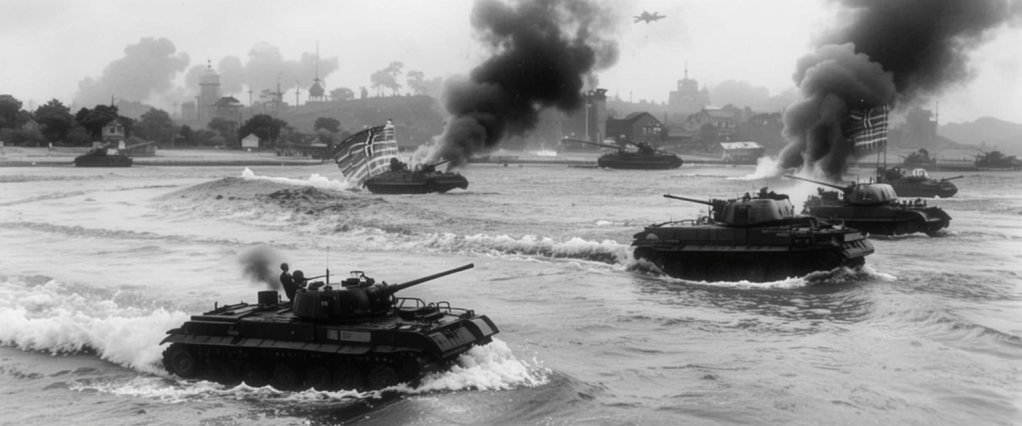
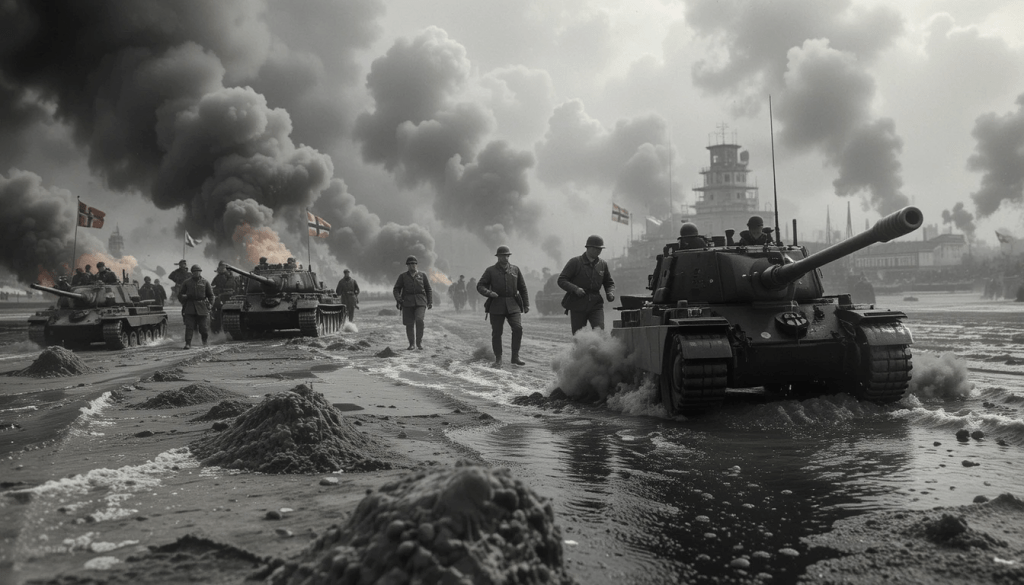
On April 9, 1940, Nazi Germany launched Operation Weserübung, a surprise military campaign that resulted in the swift occupation of Denmark and large parts of Norway. This invasion marked a pivotal moment in the early phase of World War II, demonstrating the efficiency of Germany’s combined arms strategy and extending the war into Northern Europe.
Denmark surrendered within hours, while Norway mounted a longer resistance with Allied support, ultimately falling after two months. The operation was not only significant militarily but also contributed lasting terminology and strategic concepts to English-language discourse surrounding warfare and international relations.
Strategic Language Introduced and Reinforced
The rapid occupation of Denmark and Norway introduced and reinforced several military terms and concepts in English, many of which have since become embedded in discussions of modern warfare:
- “Blitzkrieg” – Originally used during the invasion of Poland, this term meaning “lightning war” was cemented in English through Germany’s swift assaults across Europe. Operation Weserübung reinforced the concept of rapid, surprise military offensives.
- “Occupation” – Though older, the term took on renewed relevance and specificity during WWII, particularly in describing German control over foreign territories.
- “Quisling” – Named after Vidkun Quisling, the Norwegian politician who collaborated with the Nazis, this term entered English as a synonym for “traitor” or “collaborator with an enemy force.” It remains a potent term in political vocabulary today.
- “Invasion route” and “theater of operations” – These strategic phrases were used widely in Allied reports and analysis of the Scandinavian campaign, helping to standardize modern military language.
- “Neutrality violation” – The invasions of neutral nations like Denmark and Norway brought this term into wider use, reflecting the legal and ethical questions raised in wartime diplomacy.
Influence on English Wartime Reporting and Policy Discourse
As the news of Germany’s northern offensive spread, English-language media and government briefings adopted terminology from both German and Allied sources to describe the new realities of the war. This shaped the public’s understanding of geopolitical events and refined the lexicon used in policy and military planning:
- “Preemptive strike” – Operation Weserübung was described by German officials as a preventive measure against Allied advances, contributing to this term’s popularization in later Cold War rhetoric.
- “Naval superiority” and “airborne troops” – These terms gained prominence in reports describing how Germany utilized sea and air dominance to outmaneuver Norway’s coastal defenses.
- “Geostrategic importance” – The campaign highlighted the value of Norwegian fjords and access to the North Atlantic, bringing this term into strategic studies and foreign policy literature.
Cultural and Literary Responses in English
Though overshadowed in popular imagination by other WWII theaters, the invasion of Denmark and Norway did influence English-language literature, journalism, and even fiction.
- Wartime poetry and memoirs – Writers like Stephen Spender and Louis MacNeice reflected on the fall of Scandinavia as symbolic of a world succumbing to tyranny.
- Historical fiction and spy thrillers – The Scandinavian front provided a backdrop for English-language novels exploring resistance, espionage, and moral compromise in occupied territories.
- Documentaries and historical retrospectives – Terms like “Weserübung,” “Quisling,” and “puppet government” became fixtures in post-war educational and media materials.
Legacy in Modern English Vocabulary
Even decades later, the language forged and popularized during Operation Weserübung continues to echo in political, military, and historical discussions:
- “Quisling” remains a powerful pejorative used in political discourse.
- “Preemptive invasion” and “blitz-style offensive” are invoked in analyzing contemporary military strategies.
- The naming of military operations (e.g., “Operation Desert Storm”) follows the same formula made familiar during WWII.
A Campaign That Shaped Strategic English
The events of April 9, 1940, were more than a turning point in World War II—they were a moment when military terminology and strategic concepts from Europe became permanently embedded in the English-speaking world’s understanding of warfare. The invasion of Denmark and Norway expanded not only the map of conflict but also the vocabulary used to describe it, offering terms that continue to influence military, political, and cultural language today.
When the war hit the north, it rewrote the map—and the dictionary.
Originally published on April 9, 2025, on The-English-Nook.com.
Visit my page to find out ‘What Happened on this Day?‘ and learn ‘The Word of the Day‘—you’ll find it here first and all in one place!
If you’re a language enthusiast, you’ll have access to a variety of resources, including short stories in English and Spanish, interesting readings, vocabulary, and much more—not just for English, but also for Spanish. Come check it out!
 What Happened on This Day?
Leave a comment