
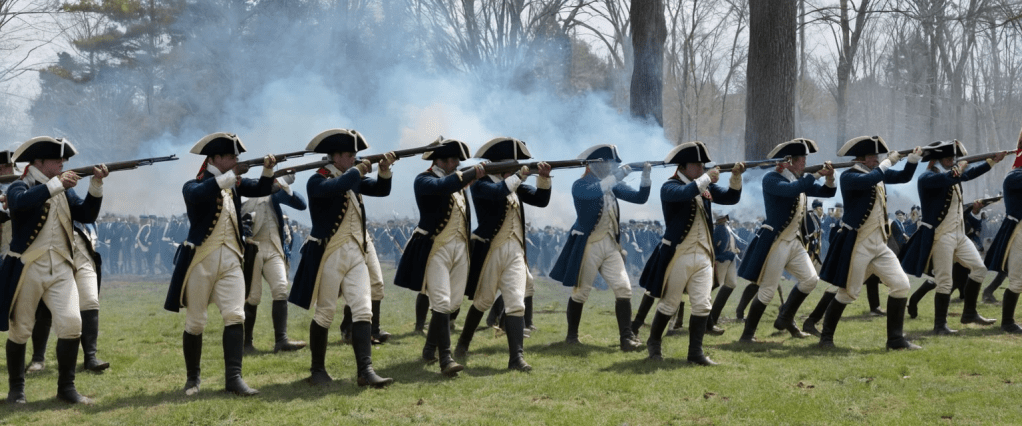
April 19, 1775
The Dawn of Armed Resistance
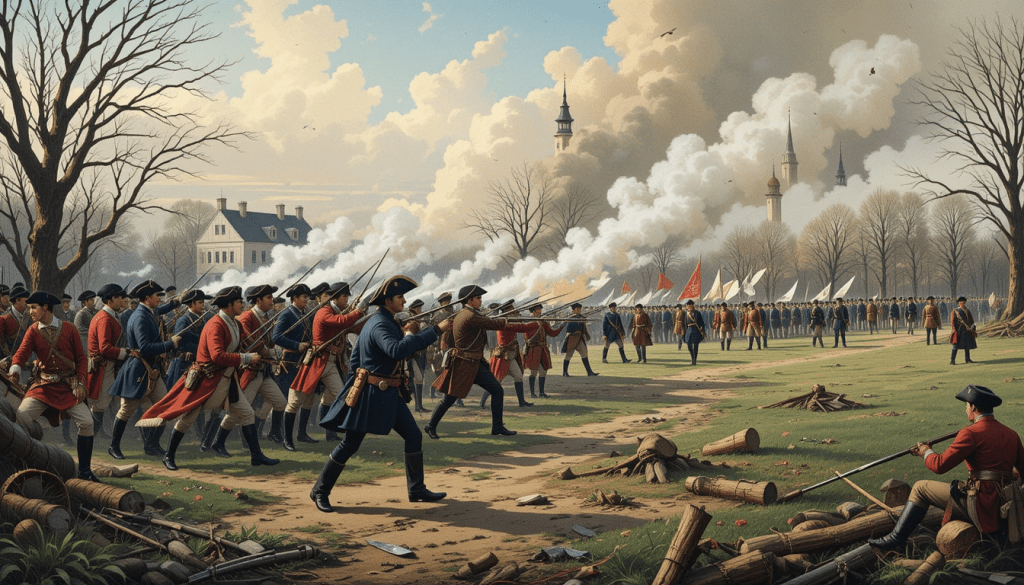
On April 19, 1775, the Battles of Lexington and Concord marked the outbreak of the American Revolutionary War. These confrontations between British troops and colonial militiamen in Massachusetts are widely regarded as the first military engagements of the revolution. Though relatively small in scale, they had enormous symbolic weight, becoming emblematic of the colonial struggle for independence.
The events of that day gave rise to one of the most iconic expressions in English-language history: “the shot heard ’round the world.” This phrase, popularized in Ralph Waldo Emerson’s 1837 poem “Concord Hymn”, refers to the first gunfire exchanged at the North Bridge in Concord, symbolizing the beginning of global revolutionary fervor.
Revolutionary Language and Rhetoric
The American Revolution wasn’t just a political and military upheaval—it was a linguistic revolution as well. The conflicts at Lexington and Concord catalyzed a flood of pamphlets, proclamations, and declarations that would help redefine the vocabulary of resistance and liberty in the English language.
From this point forward, English speakers began adopting and adapting phrases such as:
- “Patriot” – while an older term, it took on new, politically charged meaning in reference to American revolutionaries.
- “Redcoat” – a colloquial, somewhat derogatory term for British soldiers, cemented its place in popular usage.
- “Minute man” – derived from colonial militia who could be ready “at a minute’s notice,” this term entered both historical and metaphorical English.
- “No taxation without representation” – though coined earlier, it gained renewed rhetorical power following the start of hostilities, becoming a cornerstone of American political vocabulary.
Influence on English Political Discourse
The events of April 19 also contributed to shaping English political rhetoric:
- Phrases like “armed resistance,” “tyranny,” “natural rights,” and “self-governance” were not only featured prominently in American revolutionary literature but also began to resonate in British and global contexts.
- The notion of “revolution” itself underwent a transformation—from describing a cyclical return to order to denoting a complete and often violent overthrow of existing structures. This linguistic shift owes much to the ideological fervor sparked by conflicts like Lexington and Concord.
- Descriptive terms like “loyalist” and “rebel” took on deeply contextual meanings, and their nuanced usage in political writing and historiography has persisted into modern English.
Legacy in Modern Language
The language born from the revolution remains vivid today:
- “The shot heard ’round the world” is now widely used to describe any pivotal moment with far-reaching consequences, from sports victories to civil rights movements.
- Terms like “grassroots resistance,” “citizen militia,” and “freedom fighters” echo the linguistic legacy of these early revolutionary confrontations.
- The very structure of American political vocabulary—including concepts like “constitution,” “liberty,” and “independence”—finds early practical grounding in the rhetoric that sprang from Lexington and Concord.
From Gunfire to Global Metaphor
What began on a quiet Massachusetts morning transformed not only a nation, but the English language itself. The Battles of Lexington and Concord were not just a military turning point—they were a linguistic genesis, infusing English with phrases, slogans, and metaphors that continue to shape discussions of freedom, resistance, and identity.
In their echo, the language of revolution was forged—a rhetoric of rights and rebellion that still resonates in modern discourse, law, literature, and everyday speech.
One day, one shot, one language forever changed—Lexington and Concord didn’t just start a war, they started a conversation that never ended.
Originally published on April 19, 2025, on The-English-Nook.com.
Visit my page to find out ‘What Happened on this Day?‘ and learn ‘The Word of the Day‘—you’ll find it here first and all in one place!
If you’re a language enthusiast, you’ll have access to a variety of resources, including short stories in English and Spanish, interesting readings, vocabulary, and much more—not just for English, but also for Spanish. Come check it out!
 What Happened on This Day?
Leave a comment