
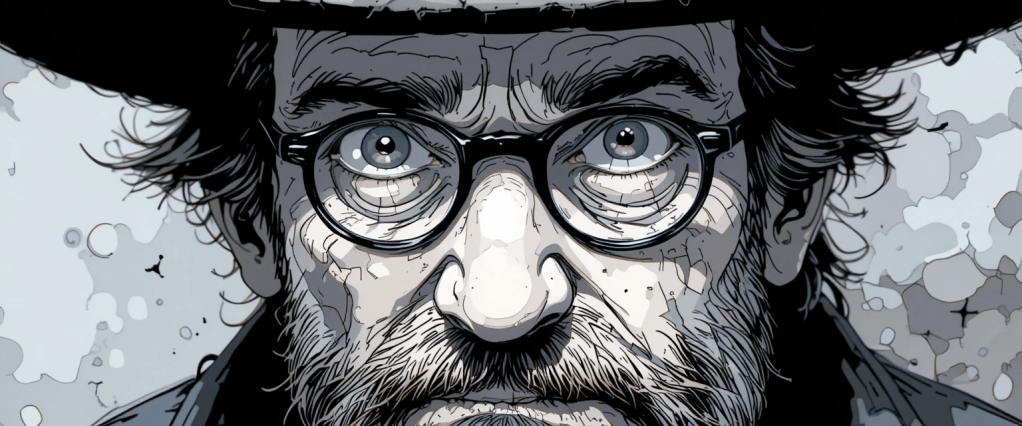
April 28, 1948
Master of Satirical Fantasy
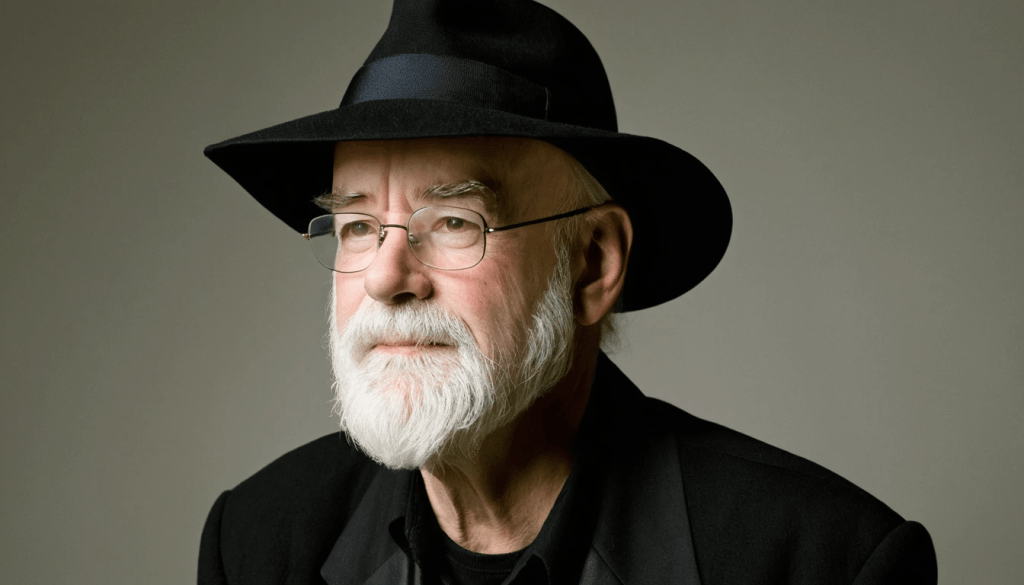
On April 28, 1948, Sir Terry Pratchett was born in Beaconsfield, Buckinghamshire, England. Over the course of his life, Pratchett became one of the most beloved and prolific English-language authors, best known for his Discworld series—a satirical, fantastical universe spanning over forty novels that deftly examine every facet of human society. Through sharp wit, keen observation, and profound empathy, Pratchett elevated the fantasy genre, challenging the boundaries between “serious” and “comic” literature.
Transforming the English Language Through Fiction
Pratchett’s influence on English literature is inseparable from his transformative use of language. He was a master of:
- Wordplay and Neologisms: Pratchett coined playful, resonant terms such as narrativium (the imagined element that makes stories happen) and redefined ordinary words through fantastical contexts.
- Inventive Metaphor and Simile: His writing features distinctive, vivid comparisons (“The night was as black as the inside of a cat”) that became hallmarks of his style.
- Satirical Aphorisms: Pithy, quotable observations—like “real stupidity beats artificial intelligence every time”—have entered common English usage, demonstrating his grasp of linguistic economy and humor.
- Dialogue and Voice: Each character spoke with a distinct rhythm and register, showcasing Pratchett’s virtuosity in crafting dialogue that was simultaneously naturalistic and exaggerated for comedic effect.
Through these techniques, Pratchett made English feel alive, adaptable, and infinitely playful, inspiring countless writers and readers to view language not just as a tool but as a playground.
Cultural and Educational Impact
Pratchett’s novels transcend genre fiction; they are philosophical treatises wrapped in comedic storytelling. Themes such as free will, morality, death, and identity are explored with a light touch but profound depth. Discworld novels like Small Gods critique organized religion, while Night Watch interrogates power, justice, and revolution—all while maintaining an approachable, entertaining tone.
His work has been incorporated into English literature curricula, creative writing programs, and even philosophy courses, underscoring its richness and complexity. His accessible language, combined with layered allegory, makes his writing a bridge between casual readers and academic study.
Furthermore, Pratchett’s advocacy for Alzheimer’s research after his diagnosis in 2007 positioned him as a thoughtful public figure who brought complex medical and ethical discussions into everyday English-language conversation.
Popularization of New Vocabulary and Concepts
Pratchett’s impact on English vocabulary extends to popular culture:
- “Discworldian”: Now a common adjective to describe settings or stories with absurdist, satirical tones.
- “Clacks”: His term for a semaphore telegraph system, paralleling today’s internet and email systems, showcasing his foresight in technological analogies.
- “Headology”: A Discworld term for psychological manipulation, now used informally among fans to describe subtle persuasion techniques.
- “Quantum weather”: Used humorously to describe unpredictable climatic conditions—reflecting his ability to blend scientific concepts into colloquial English.
His deliberate play with clichés, proverbs, and common sayings also invited readers to reconsider how language reflects collective beliefs and absurdities.
A Timeless Legacy
Knighted for services to literature in 2009, Sir Terry Pratchett’s legacy is a living one. His works continue to be adapted for radio, television, theatre, and graphic novels, introducing his inventive language and ideas to new generations. Festivals, literary discussions, and university seminars worldwide celebrate his enduring contributions.
He showed that humor and profound reflection are not mutually exclusive, but rather complementary forces that enrich language and thought. In honoring Pratchett, we recognize storytelling as a dynamic, evolving art—and English as a language continually revitalized by imagination and laughter.
Terry Pratchett: Where fantasy, laughter, and language meet genius.
Originally published on April 28, 2025, on The-English-Nook.com.
Visit my page to find out ‘What Happened on this Day?‘ and learn ‘The Word of the Day‘—you’ll find it here first and all in one place!
If you’re a language enthusiast, you’ll have access to a variety of resources, including short stories in English and Spanish, interesting readings, vocabulary, and much more—not just for English, but also for Spanish. Come check it out!
 What Happened on This Day?
Leave a comment