

May 12, 1820
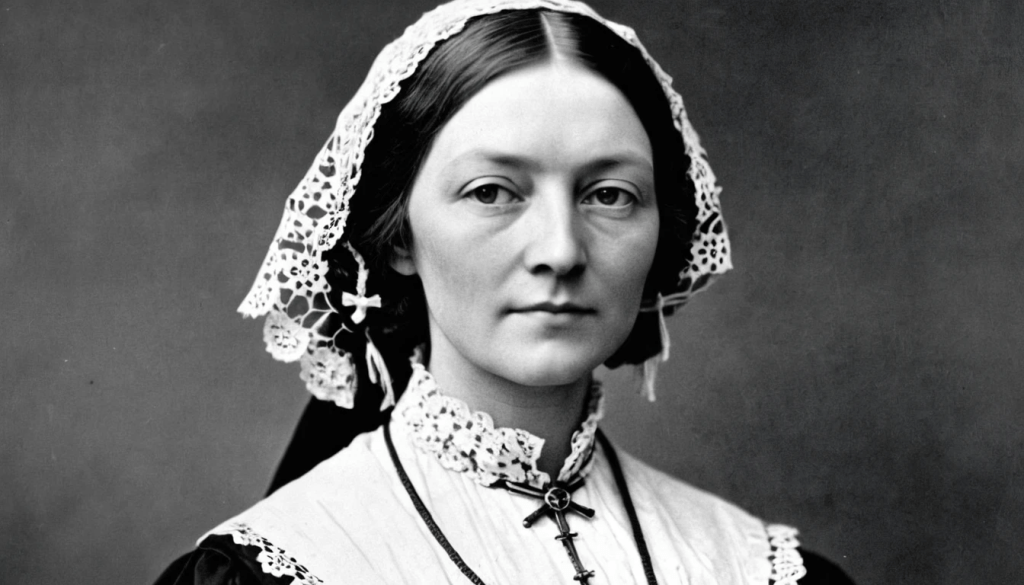
Birth of Florence Nightingale
A Revolutionary Voice in Medicine and Morality
Born on May 12, 1820, in Florence, Italy, Florence Nightingale was an English nurse, social reformer, and statistician whose contributions extended far beyond hospital walls. Revered as the founder of modern nursing, Nightingale’s influence was not only clinical but also linguistic—her writing shaped how we speak about care, health, and social responsibility in the English-speaking world.
Nursing as a Profession—and a Vocabulary
Before Nightingale, “nursing” was often associated with domestic work or religious duty. She redefined it as a trained, evidence-based medical profession. In doing so, she also reframed the terminology of healthcare, introducing precision and dignity to a field previously described in vague or demeaning terms.
- Elevating “Nurse” – Nightingale helped shift the word nurse from a term of informal caregiving to one signifying professional expertise.
- Popularizing Medical Language – Her work contributed to wider public use of terms like sanitation, infection control, triage, and hygiene, now common in both medical and everyday English.
- Clear Communication in Public Health – She championed clarity and conciseness in health education, influencing how English medical discourse developed, especially in public reports and patient instructions.
A Pioneering Writer and Communicator
Nightingale was not only a practitioner but a prolific author. Her writings—particularly Notes on Nursing (1859)—are considered foundational texts in both medical training and health communication. Her crisp, instructional prose style established a tone that has influenced generations of educational writing in English.
- Didactic Yet Accessible Prose – Nightingale’s writing modeled how to explain technical health concepts clearly to general readers—an approach echoed today in patient guides and health journalism.
- Language of Compassion and Duty – She introduced a lexicon that balanced scientific rigor with empathy, embedding terms like caregiver, compassionate service, and moral responsibility into healthcare narratives.
- First Use of Infographics in English Reports – Nightingale innovated with data presentation in English-language public documents, coining visual-linguistic hybrids like the “coxcomb diagram” to communicate statistics effectively.
Social Reform Through Persuasive Language
Florence Nightingale was a master of persuasive English. Her letters, reports, and public appeals used vivid language and moral urgency to drive reform in hospitals, army barracks, and sanitation systems.
- Framing Healthcare as Moral Language – She linked public health to moral and civic vocabulary, emphasizing duty, justice, decency, and rights, pushing the English lexicon of governance toward humane reform.
- Creating a Standard for Professional Reports – Her formal reports set benchmarks for bureaucratic English in public health, influencing policy writing and governmental documentation.
Lasting Linguistic Influence
Nightingale’s legacy continues in the many phrases and professional identities her work helped popularize:
- “The Lady with the Lamp” – A poetic phrase coined by The Times, it became symbolic of caring vigilance and entered English idiom as a shorthand for tireless compassion.
- “Nightingale nurse” – Still used to describe professionally trained and ethically grounded nurses around the world.
- “Florence Nightingale effect” – A psychological term describing romantic feelings developing between caregiver and patient, showing how her name itself became part of English descriptive language.
Language as a Tool for Healing
Florence Nightingale not only revolutionized nursing but redefined the way English speakers talk about care, health, and social duty. Her words—measured, moral, and methodical—reshaped public discourse and institutional practice. In every hospital ward and healthcare textbook that uses terms she helped normalize, her influence on the English language remains quietly profound.
She didn’t just change how we heal—she changed how we speak about healing.
Originally published on May 12, 2025, on The-English-Nook.com.
Visit my page to find out ‘What Happened on this Day?‘ and learn ‘The Word of the Day‘—you’ll find it here first and all in one place!
If you’re a language enthusiast, you’ll have access to a variety of resources, including short stories in English and Spanish, interesting readings, vocabulary, and much more—not just for English, but also for Spanish. Come check it out!
 What Happened on This Day?
Leave a comment