
May 14, 1264
Simon de Montfort and the Mise of Lewes
A Turning Point in English Constitutional History
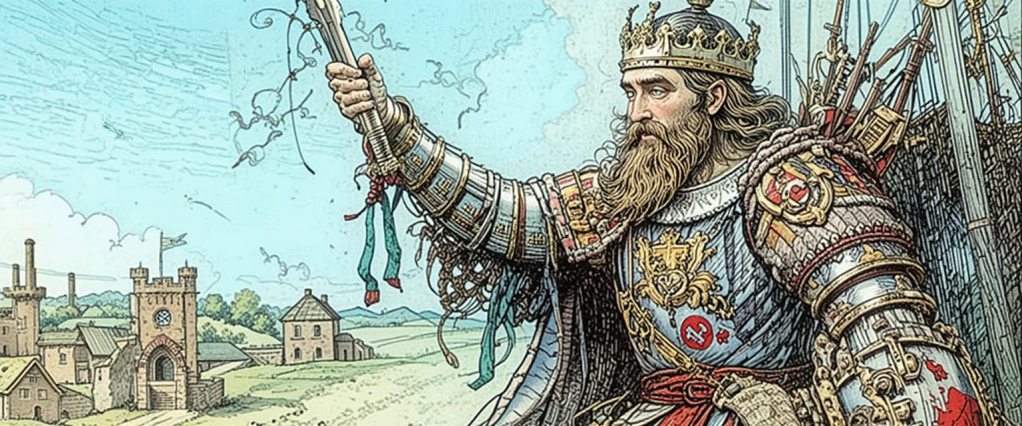
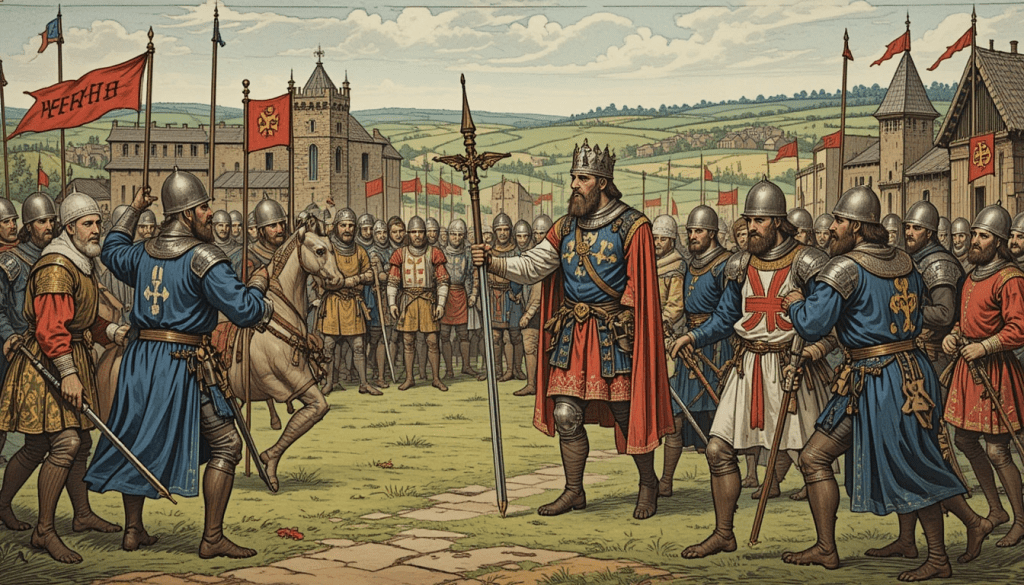
On May 14, 1264, the Battle of Lewes marked a defining moment in medieval English history. In this confrontation, forces led by Simon de Montfort, Earl of Leicester, defeated and captured King Henry III and his son, the future Edward I. The result was the Mise of Lewes, a negotiated settlement that temporarily transferred royal authority to de Montfort, ushering in a brief but influential period of baronial rule.
The Mise of Lewes and Political Language
The Mise of Lewes—though short-lived—introduced vocabulary and concepts that shaped English political discourse and legal development.
- “Mise” – A term meaning a negotiated settlement or compromise, the word entered English historical and legal discussion as a symbol of forced concession and proto-constitutional reform.
- “Magna Carta” – Reinvoked during the conflict, the charter’s language of rights and limits on royal power was central to the baronial justification for rebellion.
- “Loyal opposition” and “rebellious barons” – These contrasting descriptors helped refine the language around political legitimacy, resistance, and lawful dissent in English history texts.
- “Parliament” – Though not created at Lewes, the evolving idea of representative governance gained traction, especially under de Montfort’s later 1265 Parliament, which included elected commoners—a linguistic and institutional milestone.
Impact on Historical and Political English
The events surrounding Lewes became a reference point in English political writing for centuries, shaping how constitutional crises and the limits of monarchy were discussed.
- Historical writing – Chroniclers and later historians used the conflict to illustrate the tension between autocracy and accountability, reinforcing the value of terms like consent, representation, and rule of law.
- Legal and parliamentary English – The conflict contributed to the tradition of formal negotiation between crown and nobles, influencing the vocabulary of petitions, statutes, and governance in English legal language.
Cultural and Literary Echoes
Writers and poets across English history returned to the Battle of Lewes and its political consequences as symbols of struggle and reform.
- “Tyranny” vs. “Liberty” – These terms became enduring opposites in political rhetoric, often traced back to medieval struggles like those between Henry III and de Montfort.
- Shakespeare and beyond – While not directly dramatized by Shakespeare, the language of noble resistance and flawed monarchy in his history plays echoes the themes of Lewes.
A Linguistic Legacy of Power and Reform
Though the baronial victory was short-lived, and royal authority was soon restored, the ideas and language that emerged from the Battle of Lewes had lasting influence.
- The Mise of Lewes entered the vocabulary of constitutional development, often cited in political arguments about power-sharing.
- Simon de Montfort became a symbol in English political language—a “father of Parliament” whose legacy endures in discussions of representative governance.
Lewes and the Evolution of English Political Expression
The Battle of Lewes was not just a clash of arms but a crucible of constitutional language. It contributed to the evolution of political vocabulary that would later define English democracy. From mise and rebellion to parliament and representation, the words shaped by that conflict continue to resonate in how English expresses ideas of power, justice, and compromise.
When swords clashed, a constitution began to speak.
Originally published on May 14, 2025, on The-English-Nook.com.
Visit my page to find out ‘What Happened on this Day?‘ and learn ‘The Word of the Day‘—you’ll find it here first and all in one place!
If you’re a language enthusiast, you’ll have access to a variety of resources, including short stories in English and Spanish, interesting readings, vocabulary, and much more—not just for English, but also for Spanish. Come check it out!
 What Happened on This Day?
Leave a comment