

May 17, 1954 – A Landmark Supreme Court Decision
A Turning Point in Legal and Cultural Discourse
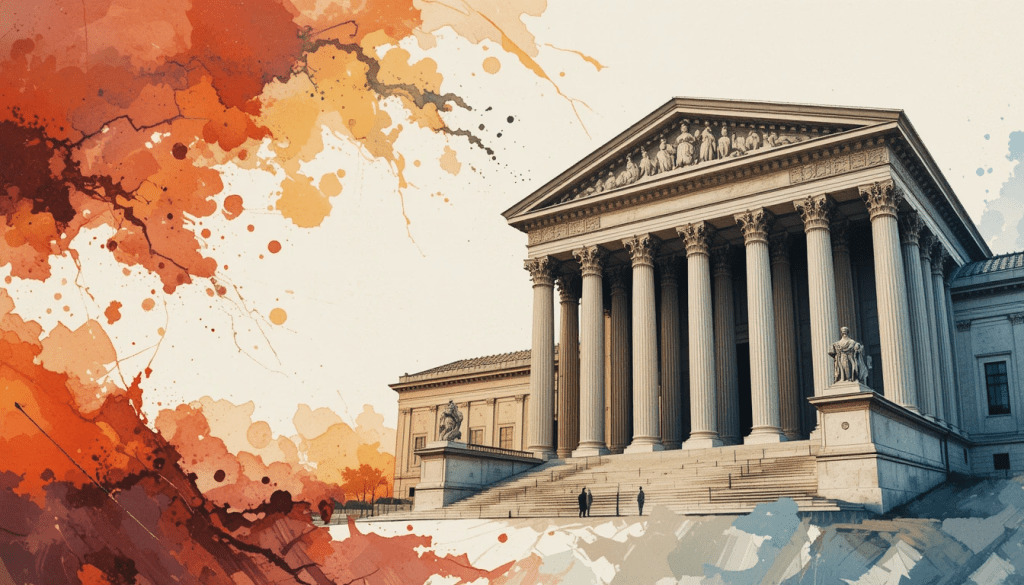
On May 17, 1954, the United States Supreme Court issued its unanimous ruling in Brown v. Board of Education of Topeka, declaring that racial segregation in public schools violated the Equal Protection Clause of the Fourteenth Amendment. This decision overturned the 1896 precedent of Plessy v. Ferguson, which had upheld the constitutionality of “separate but equal” facilities.
More than just a legal victory, the Brown ruling profoundly impacted the language of civil rights, embedding new expressions of justice, equality, and inclusion into the American lexicon. The case helped reshape how the English language articulated ideas of fairness, identity, and constitutional morality.
Legal Language Reimagined
The decision introduced and reinforced pivotal legal and rhetorical terms that would dominate civil rights discourse for decades:
- “Inherently unequal” – A groundbreaking phrase used in the Court’s opinion to describe segregated schools. This term became central to arguments against institutionalized discrimination and was widely cited in later civil rights literature and policy.
- “Equal protection under the law” – Though rooted in the Fourteenth Amendment, this clause gained renewed urgency and became a foundational phrase in legal challenges to discrimination across race, gender, and class.
- “Desegregation” – Once a specialized term, it entered everyday speech, symbolizing a broader societal push toward integration and racial justice.
- “Separate is not equal” – A succinct, morally resonant phrase that evolved into a slogan for civil rights activism and remains embedded in public consciousness.
Influence on Civil Rights Rhetoric and Literature
The decision catalyzed a wave of writing, journalism, and activism that further expanded the English-language vocabulary of social justice:
- Emergence of activist language – Terms like “systemic racism,” “racial equity,” “civil disobedience,” and “social justice” began to appear more frequently in public dialogue, literature, and academic writing.
- Oratory and protest – The legal principles from Brown were echoed in the speeches of figures like Martin Luther King Jr., whose use of moral clarity and repetition drew from legal rhetoric to inspire broad social change.
- Courtroom to classroom – The decision itself became a touchstone case in legal education, shaping how English-language case law is written, taught, and discussed.
Shifting the Cultural and Linguistic Landscape
Brown v. Board not only challenged discriminatory practices but also reshaped how institutions and individuals spoke about identity and community.
- Language of identity and inclusion – The ruling prompted schools, lawmakers, and the media to adopt more inclusive terminology, foregrounding concepts like “integration,” “diversity,” and “equal opportunity.”
- Power of judicial language – The case demonstrated how formal legal language could have a profound effect on popular speech and political activism, lending authority and weight to calls for reform.
Enduring Linguistic Legacy
The influence of Brown v. Board continues to echo in contemporary English:
- Court opinions, social justice movements, education policy, and media discussions still rely on its core phrases and values.
- The case contributed to the codification of a shared moral vocabulary, where terms like “civil rights,” “educational equity,” and “constitutional justice” have become fixtures in political, educational, and cultural conversation.
Law That Changed the Language
Brown v. Board of Education was more than a Supreme Court case—it was a moment that redefined how English articulates fairness, dignity, and human rights. By invalidating segregation, it didn’t just rewrite law books—it rewrote the moral language of a nation. Its vocabulary continues to empower generations seeking justice and equality, proving that the words we choose in law and policy can reshape not just society, but the language in which we imagine a better future.
One decision didn’t just end segregation—it rewrote the language of justice forever.
Originally published on May 17, 2025, on The-English-Nook.com.
Visit my page to find out ‘What Happened on this Day?‘ and learn ‘The Word of the Day‘—you’ll find it here first and all in one place!
If you’re a language enthusiast, you’ll have access to a variety of resources, including short stories in English and Spanish, interesting readings, vocabulary, and much more—not just for English, but also for Spanish. Come check it out!
 What Happened on This Day?
Leave a comment