
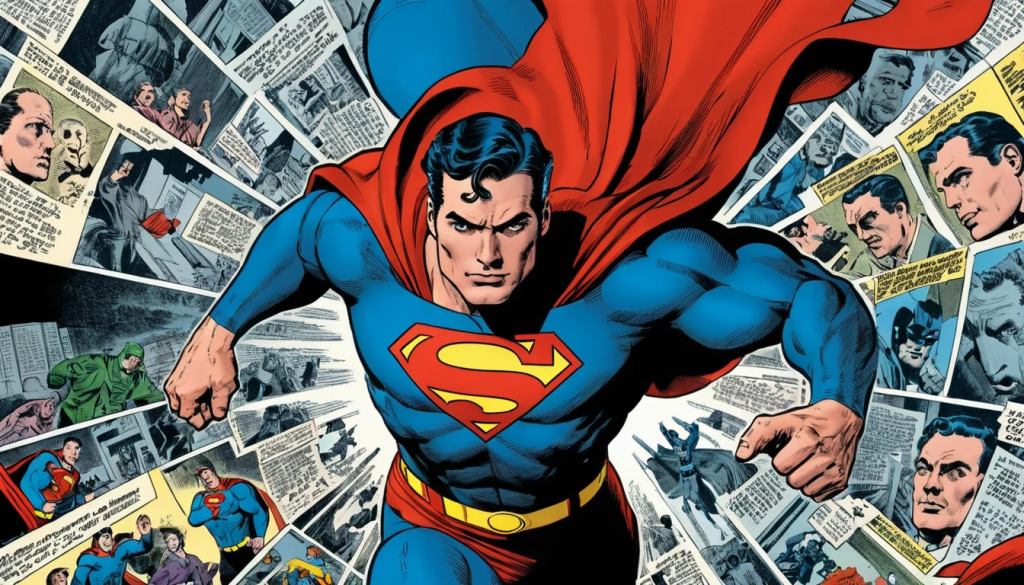
June 1, 1938
The Dawn of Superman in Action Comics #1
Superman Soars into the World
On June 1, 1938, the very first issue of Action Comics #1 hit newsstands in the United States, featuring the debut of Superman, a costumed hero created by Jerry Siegel and Joe Shuster. This moment marked the birth of the modern superhero, an idea and a character that would change not only comic books, but the English language itself.
The First Superhero and the Language of the Extraordinary
Superman’s arrival on the scene did more than introduce a new kind of protagonist—it introduced a new lexicon for talking about heroism, power, and myth:
- The word “superhero” itself—an entirely new term in English—entered popular usage, forever linking the “super” prefix to feats of superhuman power and moral grandeur.
- The phrase “superpowers”—coined to describe Superman’s extraordinary abilities—quickly became shorthand for exceptional or supernatural abilities, from comic books to everyday conversation.
From Krypton to Kryptonite: The Power of a New Vocabulary
Superman’s mythology didn’t just reshape the English language of heroism—it also introduced iconic words and phrases that have become part of global pop culture vocabulary:
✅ Kryptonite – First appearing in the radio serials of the 1940s and later in comics, this term became synonymous with an otherwise invulnerable figure’s Achilles’ heel. In English today, “kryptonite” is a metaphor for a fatal weakness or vulnerability, far beyond its original comic book context.
✅ Clark Kent / Secret Identity – Superman’s dual identity as the mild-mannered reporter Clark Kent helped codify the trope of the “secret identity”—a term and concept that became essential to superhero narratives and English pop culture slang for anyone living a double life.
✅ Man of Steel, Last Son of Krypton, Faster Than a Speeding Bullet – These vivid epithets, first popularized in comics and radio, entered the rhetoric of popular English, becoming instantly recognizable titles for invincible heroism and resilience.
A New Genre and Its Language
The debut of Superman in 1938 also gave birth to the superhero genre itself—a genre that would expand the English language in profound ways:
- Terms like “cape,” “supervillain,” “origin story,” and “comic book hero” became part of the everyday lexicon, shaping how people talk about not only fictional figures, but real-life heroes and role models.
- The language of comics—“issues,” “panels,” “splash pages”—emerged alongside Superman, enriching English with a visual vocabulary tied to storytelling and pop culture.
Influencing Generations of English Speakers
Superman’s impact on the English language and on global culture was immediate and far-reaching:
- Newspapers, radio, and later television shows popularized the superhero’s lingo, weaving terms like “super strength” and “x-ray vision” into the popular imagination.
- In political and social discourse, Superman’s “faster than a speeding bullet” bravado became a metaphor for speed, efficiency, and unstoppable resolve.
Legacy: A Heroic Lexicon for the Ages
Since his debut in Action Comics #1, Superman has become a universal symbol of hope and a linguistic touchstone for power, virtue, and hidden strength:
- Today, the superhero lexicon he introduced has shaped not only comic books, but also movies, television, video games, and digital media.
- Words like “superhero,” “superpowers,” and “kryptonite” remain indelible in modern English—testament to the staying power of the Man of Steel and the vibrant, evolving language of his world.
Superman’s Flight into English Imagination
On June 1, 1938, Superman took flight, lifting not just a comic book character, but an entire new language of possibility and imagination. His debut heralded a revolution in storytelling and popular speech, reminding us that sometimes, a single figure in a red cape can forever reshape the words we use to talk about courage, weakness, and the extraordinary.
One hero, one comic, one giant leap for the English language.
 What Happened on This Day?
Leave a comment