
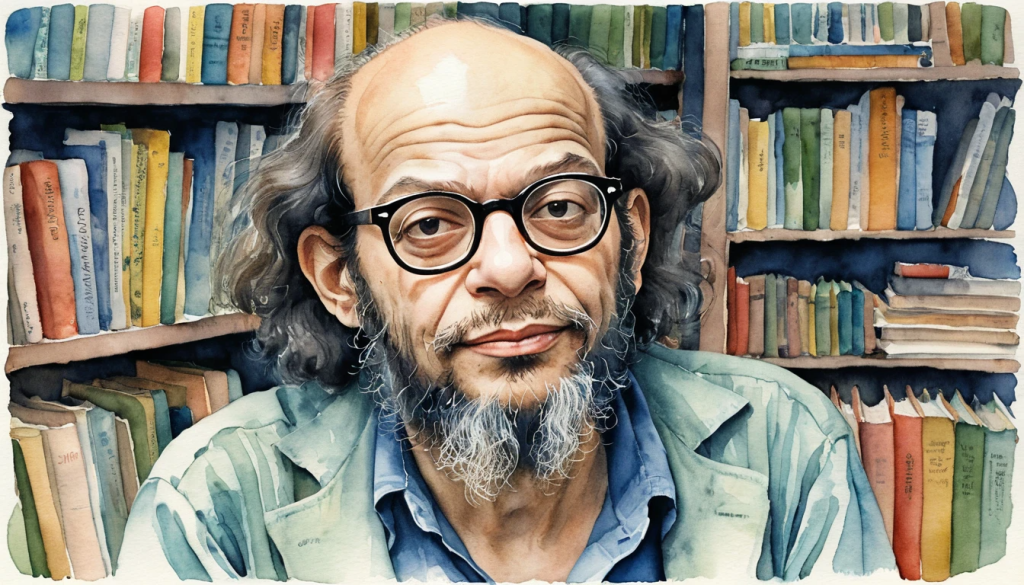
June 3
Celebrating the Life of Allen Ginsberg
(1926–1997)
The Legacy of Allen Ginsberg
On June 3, we remember the birth of Allen Ginsberg, one of the most influential American poets of the 20th century and a leading figure of the Beat Generation. Ginsberg’s verse and voice—most famously in his poem “Howl” (1956)—radically redefined the possibilities of English-language poetry, inspiring a generation and leaving an indelible mark on the evolution of modern English.
Radical Verse and the Expansion of English Poetic Language
Ginsberg’s work was revolutionary not only for its themes—spiritual searching, sexual liberation, political dissent—but also for its language:
“Howl” – Ginsberg’s signature poem shattered conventional forms with its long lines, repetitive incantations, and vivid, street-level diction. Words like “angelheaded hipsters” and “Moloch” entered the American poetic lexicon as symbols of rebellion and cultural critique.
Slang and vernacular – Ginsberg’s poetry was rooted in the spoken rhythms of American English, blending Beat slang, spiritual mantras, and jazz-inflected cadences into a new literary music.
Profanity as poetry – His unflinching use of profanity and taboo subjects challenged the boundaries of “acceptable” English in print, helping to expand the scope of public language in poetry and beyond.
A Voice of Protest and Countercultural English
Ginsberg’s radical embrace of colloquial language, political critique, and personal revelation reshaped American English:
- He championed “first thought, best thought”—a writing philosophy that encouraged spontaneous expression, influencing how English was used in poetry, song lyrics, and even protest slogans.
- His open embrace of spirituality and Eastern philosophy (with terms like “mantra,” “karma,” “Buddha”) brought previously foreign words into the vocabulary of American and global English.
From the Beats to Pop Culture English
Ginsberg’s influence extended far beyond the printed page:
Pop culture idioms – Words like “Beat” (from “beatific” or “beaten down”), “hipster,” and “visionary” became part of mainstream English, defining an era of artistic rebellion and restless energy.
Spoken-word performance – His style inspired generations of spoken-word poets and performance artists, blending rhythm and rhetoric in new ways that continue to shape English performance poetry.
A Linguistic and Cultural Legacy
The language of Ginsberg’s verse became a living record of postwar America’s cultural revolution:
- “Howl” and other works broadened the English poetic vocabulary to include the voices of the marginalized and the disenchanted, paving the way for later movements in civil rights, LGBTQ+ rights, and anti-war activism.
- Phrases and images from Ginsberg’s poetry have become part of global English—from the spiritual cadences of meditation communities to the political chants of protests.
English Reimagined
On June 3, we celebrate not just the birth of Allen Ginsberg, but the birth of a new poetic language—one that married the mystical with the profane, the political with the personal. Ginsberg’s radical English remains a testament to the power of language to shock, heal, and liberate, ensuring that the voice of the Beat Generation will forever echo in the evolving rhythms of English itself.
Allen Ginsberg didn’t just write poetry—he detonated it.
 What Happened on This Day?
Leave a comment