
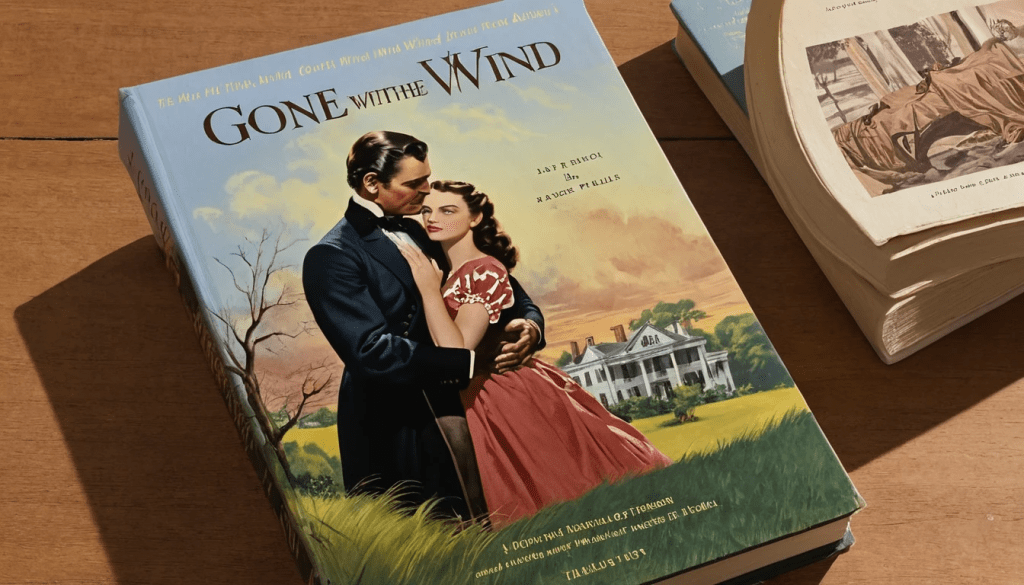
June 30, 1936
Publication of Gone with the Wind
On June 30, 1936, Margaret Mitchell’s Gone with the Wind was published in the United States. The sweeping Civil War-era novel became one of the best-selling English-language books of the 20th century, winning the Pulitzer Prize in 1937 and spawning a globally iconic film adaptation in 1939.
Beyond its narrative and commercial success, Gone with the Wind left a lasting imprint on the English language, especially in how it shaped Southern idiom, romantic archetypes, and cultural metaphor.
Phrases That Entered English from the Title Alone
- The novel’s title phrase, “gone with the wind,” became a universal English idiom, now used to evoke loss, nostalgia, or the passing of an era:
- E.g., “His chances of winning were gone with the wind.”
- It appears frequently in political speeches, literary essays, and headlines referring to vanished grandeur or ideals.
- The phrase “Gone with the Wind–era” evolved in media and criticism to mean romanticized portrayals of the Old South or outdated attitudes, often used critically:
- “The company’s policies felt like something from a Gone with the Wind–era boardroom.”
Character Idioms: “Scarlett-like” and “Rhett Butler Charm”
- “Scarlett-like” (from protagonist Scarlett O’Hara) came to describe a certain headstrong, manipulative, but captivating woman, entering journalistic and pop-cultural English:
- “Her ambition and charm made her downright Scarlett-like in the courtroom.”
- “Rhett Butler” became shorthand for a rakish, witty, emotionally detached romantic lead—terms like “Butler charm” or “Rhett-style” are occasionally found in reviews and character descriptions.
These character-derived idioms helped enrich English shorthand for personality types and social roles.
Regional Vocabulary and Southern English
The novel helped popularize and canonize certain Southern American English expressions and dialectical stylings, including:
- “Fiddle-dee-dee!” – Scarlett’s iconic exclamation, now symbolic of flippant dismissal in English, even in parody.
- Use of “Miss” + first name (“Miss Melanie”) reinforced Southern modes of address in English awareness.
- Familiarization with regionalisms such as:
- “Y’all” (though already common, the novel brought it wider attention)
- “Ain’t fittin’” or “Lawsy me” – Reflecting period-accurate, though often caricatured, speech.
These phrases contributed to the popular English understanding (and sometimes stereotyping) of Southern vernacular.
Literary English and Cultural Reference
- The novel’s dramatic tone and romantic historicism influenced English narrative style and romantic literary tropes, encouraging the rise of the historical romance genre.
- Descriptions such as “plantation elegance” or “Southern belle mentality” became commonplace in English literary and cinematic critique.
- The phrase “Frankly, my dear…” (popularized by the film, but rooted in Mitchell’s dialogue) became one of the most recognizable English quotes of emotional detachment.
Contested English Vocabulary: Romance, Race, and Memory
Gone with the Wind also shaped the language of cultural memory and critique:
- Phrases like “Lost Cause romanticism” and “Old South nostalgia” grew in part from responses to the novel’s portrayal of slavery and the Confederacy, now widely debated in academic and public English.
- Terms like “revisionist history” and “mythologizing the South” often invoke Gone with the Wind as a touchstone.
The book’s complex legacy fueled discussions in English about how language reflects power, race, and myth—especially in literature.
Enduring English Presence
Nearly a century after its release, Gone with the Wind remains referenced, quoted, debated, and reframed in English-speaking culture:
- It’s cited in political rhetoric, e.g., “His support evaporated, gone with the wind.”
- Referenced in cultural criticism, satire, and parody from The Simpsons to stand-up comedy.
- The characters’ names and lines remain embedded in English-speaking media as symbols of flawed glamour and historical drama.
Gone with the Wind’s English Echo
From its evocative title to its influential characters, Gone with the Wind embedded a host of idioms, archetypes, and dialectic rhythms into modern English. Its impact continues to shape not only how we tell stories, but how English remembers and reimagines the past.
A single novel, but a language legacy that endures.
 What Happened on This Day?
Leave a comment