
August 26, 1910
A Language for Truth and Experience
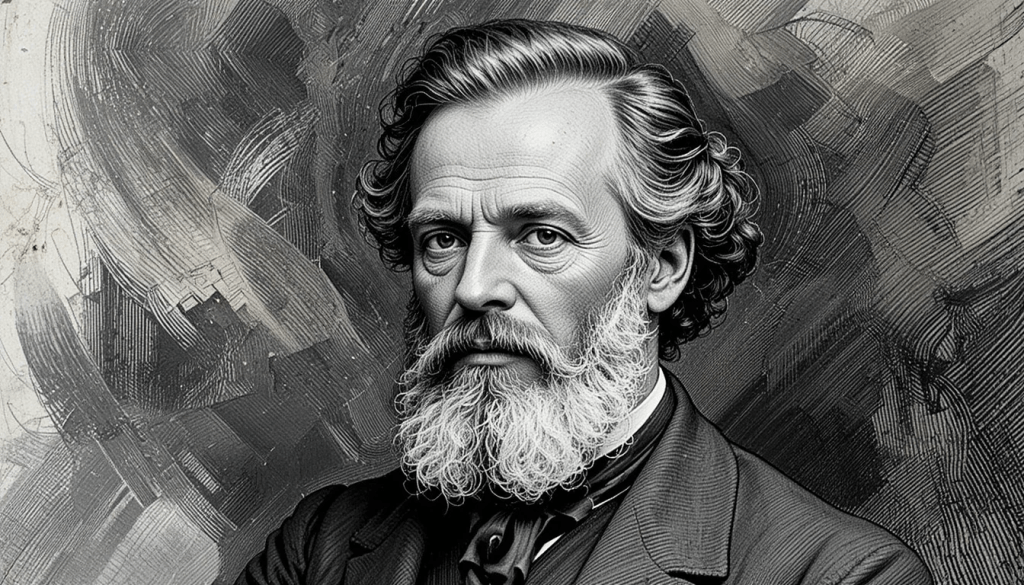
On August 26, 1910, the American philosopher and psychologist William James died at his home in New Hampshire. His passing marked the end of one of the most influential intellectual careers of the modern era. Known as the “father of American psychology” and one of the founders of pragmatism, James was a thinker who bridged philosophy, science, literature, and religion. More than simply generating ideas, he introduced and popularized a vocabulary that entered English permanently, shaping the way modern speakers describe thought, belief, and experience. His words and metaphors became tools for intellectual inquiry but also slipped into everyday idiom, giving English speakers new ways to think and talk about the mind, faith, and the practical meaning of truth.
Vocabulary and Terminology from James
- “Stream of consciousness” – James coined this metaphor in The Principles of Psychology (1890) to describe the unbroken, flowing nature of human thought. It became one of the most famous phrases in English psychological and literary discourse, later applied to narrative technique by novelists like Virginia Woolf, James Joyce, and William Faulkner.
- “Pragmatism” – Although the concept was discussed by Charles Sanders Peirce, James’s lectures and writings gave the term widespread visibility. In English today, pragmatic is a common adjective meaning practical, problem-solving, or results-oriented—a direct legacy of James’s philosophical framing.
- “Radical empiricism” – His phrase for a philosophical stance that insists on taking immediate experience as the foundation of knowledge. It entered English academic vocabulary as a marker of James’s unique epistemology.
- “The will to believe” – From his 1896 essay, this phrase offered a defense of commitment in the absence of proof. It became a durable English idiom not only in philosophy of religion but also in cultural commentary, invoked whenever conviction is chosen over doubt.
- “Varieties of religious experience” – The title of his 1902 work became a phrase in its own right, used in English scholarly and popular writing to suggest the wide spectrum of human spirituality.
- “Cash value of ideas” – James’s metaphor for truth as something useful and actionable gave English a colorful shorthand for practicality. It was quickly adopted into journalistic and political commentary.
Influence on English Thought and Language
- Psychology: James established a vocabulary for studying the mind in English. Phrases like habit formation, selective attention, and stream of consciousness remain standard terminology in psychology.
- Philosophy: His articulation of pragmatism and radical empiricism gave Anglo-American philosophy its defining lexicon for more than a century. Later philosophers, from John Dewey to Richard Rorty, worked in a language that James had set in place.
- Literature: James’s metaphors were absorbed into the literary world. The stream of consciousness became the defining term of high modernist narrative technique. Writers from Joyce to Woolf built their English novels around it, ensuring its place in literary theory.
- Religion and Culture: The phrase varieties of religious experience provided English with a conceptual tool for describing spiritual pluralism. It remains a standard term in theology, sociology, and comparative religion.
- Everyday Speech: The adjective pragmatic—once an obscure philosophical word—entered general English thanks to James, where it now describes politicians, leaders, and practical solutions in common discourse.
Conclusion
The death of William James on August 26, 1910, closed the career of a man who not only shaped modern philosophy and psychology but also reshaped the English language itself. His metaphors and formulations—“stream of consciousness,” “the will to believe,” “varieties of religious experience,” “cash value of ideas”—gave English speakers enduring tools for describing the inner life, the pursuit of truth, and the workings of belief. His influence spread across psychology, philosophy, literature, religion, and journalism, proving that a philosopher’s true legacy may rest not just in abstract theories but in the words and phrases that enter the bloodstream of a language. James remains a prime example of how a single thinker can leave behind not only a body of work but also a linguistic inheritance that continues to shape English intellectual and cultural life more than a century after his death.
William James — the man who turned thought into the very words we think with.
Curious about what happened today in history? Want to learn a new word every day?
You’ll find it all—first and in one place—at The-English-Nook.com!
If you love languages, this is your space.
Enjoy bilingual short stories, fun readings, useful vocabulary, and so much more in both English and Spanish.
Come explore!
 What Happened on This Day?
Leave a comment