
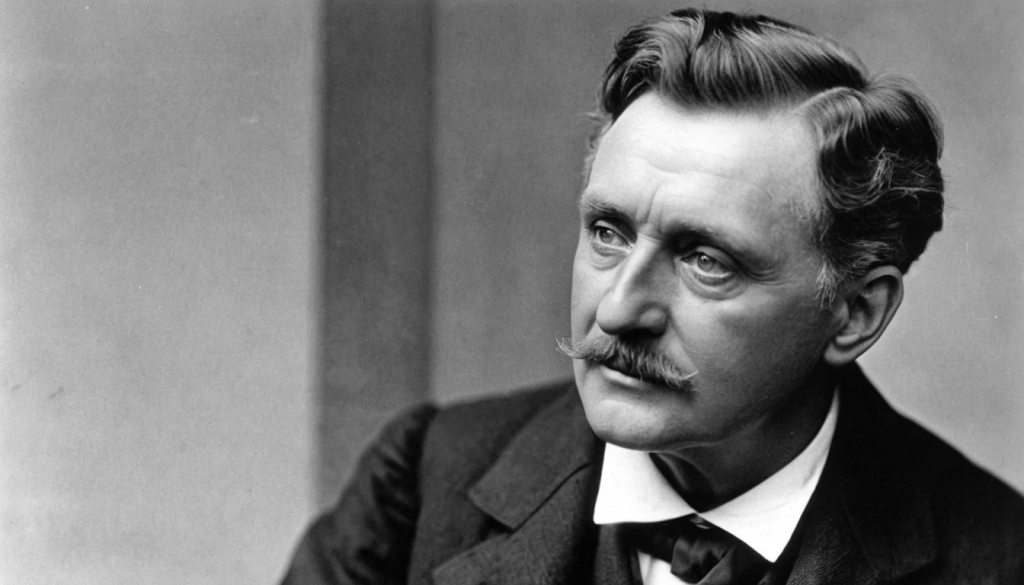
September 11, 1862
The Short Story Craftsman Who Twisted English into Irony and Surprise
On September 11, 1862, William Sydney Porter, better known by his pen name O. Henry, was born in Greensboro, North Carolina. Rising from a troubled life that included financial struggles and imprisonment, O. Henry went on to become one of the most beloved and widely read American short story writers of the late 19th and early 20th centuries. His tales, filled with urban detail, everyday characters, and sharp irony, shaped not only American literature but also the English vocabulary of storytelling itself.
O. Henry’s mastery of the “twist ending” and his blend of wit, pathos, and irony introduced enduring terms, idioms, and stylistic markers into English-language literary criticism and popular imagination.
1. The Vocabulary of the Short Story
O. Henry’s works helped fix key narrative terms into English critical usage:
- “O. Henry ending” — a phrase still used in English today to describe any ironic or surprising conclusion.
- “Twist ending” — now a staple term in English storytelling and criticism, strongly associated with his work.
- “Urban realism” — used to describe his depictions of New York life, where ordinary people became central literary subjects.
- “Slice of life” — a phrase popularized in English criticism to describe his tightly focused storytelling about everyday events.
By turning brevity into brilliance, O. Henry helped shape the vocabulary critics still use to evaluate the short story form.
2. Irony and Wit in English Expression
O. Henry’s defining contribution was his ironic narrative style, which left behind a lasting set of linguistic markers in English:
- “O. Henry irony” — used in English to signal sudden reversals that reveal both humor and cruelty in human affairs.
- “Comic pathos” — an expression coined to describe the bittersweet laughter in his tales.
- “Street-level wit” — English critical shorthand for his humor grounded in working-class life and colloquial speech.
- “American irony” — his works helped fix irony as a recognizable American mode of storytelling in English discourse.
Through this vocabulary, O. Henry’s influence stretched beyond literature into how irony itself was described in English cultural criticism.
3. Popular Storytelling and Everyday Language
Unlike many “high literary” figures, O. Henry’s language drew directly from colloquial English, enriching the lexicon with everyday vibrancy:
- His stories gave rise to “O. Henryesque”, still used in English to describe plots full of coincidence, humor, and sudden turns.
- He celebrated the “little man” in English expression, making ordinary lives the stuff of art.
- His playful idioms often crossed into journalism and popular English, embedding narrative tricks into daily speech.
Thus, O. Henry’s influence extended beyond literature into the living idiom of English urban storytelling.
4. Critical Reception and Terminology
English-language critics have long relied on certain terms and idioms to describe O. Henry’s contribution:
- “Master of surprise” — a recurring English phrase in reviews.
- “O. Henry school” — a label given in English criticism to other writers who imitated his ironic brevity.
- “The American Maupassant” — a comparison in English criticism that underscores his role in refining short fiction.
- “Ironist of the everyday” — English literary shorthand for his way of turning common lives into unexpected parables.
His style thus became a reference point in English literary vocabulary itself.
5. Enduring Legacy in English Language and Culture
More than a century after his death, O. Henry’s linguistic afterlife continues:
- In literature — the phrase “O. Henry ending” remains shorthand for irony in English-language creative writing workshops.
- In journalism — reporters invoke O. Henry when describing real-life events with unexpected reversals.
- In popular culture — “O. Henryesque” has become a colloquial way to describe coincidences and plot twists in movies and television.
Even outside his stories, O. Henry’s name became an adjective, a critical category, and a metaphor, securing his place not just in literature, but in the English language itself.
Glossary of Enduring Expressions from O. Henry
- O. Henry ending — ironic or surprising conclusion.
- O. Henryesque — witty, coincidental, twist-filled narrative.
- Twist ending — narrative conclusion with unexpected reversal.
- Comic pathos — bittersweet humor tinged with sadness.
- Urban realism — detailed, colloquial depictions of city life.
- Ironist of the everyday — storyteller turning ordinary life into art.
O. Henry’s Twisting Legacy in English
O. Henry transformed the short story into a linguistic laboratory, where wit, irony, and brevity fused into lasting English idioms. His influence ensured that “O. Henry ending,” “O. Henryesque,” and “twist ending” became permanent fixtures of English critical vocabulary, far beyond his own works.
Through his stories, he democratized English literary style, proving that street talk, coincidences, and common people could shape the very words critics and readers use to describe literature. His legacy is not only the hundreds of stories he wrote, but the language of irony and surprise that English continues to carry in his name.
When O. Henry wrote, English itself learned how to wink.
Curious about what happened today in history? Want to learn a new word every day?
You’ll find it all—first and in one place—at The-English-Nook.com!
If you love languages, this is your space.
Enjoy bilingual short stories, fun readings, useful vocabulary, and so much more in both English and Spanish.
Come explore!
 What Happened on This Day?
Leave a comment