
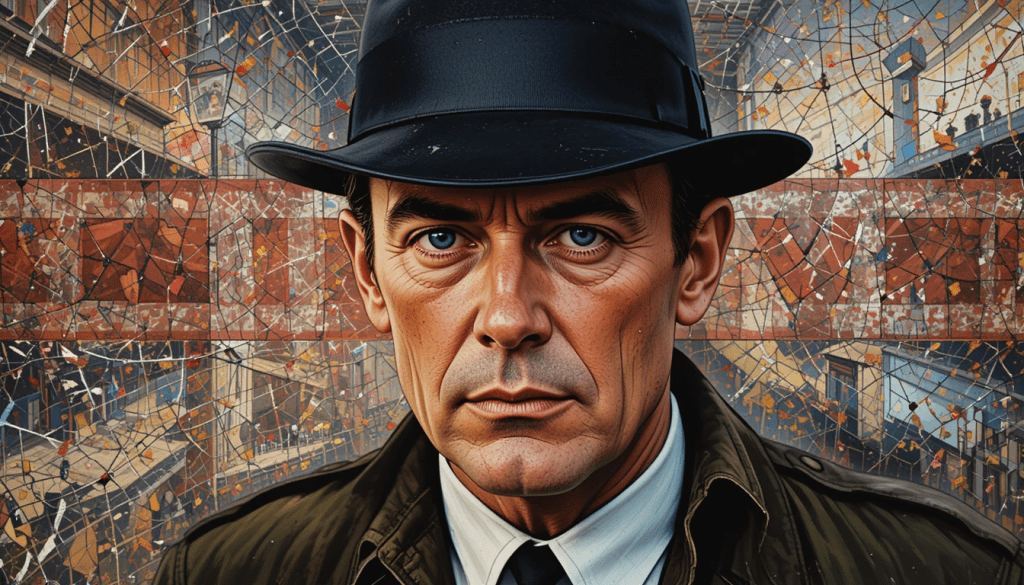
September 17, 1908
The Prolific Penman Who Expanded the Vocabulary of Detective and Crime Fiction in English
On September 17, 1908, John Creasey was born in Southfields, Surrey. A novelist of staggering productivity—publishing over 600 books under more than 20 pseudonyms—Creasey became one of the most influential voices in English-language crime and suspense fiction. His contribution was not merely quantitative: he helped forge and popularize a rich lexicon of detective, espionage, and thriller storytelling that still shapes the genre today.
1. Pseudonyms and Genre Language
Creasey’s prolific output meant he wrote under many names, each associated with a slightly different sub-genre of crime writing. This use of multiple authorial identities reinforced in English publishing circles the terms:
- “house pseudonym” — a name shared or used by publishers for branding purposes.
- “pen-name proliferation” — critics coined this phrase to describe Creasey’s astonishing use of alter-egos.
- His pseudonyms (e.g., Anthony Morton, Gordon Ashe, J. J. Marric) themselves became part of English mystery-reading culture, adding to the vocabulary of genre branding.
This pattern normalized the idea that crime fiction could be serialized and branded, shaping both English publishing and its terminology.
2. Detective Fiction Vocabulary
Creasey founded the Crime Writers’ Association (CWA) in 1953, further cementing his influence on English crime-writing discourse. His novels, particularly the Inspector West series and the Gideon of Scotland Yard books, helped standardize and popularize terms like:
- “Scotland Yard detective” — shorthand for a quintessentially English sleuth, both in fiction and journalism.
- “CID man” (Criminal Investigation Department) — used repeatedly in Creasey’s prose, this acronym entered popular English vocabulary through police procedurals.
- “crime-busting” — an idiom his thrillers helped circulate in English crime reportage and reviews.
By weaving these phrases into accessible storytelling, Creasey ensured that the jargon of English policing entered the global detective lexicon.
3. Suspense and Thriller Language
Creasey’s espionage novels and thrillers (like the Dr. Palfrey series) played a major role in shaping the rhetoric of Cold War–era English thrillers. His books introduced and popularized terms such as:
- “master spy” — a staple expression in English thrillers describing figures of intrigue and menace.
- “international conspiracy” — a phrase that became standard in pulp and later cinematic English thrillers.
- “counter-espionage” — often dramatized in his fiction, embedding the term more deeply in English popular consciousness.
This vocabulary set the stage for later spy novelists like Ian Fleming and John le Carré, whose work built upon Creasey’s foundations.
4. Seriality and Popular Culture Terms
Because Creasey wrote in massive volume, he contributed to the English critical vocabulary of “series fiction” and “genre formula.” His prolific habit inspired terms like:
- “Creaseyan output” — used by reviewers to describe unusually prolific writers.
- “production-line novel” — an expression in English criticism tied to his reputation for speed and consistency.
- “popular thriller” — a marketing phrase popularized in part through his work, now standard in publishing English.
By doing so, he normalized the idea of crime fiction as both literary entertainment and industrial production.
5. Enduring Linguistic Legacy
Creasey’s novels may not all remain in print, but their vocabulary lives on in English detective fiction, journalism, and media. Words and idioms like “Scotland Yard man,” “master spy,” and “crime-busting hero” still appear in descriptions of fictional detectives and real-life law enforcement alike. His founding of the CWA further reinforced crime-writing jargon in English critical and publishing circles.
Creasey’s Language of Crime and Suspense
Born on September 17, 1908, John Creasey did more than fill shelves with hundreds of novels—he helped establish the lexical foundation of English detective and thriller storytelling. Through his pen names, serialized detectives, and tales of espionage and crime-busting, he embedded terms like “Scotland Yard detective,” “master spy,” and “international conspiracy” into the cultural imagination. His linguistic impact shows how even pulp and popular fiction can shape the enduring vocabulary of English literature and media.
From pen names to “master spies,” Creasey didn’t just write stories—he wrote the very language of crime and suspense.
Curious about what happened today in history? Want to learn a new word every day?
You’ll find it all—first and in one place—at The-English-Nook.com!
If you love languages, this is your space.
Enjoy bilingual short stories, fun readings, useful vocabulary, and so much more in both English and Spanish.
Come explore!
 What Happened on This Day?
Leave a comment