
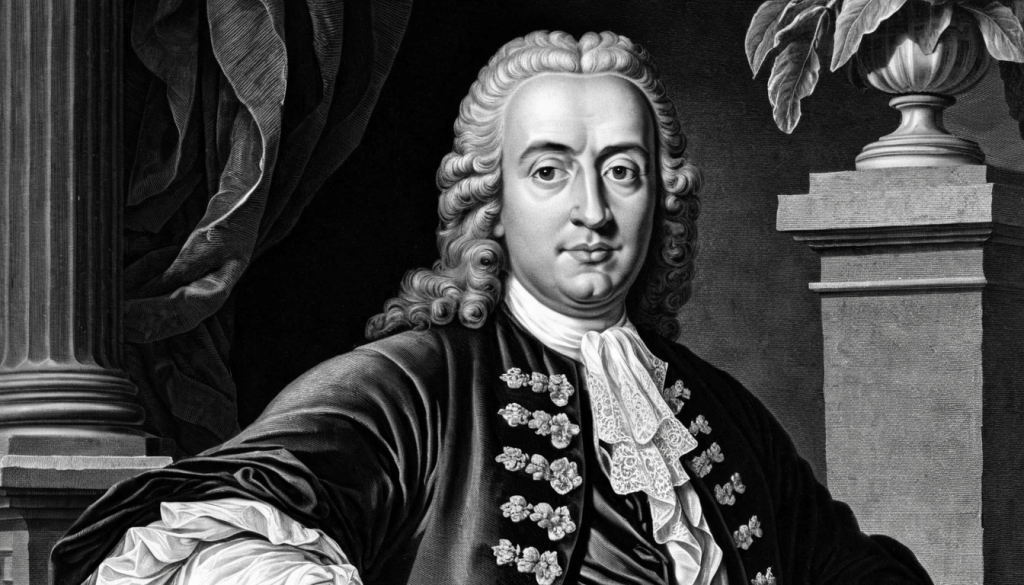
November 6, 1671
The Actor, Playwright, and Poet Who Gave English Comedy Its Theatrical Voice
On November 6, 1671, Colley Cibber was born in London — a man who would become one of the most colorful and controversial figures in eighteenth-century English letters. Actor, playwright, theatre manager, and later Poet Laureate of England, Cibber embodied the bustling, witty, and performative energy of Augustan England. His career bridged the worlds of stage and page, shaping the sound and style of English comedy and theatrical speech.
1. The English Stage Comes Alive
Cibber rose to prominence in London’s Restoration and early-Georgian theatres, where language, wit, and social satire filled the stage.
As both actor and dramatist, he helped refine the art of English comic dialogue, balancing elegant rhythm with spoken realism. His plays, such as Love’s Last Shift (1696) and The Careless Husband (1704), brought to the stage a polished mix of moral sentiment and urbane humor, marking a shift from bawdy Restoration farce toward a more moral, conversational English comedy.
Through his performances and writing, Cibber helped define what “theatrical English” sounded like — expressive, witty, and attuned to the cadences of social life.
2. The Poet Laureate and the Mock-Hero of English Satire
In 1730, Cibber was appointed Poet Laureate, a post that sparked both admiration and ridicule. His appointment provoked fierce responses from literary contemporaries, especially Alexander Pope, who immortalized him (mockingly) as the “King of Dunces” in The Dunciad.
Ironically, this satire guaranteed Cibber a form of linguistic immortality — his name became shorthand in English criticism for the comic clash between ambition and artistry. Through this literary rivalry, Cibber’s voice — sometimes mocked, sometimes defended — became part of the ongoing conversation of English letters.
3. The Language of Performance and Public Life
Cibber’s true genius lay in performance — both on stage and in prose. His Apology for the Life of Colley Cibber (1740) remains a landmark of early English autobiography, offering a vivid, conversational account of theatrical life.
His prose style — personal, self-aware, and lively — prefigured later English essayists and memoirists, combining theatrical flair with reflective wit.
He showed that English could be spoken, performed, and lived — not just written — and that the theatre was a crucible for the evolving rhythms of modern English.
4. Legacy: The Voice of English Theatrical Modernity
Though often dismissed by critics of his day, Cibber’s influence endures in the evolution of English comedy and theatrical realism.
His blend of humor, sentiment, and self-consciousness helped shape the moral comedy that would lead toward Sheridan and Goldsmith.
He also preserved, through his memoirs, a record of how spoken English sounded on the early modern stage, capturing idioms, gestures, and tones that bridged Restoration wit and Enlightenment polish.
The Actor Who Became an English Institution
Born on November 6, 1671, Colley Cibber gave English both laughter and language — words that danced, speeches that sparkled, and a personality that refused to fade.
In his life, the English stage found its voice; in his prose, English itself found its theatre.
He didn’t just write English — he performed it into brilliance.
Curious about what happened today in history? Want to learn a new word every day?
You’ll find it all—first and in one place—at The-English-Nook.com!
If you love languages, this is your space.
Enjoy bilingual short stories, fun readings, useful vocabulary, and so much more in both English and Spanish.
Come explore!
 What Happened on This Day?
Leave a comment