
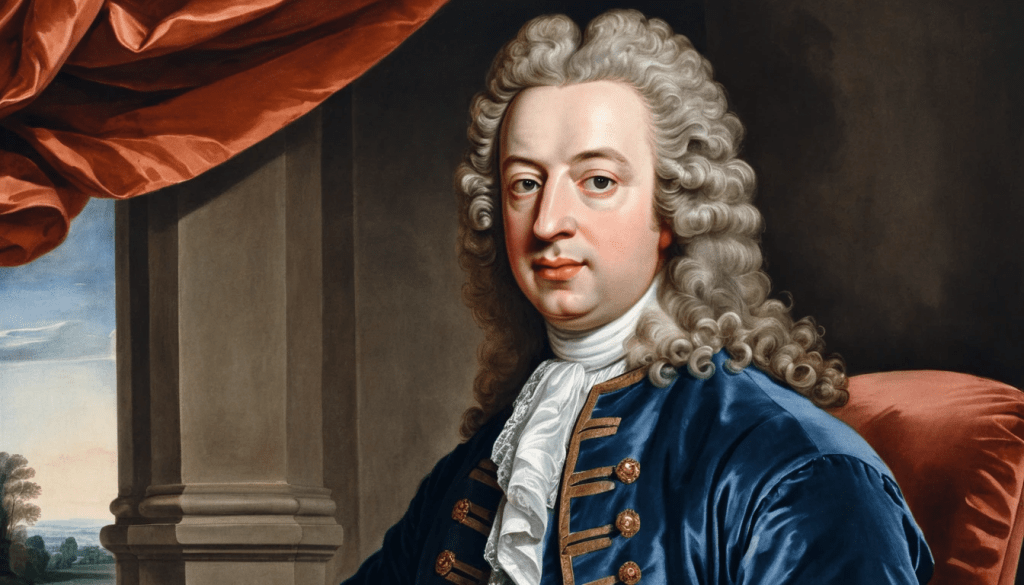
January 19, 1729
When English Comedy Learned Precision, Balance, and Intelligence
William Congreve died on January 19, 1729, leaving behind a body of work that permanently refined how English could be sharp without being crude, elegant without being dull, and intellectual without losing theatrical vitality. As the greatest playwright of the Restoration comedy tradition, and the author of The Way of the World (1700), Congreve represents a high point in the development of polished, socially intelligent English prose and dialogue.
His writing did not merely entertain fashionable audiences; it trained English to think quickly, speak economically, and argue gracefully. Few writers have had such a concentrated impact on the sound and structure of conversational English.
1. The Perfection of English Wit
Congreve’s greatest achievement was elevating wit from verbal cleverness into a disciplined literary mode. His dialogue relies on balance, symmetry, parallelism, and carefully timed reversals. Every line does multiple kinds of work: advancing plot, defining character, and performing intellectual play.
Under Congreve, English wit became:
- concise rather than verbose
- precise rather than ornamental
- logical as well as humorous
Clarifying points
- Wit as intellectual discipline
- Economy of language
- Structural balance in sentences
2. Dialogue as Social Combat
Congreve’s plays transformed English dialogue into a form of verbal fencing. Characters spar through repartee, irony, and implication rather than overt emotion. Meaning is often carried indirectly—through tone, contrast, and timing.
This refined English’s ability to express:
- skepticism
- flirtation
- power dynamics
- moral ambiguity
Clarifying points
- Indirect meaning
- Irony as default mode
- Language as social negotiation
3. The Stabilization of Polished Prose Style
Congreve helped standardize a form of urbane, controlled English prose that influenced essay writing, criticism, and later fiction. His sentences are measured, grammatically poised, and rhythmically balanced, reflecting classical rhetorical training adapted to modern English usage.
This style reinforced English as a language capable of:
- intellectual clarity
- emotional restraint
- aesthetic symmetry
Clarifying points
- Classical rhetoric in English
- Controlled sentence architecture
- Elegance without excess
4. The Way of the World and the Maturity of English Comedy
The Way of the World is often considered the most technically perfect comedy in English. Its language is dense with nuance: contracts, conversations, misunderstandings, and reconciliations are all conducted through carefully calibrated speech.
The play demonstrated that English comedy could be:
- structurally complex
- morally serious
- linguistically exact
Clarifying points
- Complexity through dialogue
- Speech as moral action
- Comedy as intellectual form
5. Shaping English Expressions of Manners and Politeness
Congreve’s work helped define how English expresses manners, civility, and social intelligence. Politeness in his plays is never neutral—it conceals intention, desire, or critique.
This sharpened English’s capacity for:
- coded speech
- polite disagreement
- ironic courtesy
Clarifying points
- Manners as linguistic performance
- Politeness with subtext
- Social intelligence encoded in language
6. Vocabulary, Idiom, and Lasting Quotations
Congreve contributed enduring phrases and sharpened idiomatic English. Most famously, he is often (though somewhat inaccurately) credited with the sentiment behind “Hell hath no fury like a woman scorned”—a line that illustrates his ability to fuse emotional force with rhetorical control.
His language favored:
- antithesis
- epigram
- memorable phrasing
Clarifying points
- Epigrammatic style
- Quotability
- Emotional compression
7. Influence on Later English Literature
Congreve’s influence extends into:
- 18th-century satire (Pope, Swift)
- the development of the English novel
- modern comedy of manners
Writers learned from Congreve that English dialogue could sustain intelligence as pleasure, not as obstacle.
Clarifying points
- Bridge between drama and prose
- Influence on satire and fiction
- Wit as enduring literary value
8. English as a Language of Intelligence and Control
Congreve’s lasting contribution lies in demonstrating that English could reward attentiveness. His writing assumes an intelligent reader or listener, capable of catching implication and appreciating restraint.
He helped establish English as a language suited to:
- intellectual play
- ethical ambiguity
- social self-awareness
Clarifying points
- Reader engagement
- Intelligence without heaviness
- Control as aesthetic principle
Vocabulary and Stylistic Legacy
Key features of Congreve’s English:
- balanced syntax
- epigrammatic phrasing
- irony and understatement
- precision in dialogue
Concepts reinforced in English usage:
- wit
- civility
- decorum
- conversational intelligence
Conclusion
January 19 marks the death of the writer who brought English comedy to its most refined point of balance and brilliance. William Congreve did not expand English by adding excess; he refined it by removing waste. His work taught English how to be sharp without cruelty, elegant without stiffness, and intelligent without arrogance. In doing so, he helped define a standard of prose and dialogue that still underlies how English expresses wit, manners, and social thought today.
He taught English that sharpness works best when perfectly balanced
Curious about what happened today in history? Want to learn a new word every day?
You’ll find it all—first and in one place—at The-English-Nook.com!
If you love languages, this is your space.
Enjoy bilingual short stories, fun readings, useful vocabulary, and so much more in both English and Spanish.
Come explore!
 What Happened on This Day?
Leave a comment