
January 29, 1888
When English Learned the Grammar of Nonsense
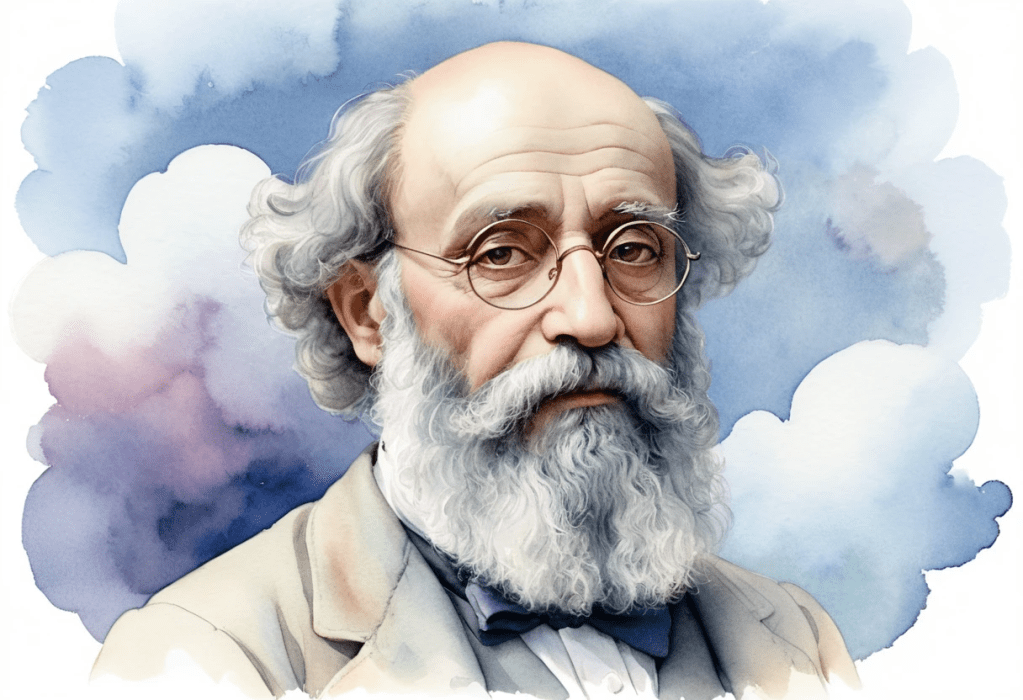
On January 29, 1888, Edward Lear died in San Remo, Italy. An English poet, illustrator, and traveler, Lear occupies a foundational place in the history of English-language literature as the great systematizer of literary nonsense. Best known for poems such as “The Owl and the Pussy-cat”, “The Dong with a Luminous Nose”, and his Book of Nonsense, Lear did far more than amuse children: he revealed that English could sustain play, illogic, and fantasy with internal coherence, musicality, and emotional depth.
Nonsense as a Serious Linguistic Mode
Lear’s “nonsense” is not random absurdity. It operates according to strict internal rules—metrical regularity, syntactic clarity, and recurring lexical patterns—that give his poems their distinctive balance of order and surprise. He showed that English could mean without referring, creating sense through rhythm, sound, and structure rather than conventional semantics.
His work introduced into English a durable vocabulary of playful invention—runcible, quangle-wangle, bong-tree—words that function grammatically even when they resist definition.
- Nonsense governed by syntax, not chaos
- Meaning generated through rhythm and repetition
- Invention treated as linguistic legitimacy
Through Lear, English learned that coherence and imagination are not opposites.
Foundations of English Children’s Literature
Lear is one of the architects of modern English children’s literature, not because he simplified language, but because he trusted young readers with complexity. His poems assume an attentive ear, a tolerance for ambiguity, and a delight in sound—qualities that later writers from A. A. Milne to Dr. Seuss would inherit.
He helped normalize a child-directed English that is:
- musical rather than didactic
- playful without condescension
- emotionally suggestive without moralizing
This shift permanently altered how English addresses children as readers rather than pupils.
Comic Verse and the Music of English
Lear’s mastery of meter—especially anapestic and limerick forms—demonstrated how tightly controlled rhythm can support even the most extravagant imagery. His verses are memorable because they are prosodically exact, embedding nonsense within forms that invite memorization and recitation.
In doing so, Lear strengthened the place of comic and light verse within English literature, proving that humor could be technically rigorous and aesthetically serious.
- Regular meter as mnemonic engine
- Rhyme as structural glue
- Humor as a legitimate poetic register
His influence persists in English verse wherever wit and musicality intersect.
The Union of Image and Text
As both poet and illustrator, Lear pioneered a form of visual–verbal storytelling in English. His drawings do not merely accompany the poems; they extend and complicate them, creating a dialogue between image and text that anticipates modern picture books and graphic narratives.
This integration helped establish:
- illustration as narrative partner
- visual humor as literary technique
- multimodal storytelling as a core English tradition
Lear thus expanded English narrative beyond the purely verbal page.
Nonsense, Melancholy, and Emotional Range
Beneath Lear’s whimsy lies a persistent note of loneliness, wandering, and longing. Many of his poems center on solitary figures, perpetual travelers, and gentle outsiders. This emotional undercurrent gave English nonsense a depth that later writers would recognize as quietly profound.
He proved that playful language could carry:
- melancholy without heaviness
- emotion without realism
- meaning without explanation
In Lear’s hands, English learned to play—and to feel—at the same time.
Conclusion
Edward Lear’s death on January 29 marks the loss of a writer who permanently expanded the expressive range of English. By systematizing nonsense, uniting word and image, and trusting rhythm as a generator of meaning, he taught English how to play seriously—and how to imagine without apology.
January 29 stands as a key date in English literary history: the day we remember the poet who showed that nonsense is not the absence of meaning, but one of its most enduring forms.
Nonsense taught English how to make sense through play.
Curious about what happened today in history? Want to learn a new word every day?
You’ll find it all—first and in one place—at The-English-Nook.com!
If you love languages, this is your space.
Enjoy bilingual short stories, fun readings, useful vocabulary, and so much more in both English and Spanish.
Come explore!
 What Happened on This Day?
Leave a comment