
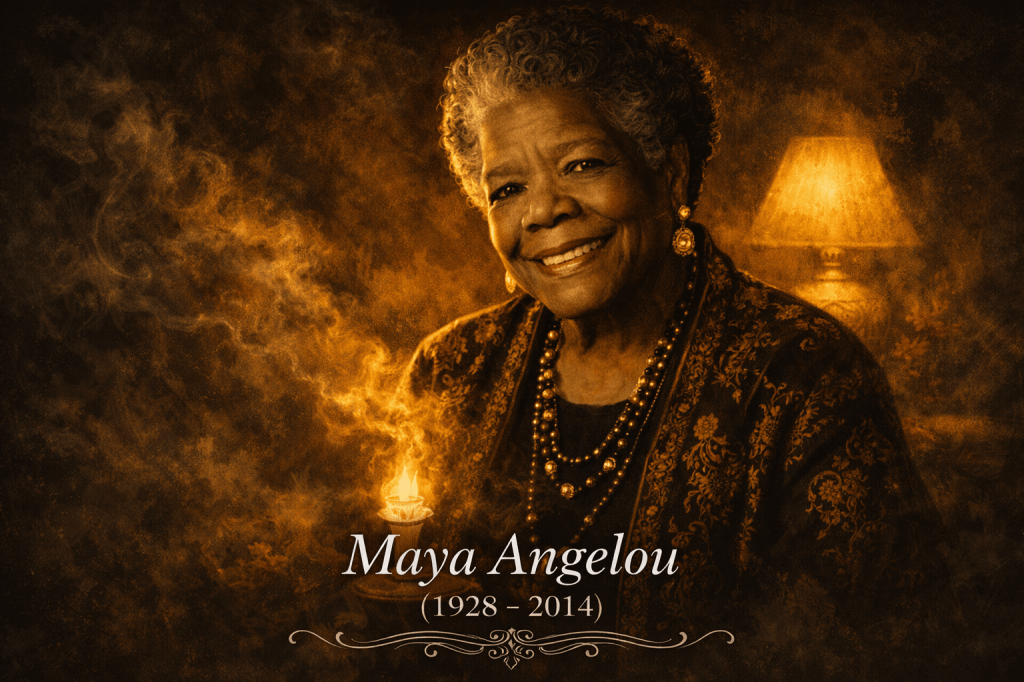
April 4, 1928
When Personal Experience Became a Transformative Literary Voice
Born on April 4, 1928, Maya Angelou became one of the most influential voices in modern American literature. Through works such as I Know Why the Caged Bird Sings, she transformed personal narrative into a powerful literary form, helping reshape how English could express identity, memory, and resilience. Her writing marked a turning point in which deeply personal and historically marginalized experiences gained a central place in literary English.
1. Elevating Autobiographical Writing in English
Angelou played a crucial role in redefining autobiographical writing, expanding its emotional and linguistic range.
Key contributions include:
- transforming autobiography into a literary and artistic form
- blending personal narrative with broader social and historical themes
- introducing a more intimate, reflective narrative voice
- foregrounding lived experience as a source of literary authority
- helping legitimize autobiographical storytelling as a central form in modern English literature
Her work reshaped how personal stories could be told—and valued—in English.
2. Expanding Poetic Expression of Identity and Resilience
Angelou’s poetry brought new depth and clarity to themes of identity, race, and strength.
Important developments include:
- articulation of complex identity through clear, powerful language
- use of repetition, rhythm, and cadence to reinforce meaning
- exploration of resilience, dignity, and selfhood in poetic form
- influence on later poets addressing social and cultural themes
- broadening the emotional and thematic scope of modern English poetry
Her voice helped make poetry more direct, accessible, and socially resonant.
3. Blending Oral Tradition with Literary English
Angelou drew deeply from spoken traditions, incorporating their rhythms and patterns into written form.
Key linguistic and cultural impacts include:
- integration of oral storytelling techniques into literary prose
- use of rhythmic, speech-like patterns in both poetry and narrative
- preservation of cultural voice and community expression through English
- blending of conversational tone with formal literary structure
- enriching English with cadences rooted in lived speech
Her work helped bridge the gap between spoken and written English.
4. Influencing Style, Tone, and Narrative Authority
Angelou’s writing style combined clarity, strength, and musicality, influencing modern English expression.
Long-term impact:
- development of a confident, declarative narrative voice
- use of lyrical prose that balances simplicity with depth
- emphasis on emotional honesty and directness
- influence on contemporary memoirists and poets
- contribution to a more inclusive and expressive literary English
Her voice demonstrated how English could carry both personal truth and collective history with equal power.
Why It Matters
The birth of Maya Angelou in 1928 marks the emergence of a writer who transformed the expressive possibilities of English. By elevating personal narrative, integrating oral traditions, and redefining poetic voice, she helped shape a more inclusive and powerful literary language.
Through her work, English became a medium not only for storytelling—but for identity, resilience, and the affirmation of human experience.
She turned lived experience into language—and made English speak from within.
 What Happened on This Day?
Leave a comment