
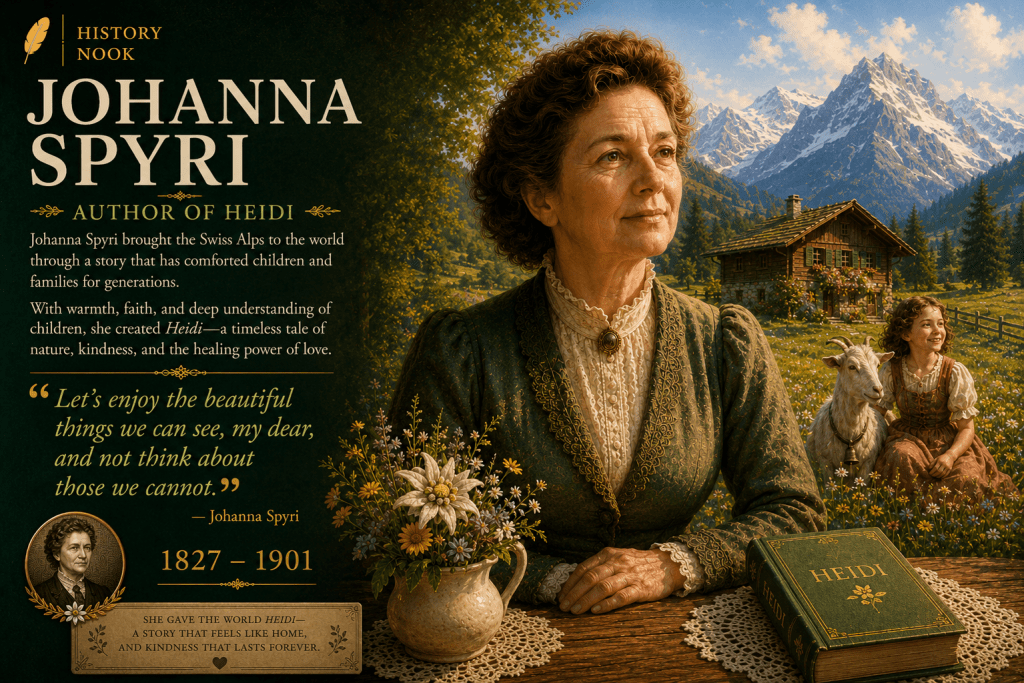
June 12, 1827
When a Swiss Story Became Part of English Childhood
Born on June 12, 1827, Johanna Spyri became one of the most influential writers in the history of children’s literature. Although she wrote in German and was not an English-language author, her novel Heidi reached generations of English-speaking readers through translation, adaptation, and international popularity.
Over time, Heidi became more than a translated book. It became part of the shared literary experience of childhood throughout much of the English-speaking world.
Few children’s stories have crossed linguistic boundaries so successfully.
Bringing International Literature into English Childhood
Spyri’s success demonstrated that children’s literature could travel across cultures and languages without losing its emotional power.
Through translation, English-speaking readers encountered Swiss landscapes, Alpine traditions, and cultural perspectives that differed from their own. The novel expanded the range of experiences available within children’s publishing and helped strengthen the role of translated literature in English literary culture.
Stories no longer needed to originate in English to become part of English childhood.
Literature became a bridge between cultures.
Shaping the Language of Children’s Storytelling
One reason Heidi endured is that it helped popularize themes that became central to modern children’s literature.
The novel emphasizes personal growth, resilience, kindness, friendship, and a deep connection with nature. Childhood is portrayed as a meaningful stage of emotional and moral development rather than simply preparation for adulthood.
Its influence can be seen in countless later stories centered on young protagonists discovering themselves and the world around them.
The language of childhood became richer and more emotionally nuanced.
Influencing English Literary Culture Through Adaptation
The influence of Heidi extended far beyond the printed page.
Adaptations in film, television, theatre, and illustrated editions introduced the story to new generations of readers. Through repeated retellings, many of its images and themes became familiar parts of English-speaking cultural memory.
The story achieved a rare level of international recognition.
A Swiss novel became a global childhood classic.
Helping Create a Global Tradition of Children’s Literature
Spyri’s work demonstrated that children’s literature could become an international cultural force.
Publishers increasingly sought stories from different countries, educators introduced translated works into classrooms, and readers became more open to literary experiences originating beyond their own cultures.
Her success encouraged a broader vision of children’s publishing.
English literary culture grew through its engagement with stories from around the world.
Why It Matters
The birth of Johanna Spyri in 1827 marks the arrival of a writer whose influence extended far beyond Switzerland.
Through Heidi, she helped shape international traditions of children’s storytelling and became one of the authors whose work entered English-language childhood through translation.
English literary culture was enriched not only by writers working within the language itself, but also by global stories that became part of its cultural memory through readers, translators, and generations of adaptation.
Key Shifts in English Through Johanna Spyri
- Translated children’s literature gained greater prominence in English publishing
- Children’s stories embraced stronger themes of personal growth and emotional development
- International settings became more common within children’s literature
- Nature-centered storytelling gained lasting popularity
- English childhood reading became more connected to global literary traditions
Some stories belong to a country.
Heidi became a story that belonged
to childhood around the world.
Also on this day!
If this moment still speaks, there is more to uncover.


 What Happened on This Day?
Leave a comment