
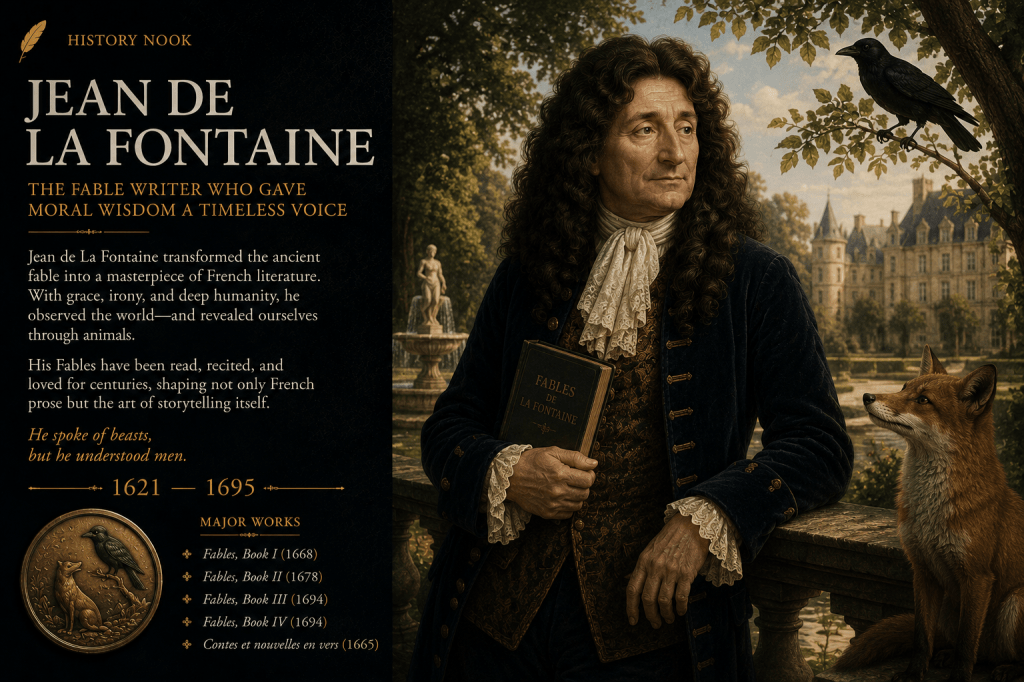
July 8, 1621
When One of the World’s Greatest Writers of Fables Was Born
Born on July 8, 1621, Jean de La Fontaine became one of the most influential fabulists in literary history. Although he wrote in French, his Fables were translated into English and became enduring classics of English literary culture. For centuries, they formed part of children’s education, moral instruction, and literary study, influencing generations of readers and writers while helping shape the tradition of English-language fable and didactic verse.
Through wit, elegance, animal characters, and moral insight, La Fontaine transformed inherited stories into literary works of lasting charm. His fables showed that brief narratives could carry deep lessons about pride, wisdom, greed, patience, power, and human weakness.
Influencing English Children’s Literature
La Fontaine’s Fables became a cornerstone of reading for young audiences in the English-speaking world. Their combination of memorable characters, compact storytelling, and clear moral reflection made them especially useful in classrooms, nurseries, and school readers.
Key contributions include: helping establish the fable as a central form of children’s literature; combining moral instruction with engaging storytelling; demonstrating the educational value of literary narrative; influencing generations of English-language children’s authors; and contributing to literature written for both instruction and enjoyment.
His works remained classroom favorites for centuries.
Shaping the English Tradition of Moral Verse
La Fontaine refined the literary fable into a sophisticated poetic form. His stories did not merely deliver lessons; they shaped those lessons through rhythm, irony, wit, and dramatic economy.
Important developments include: blending humor with moral reflection; presenting ethical lessons through memorable narratives; influencing English writers of didactic poetry; enriching traditions of verse intended to educate as well as entertain; and demonstrating the enduring appeal of allegorical storytelling.
His approach became a model for later English adaptations and original fables.
Entering English Literary Culture Through Translation
Translation carried La Fontaine’s influence far beyond the French language. English versions allowed his fables to become part of a broader literary world, where French, classical, and English traditions could meet.
Key impacts include: making his stories accessible to English-speaking readers; strengthening the place of translated literature in English education; encouraging literary exchange between France and Britain; broadening the range of European literature available in English; and enriching comparative literary traditions.
Many English readers came to know the fable tradition through versions shaped by La Fontaine’s art.
Influencing English Adaptations of Classical Fables
La Fontaine drew on older sources, including Aesop and other classical traditions, but his retellings often became influential works in their own right. In English, many later adaptations carried traces not only of ancient fable but also of La Fontaine’s wit, structure, and moral style.
Long-term impact includes: inspiring numerous English translations and adaptations; shaping the language and style of later collections of fables; influencing school readers and educational anthologies; contributing memorable stories to English literary culture; and helping preserve the fable as a living literary genre.
Many English versions owe as much to La Fontaine’s artistry as to the ancient sources behind them.
Why It Matters
The birth of Jean de La Fontaine in 1621 marks the arrival of a writer whose influence extended far beyond the French language. Through his Fables, he transformed a classical literary form into works that became an enduring part of English education, children’s literature, and moral storytelling.
In doing so, La Fontaine enriched English literary culture through translation, helping shape centuries of reading, teaching, and literary adaptation while demonstrating how stories from one language can become an integral part of another’s literary heritage.
Key Shifts in English
- The fable became a stronger part of English children’s literature.
- Moral storytelling gained new elegance through translated French verse.
- English school readers absorbed European fable traditions more deeply.
- Animal stories became lasting tools for teaching human behavior.
- Translated literature helped shape the moral imagination of young readers.
A fable may be small, but in the right hands, it can teach a whole civilization how to recognize itself.
Also on this day!
If this moment still speaks, there is more to uncover.
 What Happened on This Day?
Leave a comment