
2026 July
-
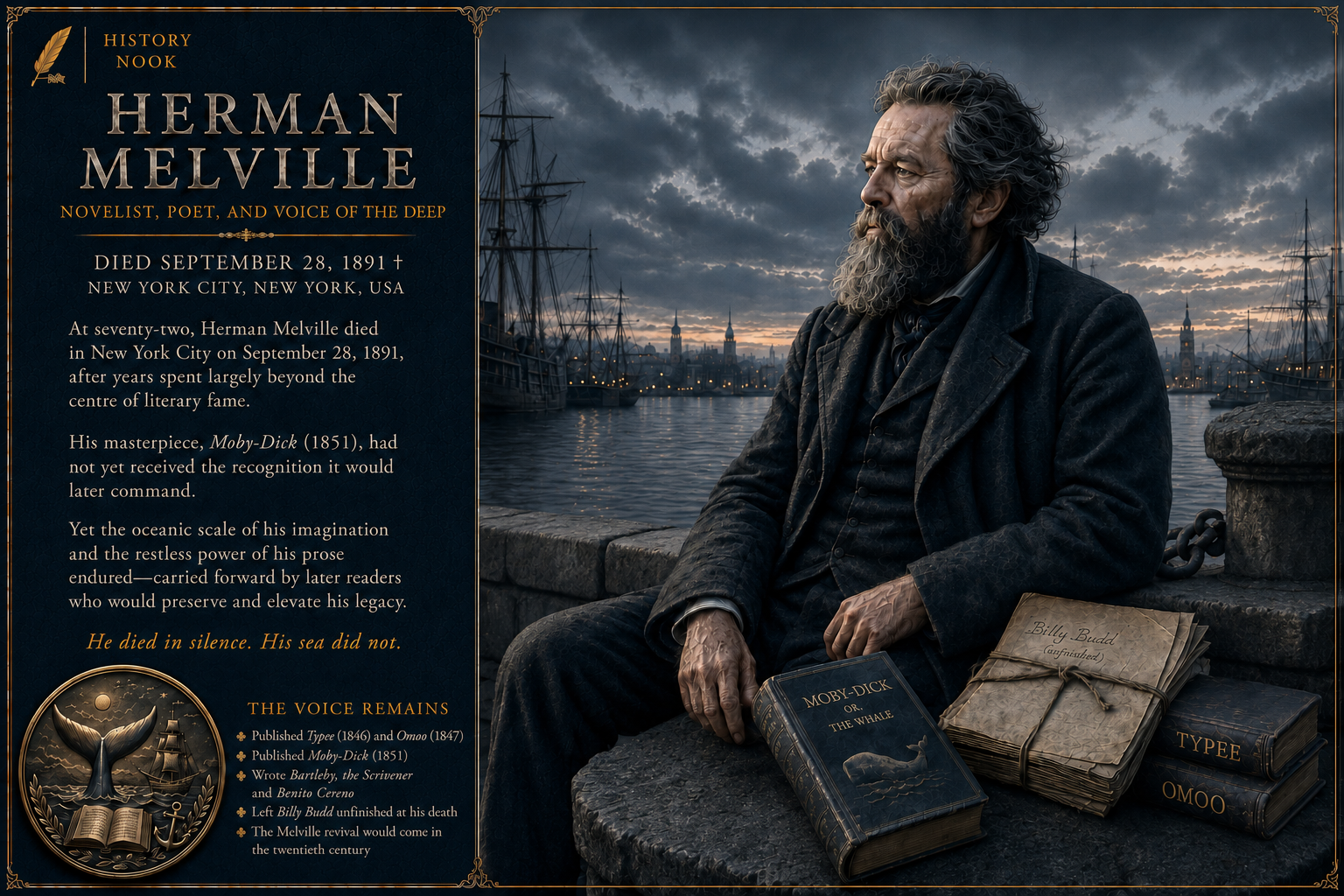
What happens when a writer dies before his greatest book is understood? Discover how Herman Melville’s death in 1891 began one of the most dramatic literary afterlives in English.
-

Daniel Defoe’s punishment in the pillory was meant to disgrace him. Instead, he answered with satire, poetry, and a lasting lesson in authorship, public language, and power.
-
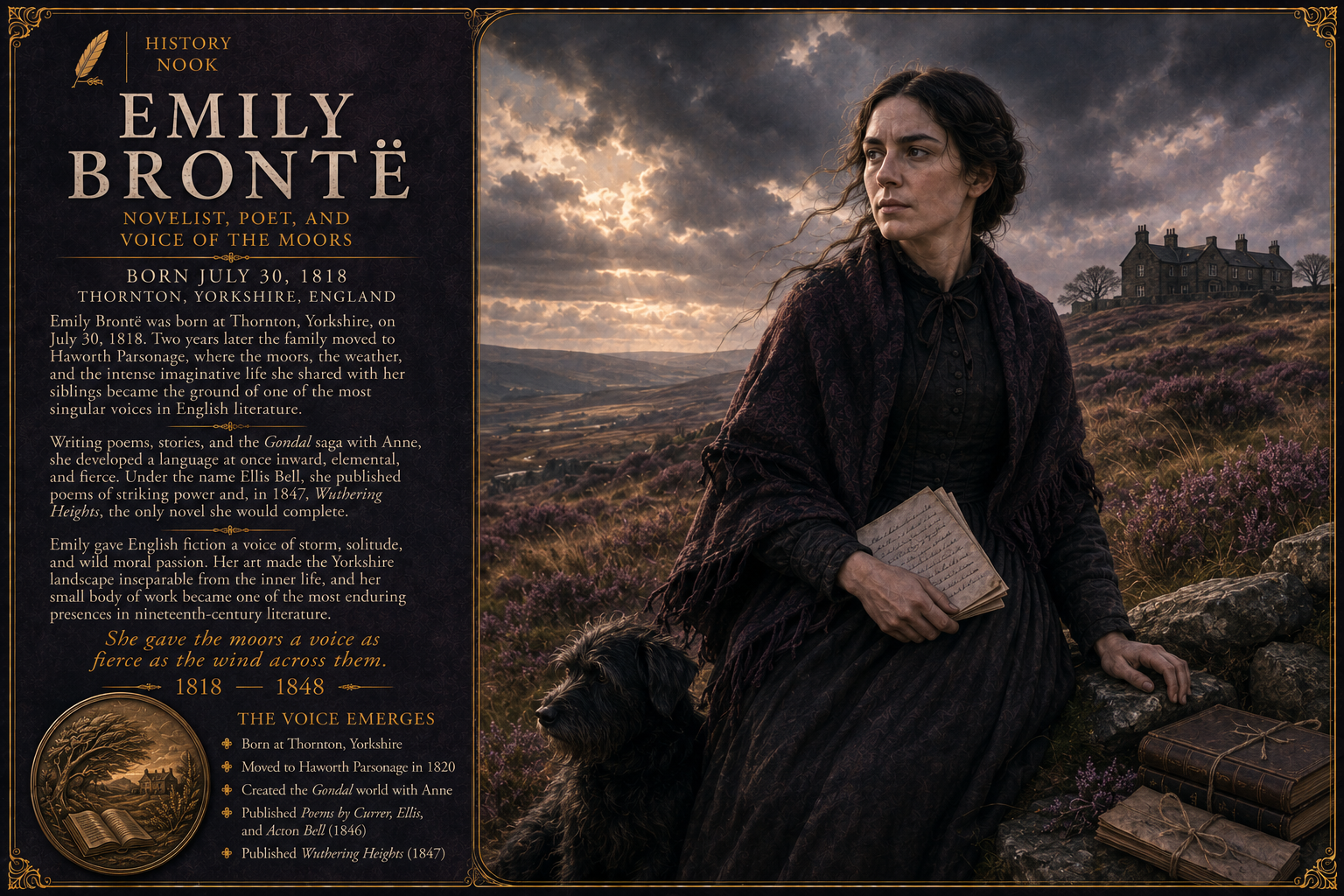
How can one novel make landscape, love, violence, and memory speak with the force of weather? Discover how Emily Brontë gave English fiction the wild inward language of Wuthering Heights.
-

Discover how Booth Tarkington captured the manners, speech, automobiles, class anxieties, and neighbourhood changes of an America entering the modern age.
-
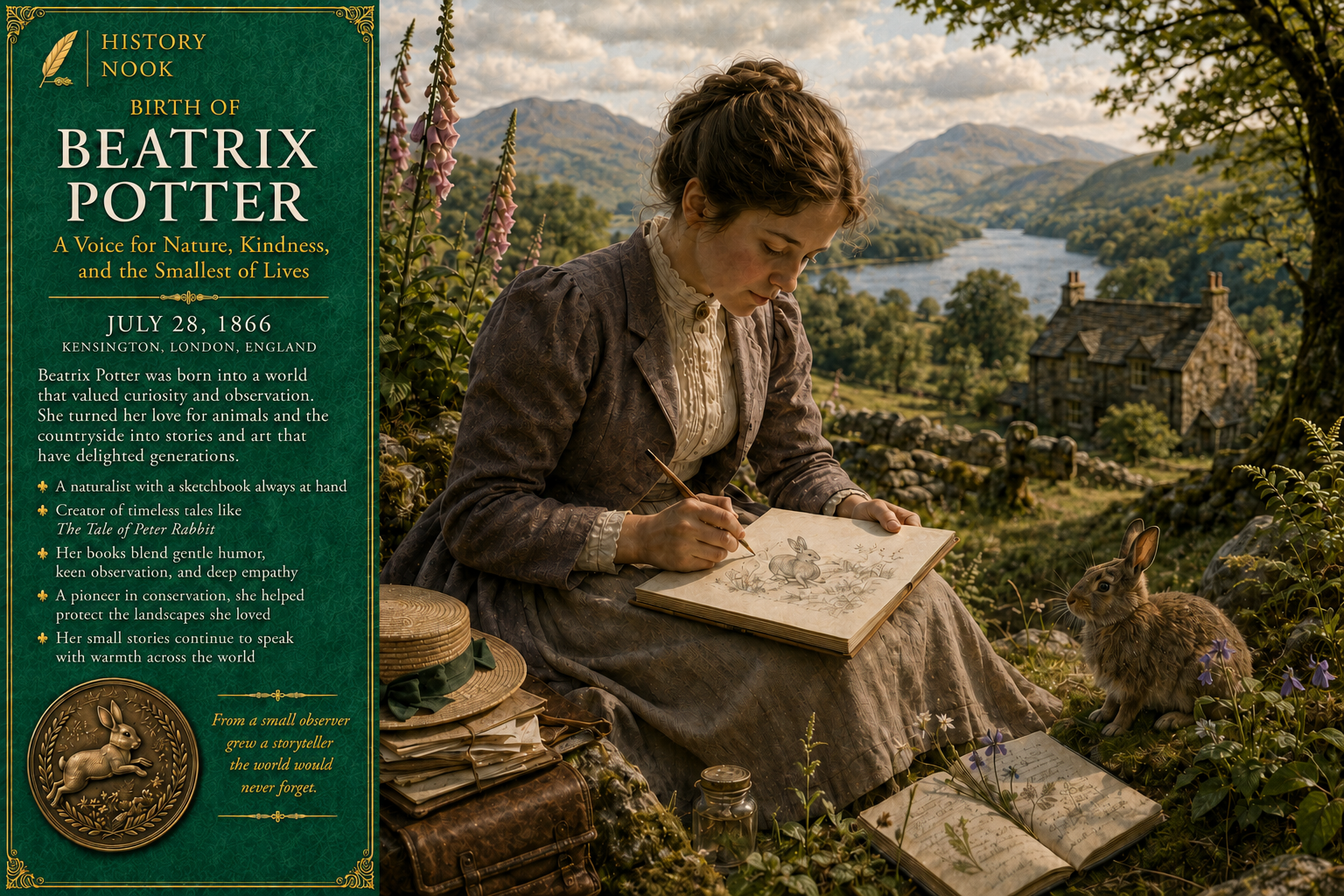
Discover how Beatrix Potter transformed children’s literature by joining close observation, animal life, danger, small-book design, and the living landscapes of the Lake District.
-

What if a city’s deepest history was hidden in ordinary voices? Discover how Joseph Mitchell transformed literary journalism by listening to workers, eccentrics, vanished places, and overlooked lives.
-
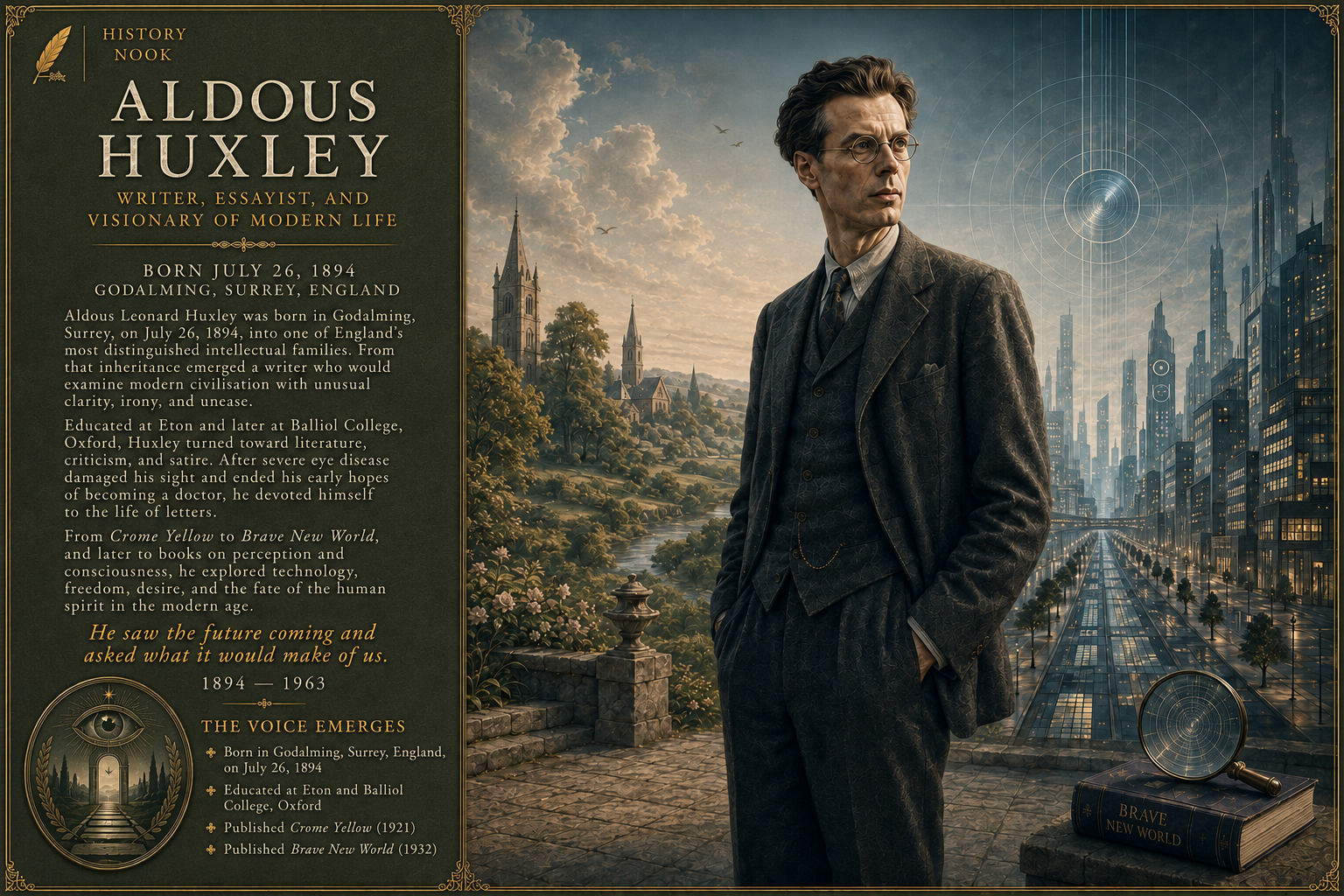
What if the future controlled people not by pain, but by pleasure? Discover how Aldous Huxley’s Brave New World gave English a lasting vocabulary for conditioning, distraction, soma, and seductive control.
-
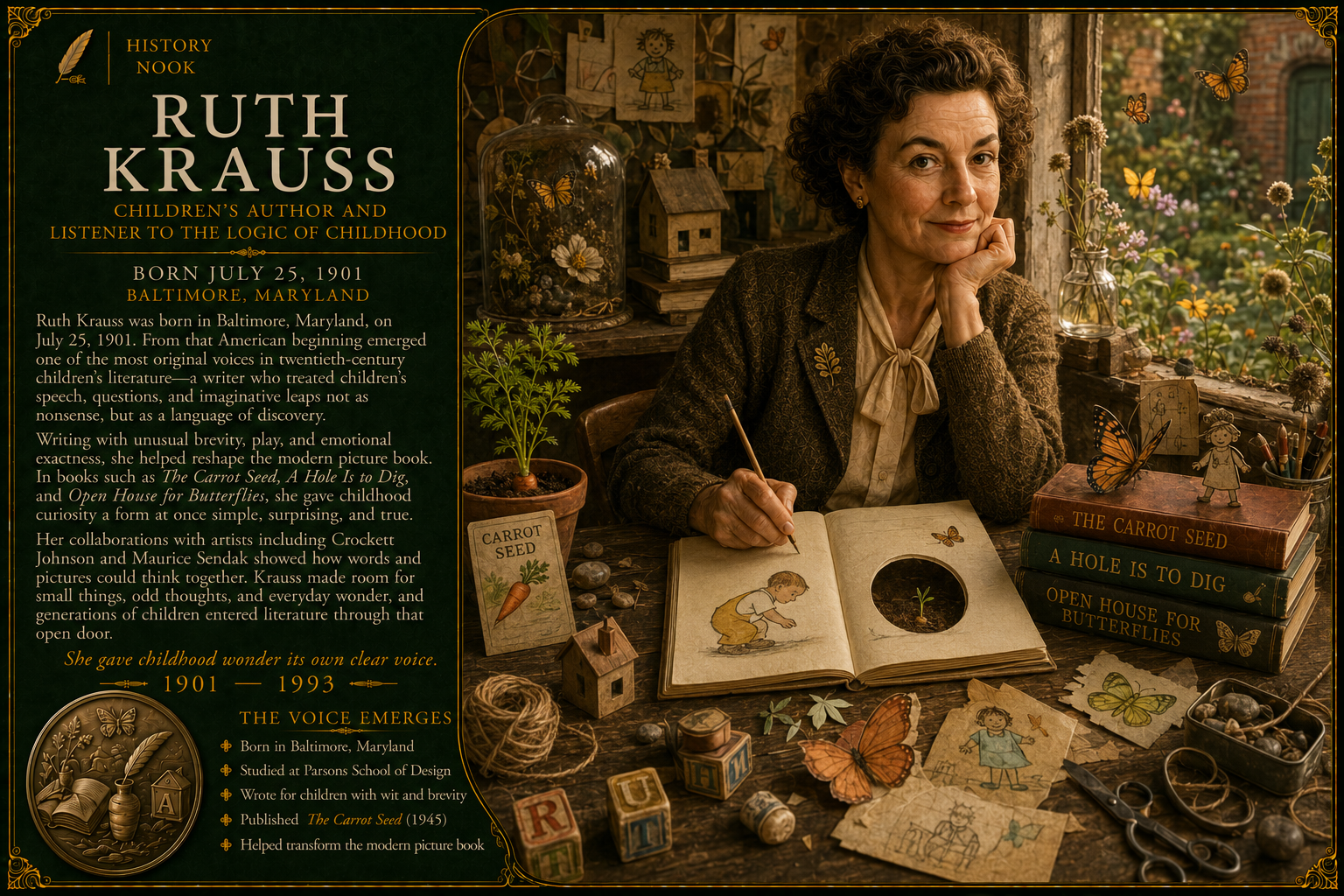
What if children’s definitions were not wrong, but wonderfully exact? Discover how Ruth Krauss listened to children’s actual language and turned their words, questions, play, and logic into literature.
-
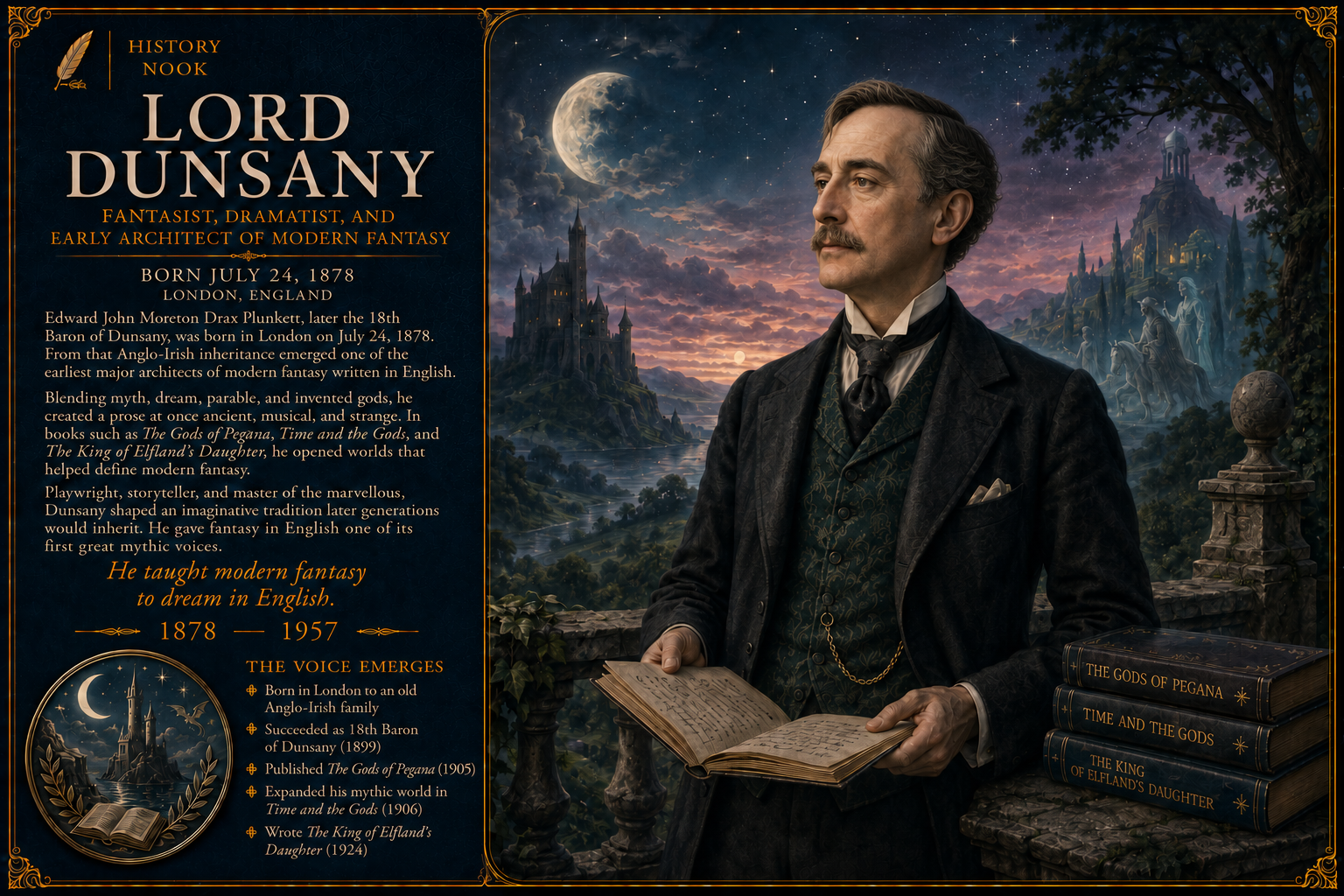
Before fantasy had fully found its name, Lord Dunsany was already creating gods, borders, impossible cities, and distant worlds. Discover how his prose helped give English fantasy the language of invented mythology.
-
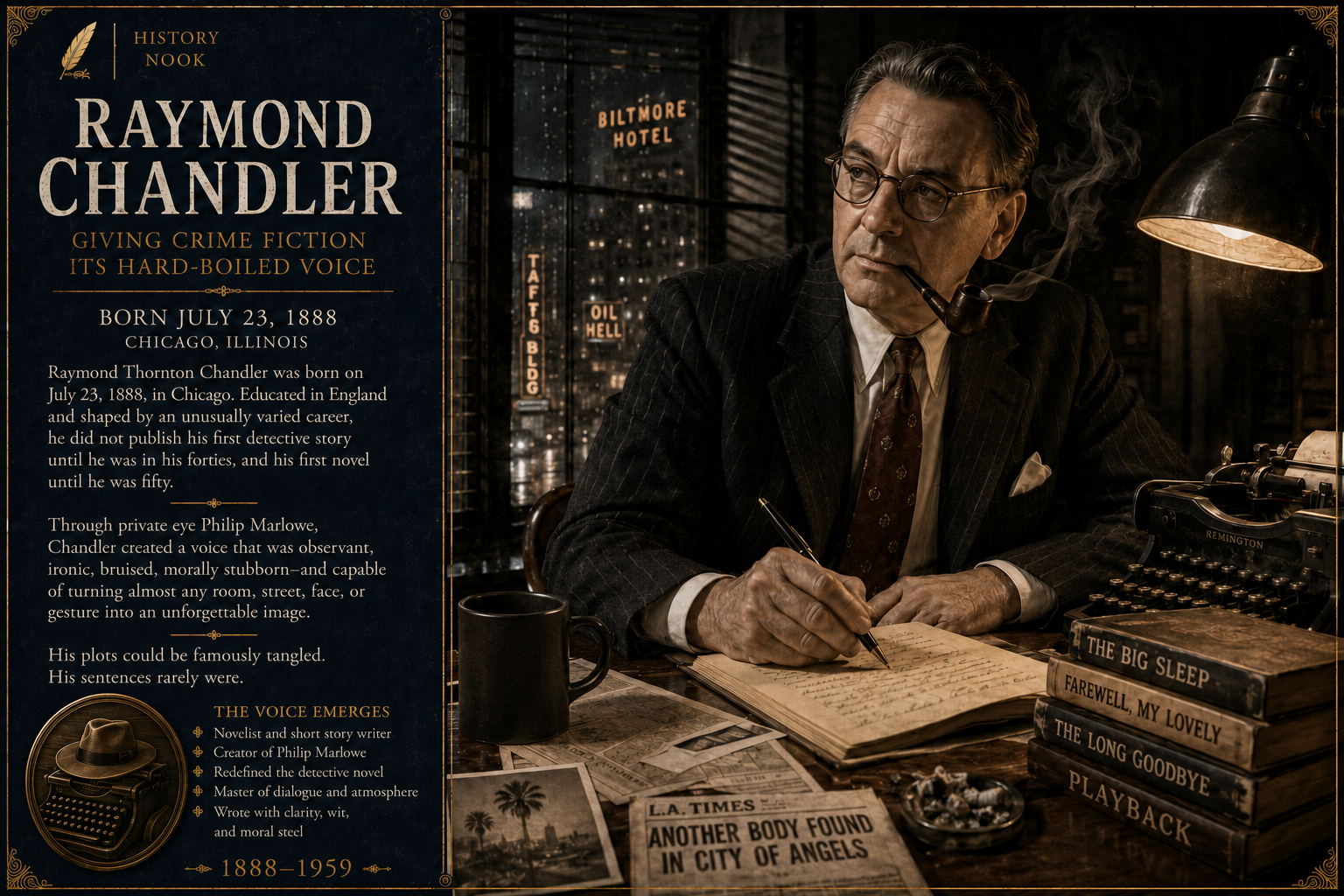
Born on July 23, 1888, Raymond Chandler transformed crime fiction through Philip Marlowe, combining hard-boiled dialogue, moral stubbornness, and unforgettable urban imagery.