
On October 12, 1362
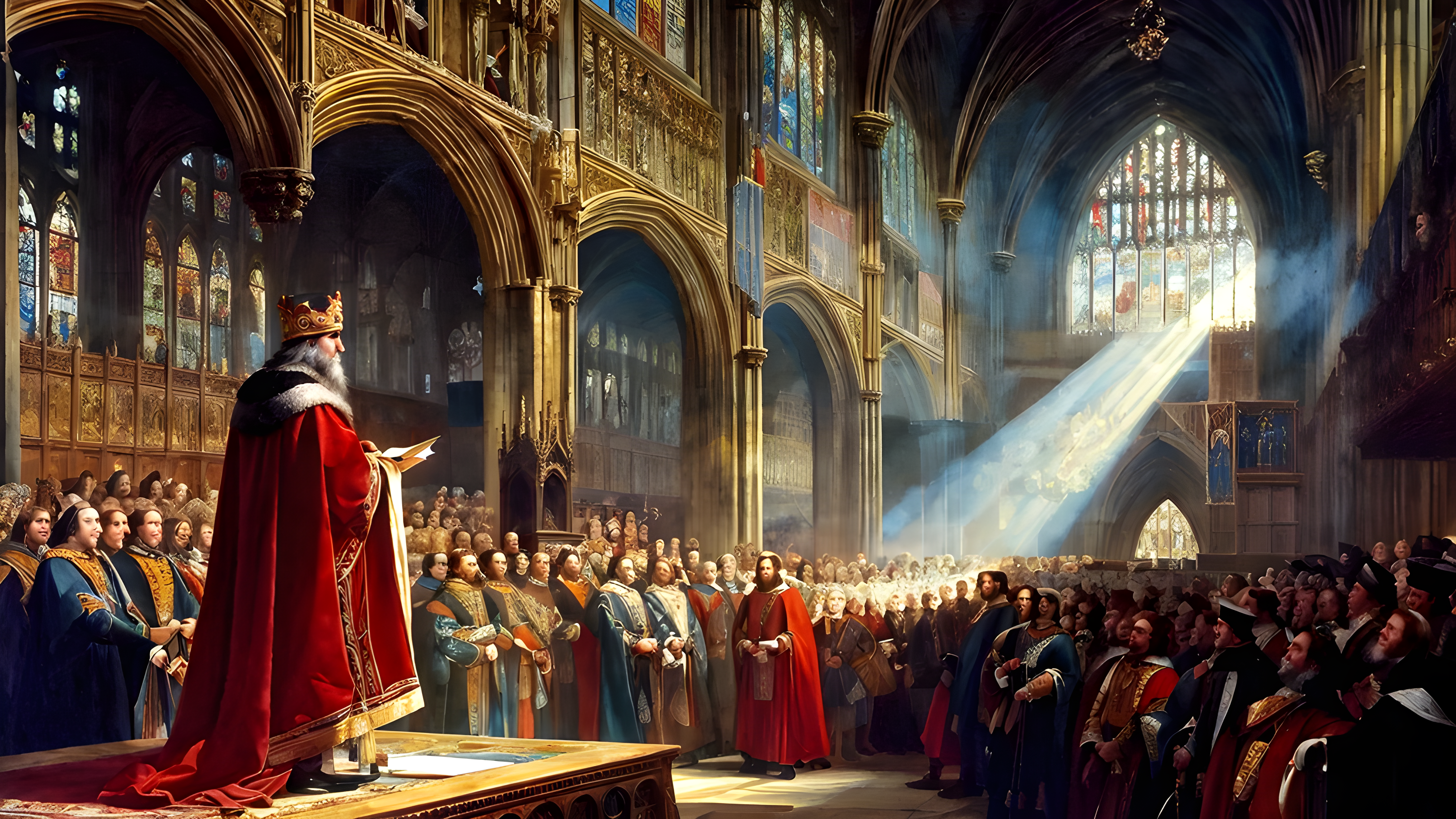
King Edward III addressed Parliament in English for the first time. This marked a watershed moment in the evolution of English from a spoken vernacular used by the general populace to an accepted language of governance and law. The decision to use English in such a formal setting reflected deep cultural and social shifts that were reshaping England in the 14th century.
The Historical Context: French and Latin Dominance
Following the Norman Conquest in 1066, Norman French became the language of the ruling elite, courts, and legal proceedings in England. French was not only the language of the monarchy but also of the aristocracy, who controlled much of the political and economic power. Simultaneously, Latin was the language of written law, official records, and the church. This created a linguistic divide, with English being relegated to the lower classes, spoken predominantly by commoners and peasants.
For nearly three centuries, this linguistic hierarchy persisted. However, by the 14th century, several factors contributed to the erosion of French dominance. The Hundred Years’ War (1337–1453) between England and France fostered a growing sense of English nationalism, which made the French language, associated with the enemy, less favorable. Additionally, French influence began to wane as the Norman aristocracy gradually assimilated, intermarrying with native English speakers, leading to a blending of cultures and languages.
The 1362 Speech: A Turning Point
King Edward III’s choice to speak in English to Parliament was not just a symbolic gesture but a recognition of the language’s growing prestige. While English had been the spoken language of the majority, it had not been used in such high-level governmental settings. This speech, delivered in English, helped break down the notion that French and Latin were the only legitimate languages for official use.
This moment also coincided with the Statute of Pleading in 1362, a law that declared English as the language to be used in courts. Prior to this, while cases were argued in French, the majority of the population did not understand it, making legal proceedings inaccessible to most. The Statute of Pleading mandated that court proceedings should be conducted in English to ensure that the people involved could understand the cases against them, though legal records were still written in Latin for a time.
The Re-emergence of English
The speech in 1362 and the subsequent legal reforms paved the way for English to become the dominant language of governance. Over the following decades, English steadily replaced French in the spheres of law, government, and even literature. By the late 14th century, poets like Geoffrey Chaucer, who wrote The Canterbury Tales in English, further elevated the status of the language. Chaucer’s works demonstrated that English could be used not just for day-to-day conversation but also for art and sophisticated expression.
By the 15th century, English had become the principal language of both spoken and written communication in England, and the use of French for official purposes faded almost entirely. Latin continued to be used for some time in religious and scholarly contexts, but English firmly established itself as the language of the state.
Long-term Impact on the English Language
King Edward III’s decision to use English in his 1362 address to Parliament had long-lasting consequences for the development of the language. It marked the beginning of English’s rise as a language of power and prestige. The formalization of English in government and law helped to standardize the language, influencing the development of grammar, vocabulary, and syntax. This event also contributed to the decline of regional dialects in favor of a more standardized form of English, particularly in London and the surrounding areas, which later became the foundation of Modern English.
Ultimately, this moment in 1362 helped set the stage for English to become the dominant language of not only England but eventually much of the world. From this period onward, English began its evolution into a global language of commerce, law, diplomacy, and culture. The use of English by Edward III and its subsequent institutionalization reinforced the language’s importance in England and provided the momentum for its expansion in the centuries to come.
Originally published on October 12, 2024, on The-English-Nook.com.
 What Happened on This Day?
Leave a comment