
October 22, 1879
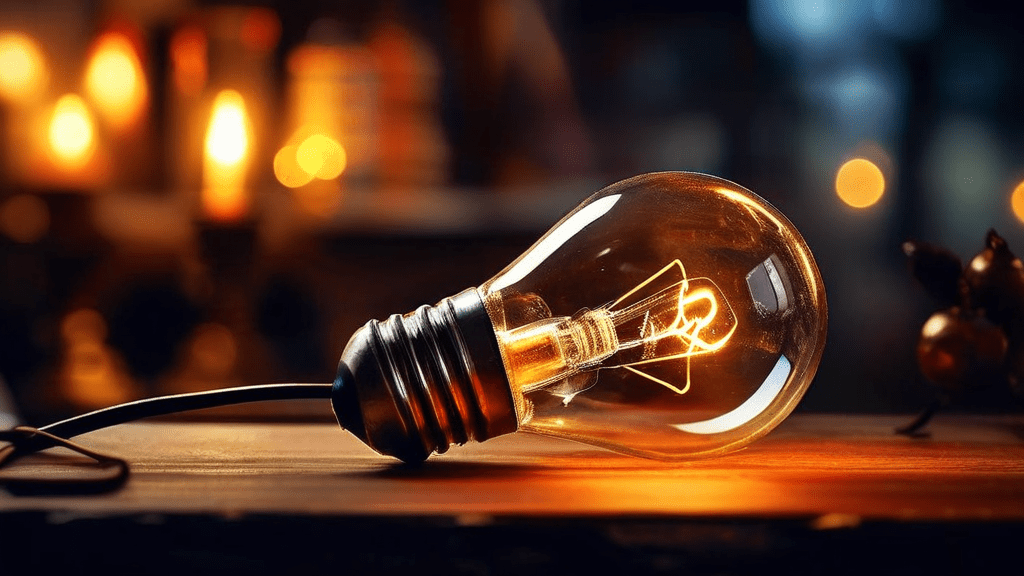
On October 22, 1879, Thomas Edison successfully tested the first practical incandescent light bulb, revolutionizing modern life and marking the beginning of an era of rapid technological advancement. This invention not only transformed the way people lived and worked by extending daylight hours with artificial light but also introduced new technical vocabulary into the English language. Terms like “incandescent,” “filament,” and “electrification” entered common usage, reflecting the scientific and technological innovations of the time. Edison’s light bulb, along with the broader electrification of society, contributed to the expansion of English vocabulary as new technologies emerged and reshaped daily life.
Introduction of New Terminology
Edison’s invention of the practical incandescent light bulb brought with it a wave of new terms that became part of the everyday lexicon. The word “incandescent” itself, derived from the Latin word incandescere (to glow white), refers to an object that emits light when heated. In the context of the light bulb, it described the glowing filament inside the bulb that produced light when an electrical current was passed through it.
The term “filament,” referring to the fine wire inside the bulb, also became widely used. This thin, often carbon-based wire heated to the point of glowing was central to the bulb’s function. As electric lighting became more commonplace, these technical terms transitioned from the language of scientists and inventors to the everyday language of consumers and manufacturers.
“Electrification,” another term that gained prominence, referred to the process of providing power through electricity. As Edison’s light bulb and related electrical infrastructure spread across cities and rural areas, the word “electrification” symbolized modernization and technological progress. These terms reflected the groundbreaking changes in energy consumption and the new way people experienced their environment.
Enriching the Vocabulary of Science and Technology
The successful test of the light bulb was a pivotal moment in the broader trend of technological innovation during the late 19th and early 20th centuries. This period, known as the Second Industrial Revolution, saw the rise of new industries and the development of inventions that fundamentally altered society. As new technologies were introduced, they brought with them an influx of specialized language into English, expanding its vocabulary to accommodate new scientific discoveries and industrial processes.
Edison’s inventions, along with those of his contemporaries, led to the creation of a language for a new technological age. Words related to electricity, such as “current,” “voltage,” “circuit,” and “wattage,” became part of everyday language, as electricity became a more prevalent force in homes, factories, and cities. These technical terms were essential for describing the new world of electrified infrastructure and devices, and they continue to be part of modern English today.
In addition, the light bulb and subsequent electrical innovations contributed to the creation of terms that extended beyond the technical realm. Phrases like “light up” and metaphors such as “a bright idea” or “being in the dark” took on new connotations in the context of artificial lighting. Language that once referred to natural light and darkness evolved to include references to electric illumination and its effects on human experience.
The Impact of Electrification on Everyday Life and Language
Edison’s invention of the light bulb was not an isolated technological achievement—it was part of a larger movement toward the electrification of society. As cities and towns were outfitted with electric power grids, homes and businesses could remain active well beyond daylight hours, transforming social and economic life. The widespread availability of electric light changed how people lived, worked, and interacted, and this cultural shift was reflected in the language people used.
New industries sprang up around the development and distribution of electrical products, and with them came a new set of vocabulary. Terms like “light switch,” “socket,” “fuse,” and “wiring” became commonplace as households and workplaces adopted electric lighting. The everyday use of electricity also required new safety measures, introducing words like “insulation,” “grounding,” and “short circuit” to describe protective practices.
As electrification spread, its influence extended into areas beyond the technical realm. The advent of electric lighting changed public spaces, enabling new forms of entertainment and leisure, such as nighttime sports, theater performances, and illuminated public events. These cultural developments introduced phrases like “electric atmosphere” or “lit up,” which evoke a sense of excitement or celebration associated with electric light.
A Foundation for Future Innovations
Edison’s light bulb was one of the many inventions that marked the beginning of a new era of innovation, paving the way for future technological advancements in electricity, communication, and industry. As technological progress accelerated, the English language continued to absorb new words and concepts to describe the inventions and processes that defined modern life.
The language of technology has expanded exponentially since Edison’s time, with each new invention contributing to the enrichment of English. From the telegraph to the telephone, radio to television, and eventually computers and the internet, every advancement introduced new terminology and reshaped how people interacted with the world.
Edison’s light bulb, a symbol of technological ingenuity, also serves as a reminder of how language evolves in response to human achievement. As new technologies emerge, they bring with them new words, enriching the language and expanding the ways people communicate about the world around them.
Edison’s Legacy on Language and Life
Thomas Edison’s successful test of the incandescent light bulb on October 22, 1879, was a momentous achievement that not only changed the course of technological history but also influenced the development of the English language. The invention introduced new terms related to electricity and lighting, marking the beginning of an era in which science and technology would play an increasingly central role in society. As electrification spread and transformed daily life, the English language adapted to incorporate a growing body of vocabulary, reflecting the rapid pace of change.
Edison’s light bulb symbolizes the dawn of modernity, and the words that emerged in its wake continue to shape the way we talk about technology, innovation, and progress. The language of electricity, introduced during this pivotal moment in history, remains an essential part of modern English, highlighting the profound connection between technological advancement and linguistic evolution.
Originally published on October 22, 2024, on The-English-Nook.com.
 What Happened on This Day?
Leave a comment