
October 23, 1642
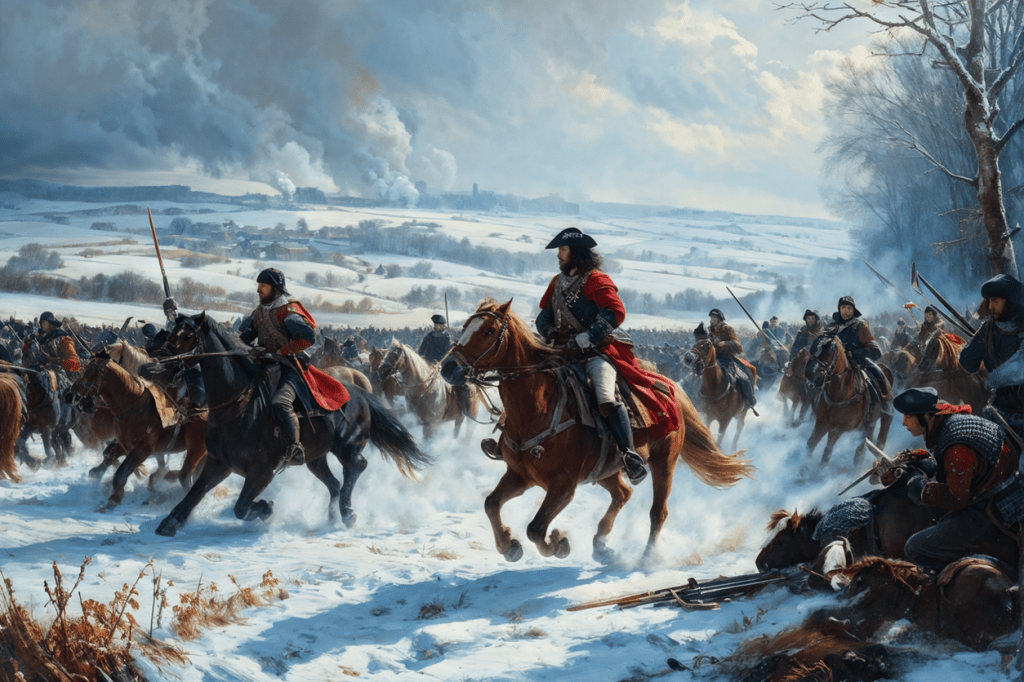
On October 23, 1642, the Battle of Edgehill marked the first significant conflict of the English Civil War, a series of battles between forces loyal to King Charles I (the Royalists) and those supporting Parliament. This war had far-reaching consequences, not only for the political landscape of England but also for the English language. The conflict introduced new terms and concepts that would become deeply embedded in political and military discourse, many of which continue to influence political debates in English-speaking countries to this day.
Political Vocabulary and Terms Introduced by the War
The English Civil War gave rise to several key terms that quickly became part of everyday language, particularly in relation to political factions and ideologies. Among the most iconic were “Roundhead” and “Cavalier,” terms used to describe the two opposing sides.
- “Roundhead” referred to supporters of Parliament, many of whom were Puritans and believed in a more austere form of Protestantism. The name was derived from their preference for short, cropped hair, a stark contrast to the longer, flowing locks favored by the Royalists. Over time, “Roundhead” came to symbolize those who opposed absolute monarchy and supported republicanism or more democratic principles.
- “Cavalier” described the Royalists, the supporters of King Charles I. Often of noble birth, Cavaliers were known for their flamboyant clothing and long hair, which stood in contrast to the plain appearance of the Roundheads. Over time, the term “Cavalier” evolved to represent those who supported a traditional monarchy and hierarchical social structures.
These labels, originally used in a military context, soon carried broader connotations, embodying the cultural and ideological differences between the two sides. The contrast between “Roundhead” and “Cavalier” became shorthand for deeper philosophical divisions about governance, individual rights, and the role of monarchy versus parliamentary authority. The use of these terms reflected how language could capture the symbolic and cultural underpinnings of political conflict.
Evolution of Political Concepts: Civil Rights and Republicanism
The English Civil War introduced critical ideas about governance, civil rights, and the balance of power between the monarchy and the people. The struggle between the Crown and Parliament over sovereignty and the role of the monarchy influenced the political vocabulary of English-speaking countries for centuries.
- “Parliamentarian,” for instance, referred to those who sided with Parliament against the king. These individuals advocated for limiting the powers of the monarchy and strengthening the role of an elected legislature. As the war unfolded, the term became associated with those who supported constitutional government, laying the groundwork for later debates about representative democracy and individual rights in English-speaking nations.
- The broader concepts of “republicanism” and “monarchy” also gained new resonance during this period. Although England did not become a long-term republic after the war, the execution of Charles I and the brief establishment of the Commonwealth under Oliver Cromwell had a profound impact on political thought. The war’s legacy was felt long after the monarchy was restored in 1660, influencing later revolutions, such as the American and French Revolutions, which embraced the republican ideals first debated in 17th-century England.
- “Civil rights” was another concept that gained prominence during the English Civil War, even if not articulated in the modern sense. As Parliament and the king clashed, discussions about the rights of subjects, the limits of royal power, and the role of law in governing a nation became more common. These debates planted the seeds for the development of civil liberties and rights, which would later be formalized in the constitutions of various democratic nations, including the United States and the UK’s Bill of Rights in 1689.
Military Terms and Warfare Vocabulary
The English Civil War also enriched the English language with military vocabulary, much of which remains relevant in discussions of warfare and military strategy today.
- “Regiment,” “cavalry,” “infantry,” and “artillery” were terms that came into widespread use during this period, reflecting the organization of armies and the methods of warfare that were employed on both sides. The use of these military terms was significant not only in describing the armies themselves but also in shaping how future conflicts were understood and reported in English.
- “Siege,” a word that had existed in English for some time, gained particular importance during the Civil War, as many key battles, such as those at York, Bristol, and Oxford, involved protracted sieges of towns and fortifications. This terminology entered political language as well, with metaphors like “besieged by criticism” becoming common to describe situations of intense pressure.
- The word “fortification” also gained broader use, as both the Royalists and Parliamentarians sought to secure key cities and strategic positions with defensive structures. This led to a more sophisticated understanding of military strategy, both in practical terms and in the metaphors used to describe defense and resistance in political or social contexts.
Long-Term Influence on Political Debate and Discourse
The English Civil War was a key moment in shaping how the English-speaking world would talk about power, rights, and governance. Many of the terms and concepts that emerged during the conflict would later be used in political debates about the limits of government, the rule of law, and the rights of individuals.
For example, discussions about the proper balance of power between a ruler and the governed would become central to the political philosophy of John Locke, who lived through the later stages of the conflict. Locke’s ideas about the social contract and the right of the people to overthrow a tyrannical government were directly influenced by the English Civil War and would later inform the political thinking of revolutionaries in the American colonies and France.
Even in modern politics, terms like “Parliamentarian” and “republican” are still in use, signifying those who advocate for representative government or favor a reduced role for monarchy. Similarly, the English Civil War’s legacy of civil liberties continues to be a cornerstone of political debates, particularly in the context of rights versus state authority.
The Enduring Legacy of Edgehill
The Battle of Edgehill, fought on October 23, 1642, was the first major clash in a conflict that would change the course of English history and leave an indelible mark on the English language. As the Civil War progressed, the terms “Roundhead,” “Cavalier,” and “Parliamentarian” became symbols of deeper political and cultural divisions, while the broader discussions about civil rights, republicanism, and monarchy influenced political thought for generations to come.
This conflict not only shaped the political future of England but also enriched the vocabulary of English, introducing terms and concepts that are still relevant in contemporary discussions of governance, civil rights, and military strategy. The legacy of the English Civil War, and particularly the pivotal battle at Edgehill, continues to resonate in the language and political discourse of English-speaking nations worldwide.
Originally published on October 23, 2024, on The-English-Nook.com.
 What Happened on This Day?
Leave a comment