
October 25, 1415
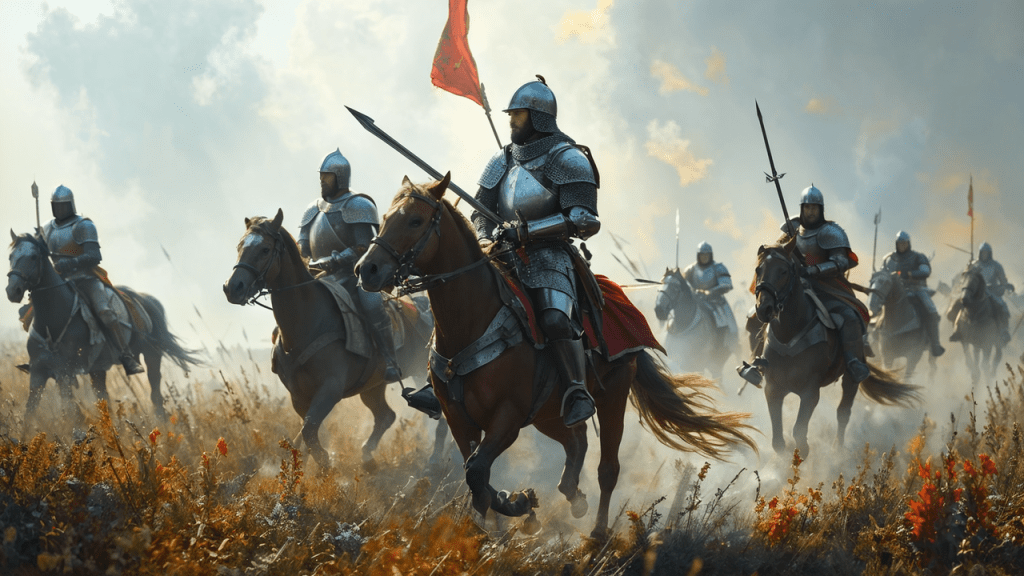
The Battle of Agincourt, fought on October 25, 1415, during the Hundred Years’ War between England and France, stands as one of the most celebrated military victories in English history. Led by King Henry V, the English forces, despite being outnumbered and weakened by disease and fatigue, triumphed against the larger French army. The battle not only marked a significant moment in medieval warfare but also had a profound impact on English culture, language, and literature, particularly through its portrayal in William Shakespeare’s play Henry V.
Shakespeare’s dramatization of the Battle of Agincourt has immortalized the event in English literary and cultural consciousness, shaping how generations of English speakers think about heroism, leadership, and nationalism. The language of Henry V’s speeches, especially the famous “St. Crispin’s Day” speech, has become emblematic of these values and continues to resonate in modern discourse.
The Historical Significance of the Battle
The Battle of Agincourt was a turning point in the Hundred Years’ War, a conflict between England and France that lasted from 1337 to 1453. King Henry V, seeking to assert his claim to the French throne, launched a military campaign in France. His army, consisting mainly of archers armed with longbows, was significantly smaller than the French force they encountered at Agincourt. Despite the odds, the English achieved a decisive victory due to superior tactics, terrain, and the effectiveness of their longbowmen, who devastated the French knights.
This victory not only bolstered English morale but also reinforced the idea of English military superiority, particularly in the use of the longbow. The battle became symbolic of national pride, and its memory endured as a key moment in English history, celebrated for the leadership of Henry V and the courage of the English soldiers.
Shakespeare’s Henry V and the Power of Language
The Battle of Agincourt may have been a significant historical event, but its portrayal in William Shakespeare’s Henry V ensured its place in the literary and cultural legacy of England. Written in 1599, nearly two centuries after the battle, Shakespeare’s play recounts Henry V’s campaign in France, culminating in the victory at Agincourt. The play’s depiction of the king as a heroic and charismatic leader has had a lasting impact on how English speakers view leadership, bravery, and patriotism.
In particular, the St. Crispin’s Day speech, delivered by Henry V to his troops on the eve of battle, has become one of the most famous speeches in English literature. In the speech, Shakespeare’s Henry V rallies his soldiers by invoking themes of camaraderie, honor, and glory. Lines like:
“We few, we happy few, we band of brothers;
For he to-day that sheds his blood with me
Shall be my brother; be he ne’er so vile,
This day shall gentle his condition”
speak to the power of unity and shared sacrifice, ideas that continue to resonate in discussions of leadership and loyalty. The speech has become synonymous with English valor and patriotism, influencing how later generations of English speakers, writers, and leaders talked about war, honor, and nationhood.
Shaping the Language of Heroism and Leadership
The language of Shakespeare’s Henry V helped define the way English speakers conceptualize heroism and leadership. The play’s portrayal of Henry V as a bold and inspiring figure became a model for how leaders were expected to act, particularly in times of conflict. Words like “courage,” “honor,” “glory,” and “nobility” became deeply associated with leadership, particularly in military contexts, through the enduring influence of Shakespeare’s dramatization.
In addition, the battle and its representation in literature contributed to the language of nationalism. Shakespeare’s Henry V presents a vision of English identity that emphasizes unity and shared purpose in the face of overwhelming odds. The king’s speeches in the play often stress the importance of national pride and collective effort, themes that have shaped English discourse around patriotism for centuries. Phrases like “this England” and “the fewer men, the greater share of honor” helped reinforce a sense of national identity rooted in resilience and defiance, concepts that continue to inform English rhetoric about leadership and national strength.
The Legacy of Agincourt in English Literature
The Battle of Agincourt’s place in English history was further solidified through literature, with Henry V becoming one of the most important historical dramas in the English canon. Shakespeare’s play is more than just a retelling of a military victory; it is a reflection on the nature of power, leadership, and the burdens of kingship. Through Henry V’s speeches, Shakespeare explores the complexities of leadership, portraying Henry not only as a warrior-king but also as a ruler deeply aware of the weight of responsibility.
Shakespeare’s language in the play, especially in the St. Crispin’s Day speech, has had an enduring influence on English literary and cultural traditions. The rhetorical style of the speech, with its emphasis on motivational language, emotional appeal, and vivid imagery, became a template for how future writers and speakers crafted speeches designed to inspire and rally people. The play’s exploration of themes like honor, duty, and national pride continues to influence not only literature but also political rhetoric and public speaking.
The Influence of Agincourt on National Identity and Military Rhetoric
The Battle of Agincourt and its portrayal in Henry V have also shaped the way English speakers think about war and military leadership. Henry V’s ability to inspire his men, despite their disadvantaged position, became an idealized vision of how leaders should act in times of crisis. The notion of the “underdog” prevailing through courage, clever tactics, and unity is a theme that has been repeated throughout English history and literature.
The battle and its depiction in Shakespeare’s play also contributed to the language of nationalism. Henry V’s speeches in the play emphasize the idea of English exceptionalism, portraying the English as a chosen people capable of achieving great things against all odds. This sense of national pride and identity, which emerged from the victory at Agincourt, has had a lasting impact on how English speakers talk about their country and its role in the world.
Even beyond the realm of literature, the rhetoric of Agincourt has been invoked in real-life military and political speeches. Leaders have drawn on the themes of unity, sacrifice, and glory that Shakespeare associated with the battle to inspire their own audiences. Winston Churchill, for example, famously referenced Shakespeare’s Henry V during World War II to boost morale and strengthen the resolve of the British people.
Conclusion: Agincourt’s Enduring Impact on English Language and Culture
The Battle of Agincourt, fought on October 25, 1415, was more than just a military victory for England; it became a symbol of English heroism, leadership, and nationalism, thanks in large part to its depiction in William Shakespeare’s Henry V. Through Shakespeare’s powerful use of language, the battle and its themes of honor, courage, and unity were immortalized in English literature and continue to resonate in modern discussions of leadership and patriotism.
The language of the St. Crispin’s Day speech, in particular, has shaped how English speakers think and talk about concepts like brotherhood, loyalty, and national pride. The legacy of Agincourt endures in the way English speakers, writers, and leaders invoke the themes of the battle to express ideas of collective strength and resilience. As a result, the Battle of Agincourt remains a key reference point in English culture, influencing both the language of heroism and the broader discourse around nationalism and leadership.
Originally published on October 25, 2024, on The-English-Nook.com.
 What Happened on This Day?
Leave a comment