
November 4, 1890
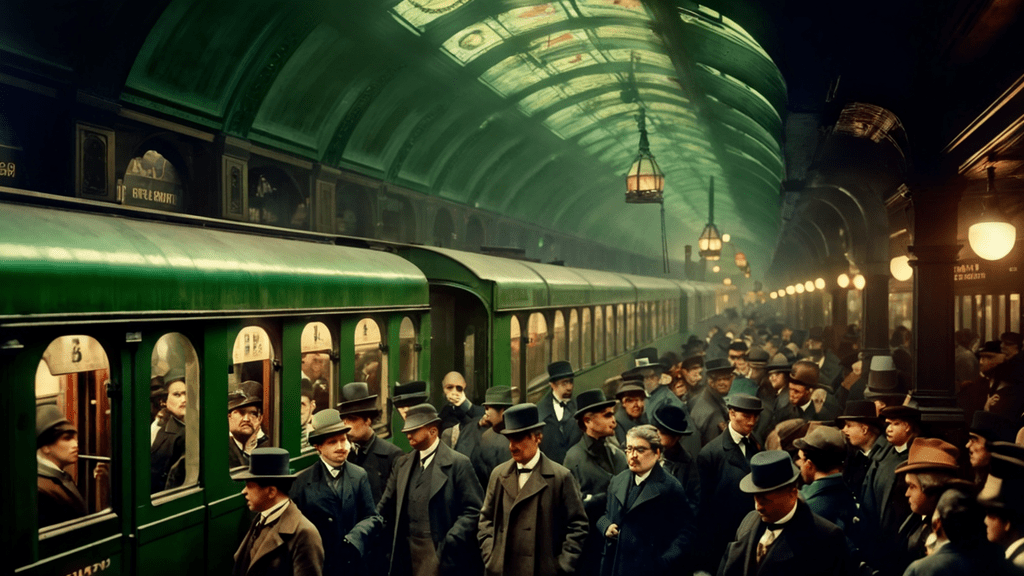
On November 4, 1890, the City and South London Railway officially opened as the world’s first electrified underground railway, connecting the Stockwell and King William Street stations in London. This remarkable engineering feat transformed urban transit and introduced a new vocabulary that reshaped public transport language in English-speaking countries. Terms like “subway,” “tube,” “metro,” and “underground” emerged as staples of urban travel vocabulary, marking this period as a turning point in how people discussed transit, city life, and mobility.
The Introduction of New Terms for Urban Transit
The electrification of the London underground led to the adoption of several key terms that quickly entered everyday English. In Britain, “tube” became a popular term for the new underground railway system, referencing the cylindrical design of many underground tunnels, which allowed electric-powered trains to travel more efficiently beneath the city. “Tube” remains a British term specifically tied to the London Underground, embodying a uniquely British identity in urban transportation.
The term “subway,” meanwhile, which originally described any subterranean passage, took on its modern meaning as an underground urban railway, especially in North America. As electrified underground systems spread to cities like New York and Boston, “subway” became the standard term in American English for underground railways. Similarly, “metro,” derived from the Paris Métropolitain, became popular in continental Europe and gradually entered English as a synonym for underground and urban transit networks.
Influence on Global Transport Terminology
The success and widespread influence of the London Underground’s electrified model spurred cities worldwide to establish their own systems, which adopted and adapted this transit vocabulary. Cities in English-speaking countries integrated terms like “subway” and “metro” as they built their own underground railway systems, allowing these words to become nearly universal in the context of urban transit. Even in countries where English is not the primary language, “metro” and “subway” are often used interchangeably, cementing their status as essential terms in the global language of transportation.
Shaping Everyday Expressions and Cultural Identity
The language surrounding the London Underground didn’t just provide practical terms; it also embedded itself in British culture, especially in London. Phrases such as “take the tube” or “mind the gap” have become synonymous with London’s identity, contributing to how British English has evolved with references to everyday experiences. The phrase “mind the gap,” for example, became more than just a warning to passengers—it turned into a cultural symbol of British pragmatism and humor, recognizable worldwide. Meanwhile, “underground” came to represent not only the physical space of London’s subway system but also connotations of subculture, secrecy, and innovation, as seen in expressions like “underground music” and “underground movements.”
A Lasting Legacy on Urban Language and English Lexicon
The opening of the first electrified subway in London set a precedent for how language adapts to technological innovation, especially as new systems of transport emerged to meet the demands of rapidly growing cities. These developments not only changed how people moved but also influenced how they described their journeys, creating a language that reflected urban life’s complexity, speed, and connectivity. The adoption of “subway,” “tube,” “metro,” and “underground” enriched the English lexicon with words that continue to evoke both the practical and cultural aspects of city life.
Through this revolution in transit vocabulary, the City and South London Railway’s electrification marked a new era in the language of travel, shaping public transport terminology that has endured across generations and borders. Today, these terms remain firmly established in English, serving as linguistic reminders of a groundbreaking innovation that transformed cities and the everyday lives of their inhabitants.
Originally published on November 4, 2024, on The-English-Nook.com.
 What Happened on This Day?
Leave a comment