
November 14, 1851
On November 14, 1851, Herman Melville’s Moby-Dick was published in the United States, introducing readers to a profound tale of obsession, exploration, and the enigmatic forces of nature. Although it was initially met with mixed reviews, Moby-Dick has since achieved legendary status, contributing a wealth of terms, phrases, and symbols to the English language. Through its epic narrative and philosophical depth, the novel has influenced literary language, particularly expressions associated with ambition, mystery, and tenacity.
Iconic Phrases: “Call Me Ishmael” and the “White Whale”
Perhaps the most famous opening line in American literature, “Call me Ishmael,” has become a widely recognized phrase, symbolizing a sense of mystery and a narrator’s authority. Ishmael, the protagonist who guides the reader through the novel’s depths, has become a literary symbol of an outsider’s perspective—one who observes and learns without being consumed by the obsessions around him. In English today, invoking “Call me Ishmael” often signals a storytelling tone or an introduction to a journey or introspection.
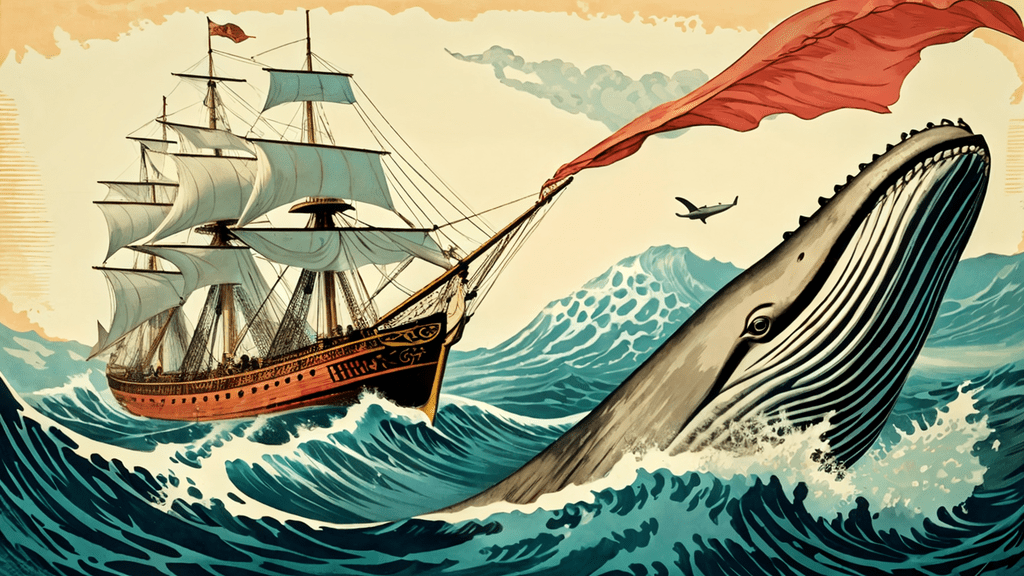
The phrase “white whale” has also become a powerful idiom, symbolizing an object or goal that one pursues obsessively, often at great personal risk or sacrifice. Captain Ahab’s relentless hunt for the elusive white whale, Moby Dick, has come to represent any single-minded pursuit of an impossible goal, a concept that has shaped discussions of ambition, obsession, and the human spirit in English-speaking cultures.
Obsession and Fate: Shaping Themes in English Discourse
The themes of Moby-Dick introduced philosophical language around fate, destiny, and human resilience. The word “Ahab” itself is sometimes used in English to describe a person who is consumed by an irrational quest, reflecting Melville’s portrayal of a man who sacrifices everything in his unyielding pursuit of revenge. The novel’s language and character portrayals enriched English with vocabulary that conveys the intensity of obsession and the moral consequences of unrelenting ambition.
Nautical and Whaling Terminology in English Literature
- Moby-Dick* also introduced readers to authentic maritime vocabulary that has since become familiar in English literature and culture. Terms like “harpooner,” “quarterdeck,” and “crow’s nest” brought the intricacies of 19th-century whaling into public awareness, giving English new words that encapsulated the life and risks of sailors. Words like “leviathan” (a gigantic creature) and “maelstrom” (a powerful whirlpool) were used to describe the ocean’s vast, terrifying power, contributing terms that evoke nature’s might and mystery in English.
This seafaring vocabulary also deepened the novel’s symbolic elements, with the ocean representing the unknown and humanity’s endless quest for understanding. As Moby-Dick depicted the perils of the sea, it expanded the English literary tradition’s capacity to describe themes of mystery, danger, and the sublime. The novel’s detailed depiction of the whaling industry and sailor life helped immortalize nautical terminology, grounding Melville’s epic in the realities of the ocean while enriching English with words that speak to exploration and adventure.
A Philosophical Legacy: Metaphors and Symbolism in English
Melville’s work is laden with symbolic language that has continued to inspire metaphors and idioms about determination, faith, and the unknown. Concepts of existential struggle and the limits of human understanding in Moby-Dick introduced English to language that describes the tension between humanity’s aspirations and the constraints of reality. This philosophical influence is seen in phrases that describe pursuits or challenges as “Sisyphean,” acknowledging endeavors that, like Ahab’s quest, may ultimately be unattainable.
Enduring Influence on Modern English and Popular Culture
Beyond literature, the language of Moby-Dick has permeated English-speaking popular culture. The white whale has appeared as a symbol in music, film, and television, often representing an elusive ambition or a mysterious, sometimes dangerous, target. The novel’s impact is felt in other media as well, with phrases like “chasing the white whale” commonly used to describe personal or professional endeavors that demand significant sacrifice or focus.
In business, politics, and everyday life, the influence of Moby-Dick’s vocabulary is evident, with references to the white whale or Ahab often suggesting intense, sometimes irrational, commitment. These allusions create a shared cultural understanding of perseverance, resilience, and the risks of unchecked ambition, enriching English with language that captures the complexities of human goals and limitations.
Moby-Dick’s Legacy in English Literature
As a work that combines adventure, philosophy, and tragedy, Moby-Dick has contributed a unique vocabulary to English that helps convey themes of obsession, exploration, and existential struggle. Melville’s novel expanded English literature’s expressive capacity, making terms like “Ishmael” and “white whale” synonymous with timeless narratives of human resilience and fallibility. Its impact on English endures, providing a lexicon that enables speakers to discuss perseverance, ambition, and the often mysterious journey of life. Through its language, Moby-Dick remains a powerful force in English, inviting readers and speakers alike to ponder the depths of ambition, nature, and the self.
Originally published on November 14, 2024, on The-English-Nook.com.
 What Happened on This Day?
Leave a comment