
November 13, 1956
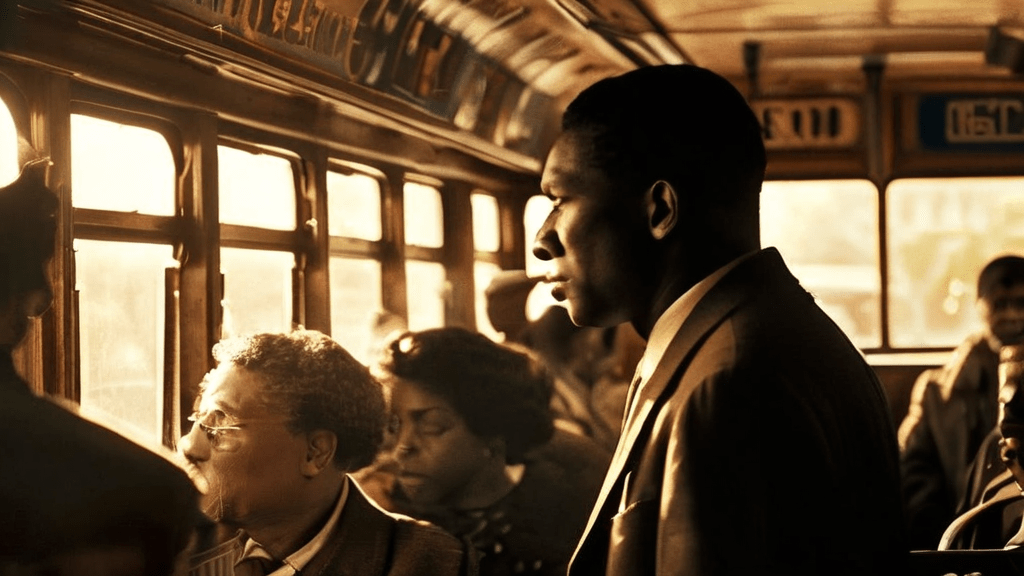
On November 13, 1956, the U.S. Supreme Court ruled that segregation on public buses was unconstitutional, marking a monumental victory for the Civil Rights Movement. This decision was directly influenced by the Montgomery Bus Boycott, led by figures like Rosa Parks and Dr. Martin Luther King Jr., whose commitment to equality and nonviolent resistance drew national attention. The ruling introduced pivotal vocabulary into English that shaped discussions around racial justice, civil rights, and equality, permanently impacting the language of social justice in English-speaking countries.
Key Vocabulary: Civil Rights, Desegregation, and Racial Justice
This ruling brought the terms “civil rights” and “desegregation” into common discourse, defining the national struggle for racial equality. As communities sought to end racial discrimination in schools, public places, and workplaces, “desegregation” became synonymous with efforts to dismantle institutionalized racism and enforce the rights outlined in the U.S. Constitution. “Civil rights,” which broadly referred to the rights of citizens to political and social freedom and equality, became a rallying cry for communities fighting discrimination and an essential term in the discourse of human rights across the world.
The terms “racial justice” and “equal rights” gained significant traction, embedding the idea of universal rights and protections for all races into the fabric of American and global discourse. Discussions around these concepts helped form the foundation of modern conversations on diversity, equality, and representation in various sectors, including politics, education, and employment.
Civil Disobedience and Nonviolent Resistance: Defining Protest Language in English
The civil rights movement popularized “civil disobedience” and “nonviolent resistance,” strategies championed by leaders like Dr. King, who drew inspiration from Mahatma Gandhi’s philosophy. These terms described the peaceful yet defiant actions of individuals protesting unfair laws or practices. “Civil disobedience” became a defining term in social justice movements, encapsulating a strategy of protest where individuals knowingly broke unjust laws to draw attention to societal issues. “Nonviolent resistance” highlighted the philosophy of achieving social change through peaceful methods rather than physical force, a concept that resonated globally and influenced later movements, including the women’s rights and anti-war movements.
The boycott in Montgomery and the subsequent Supreme Court ruling on segregated buses underscored the power of “grassroots activism” and “collective action,” both terms that entered English as ways to describe efforts where everyday citizens united to create change. The event demonstrated how people, regardless of background, could use unity to challenge unjust systems, and these terms continue to play a central role in discussions about activism and civic responsibility.
Language of Justice and Equality: Transforming Social Discourse
With the Montgomery Bus Boycott’s success and the Supreme Court decision, terms like “racial equality,” “justice,” and “fair treatment” gained new weight in English, providing vocabulary to address social and racial disparities. These words became part of a shared language that spanned across different communities and served as the basis for arguing for rights and protections for marginalized groups. The term “justice” came to signify not only legal fairness but also social equity, a concept that shaped conversations around discrimination, accessibility, and representation.
Expanding the Language of Human Rights and Civil Liberties
The ruling also expanded discussions of “human rights” and “civil liberties,” aligning the Civil Rights Movement with global calls for equality. Terms such as “freedom of assembly,” “freedom from discrimination,” and “equal protection under the law” became standard expressions in English, enabling activists, politicians, and everyday citizens to articulate the need for a fairer, more inclusive society. This language resonated internationally, influencing other movements advocating for freedom and equality and creating a global vocabulary for human rights.
The adoption of these terms into English discourse also reinforced the concept of “constitutional rights,” linking the fight for racial equality to the foundational principles of American governance. Concepts like “freedom of speech” and “freedom from persecution” were echoed in speeches, literature, and media, strengthening the argument that civil rights were a core part of the American identity.
Lasting Legacy of Civil Rights Language in Modern Discourse
The language that emerged from the 1956 Supreme Court ruling continues to shape English discussions around social justice, influencing how issues of race, equity, and human rights are addressed. Words and phrases like “systemic inequality,” “social justice,” and “intersectionality” build upon the foundation established by the Civil Rights Movement, showing the ongoing impact of these terms in modern contexts. This vocabulary serves as a reminder of the need for continuous progress toward a more equitable society.
This decision not only marked a pivotal moment in American history but also enriched English vocabulary with terms that help define modern discussions of justice and equality. Through the words and phrases that gained prominence, the Civil Rights Movement’s impact on English has been profound, shaping a language that now includes the words, concepts, and values essential to a just and inclusive society.
Originally published on November 13, 2024, on The-English-Nook.com.
 What Happened on This Day?
Leave a comment