
November 19, 1863
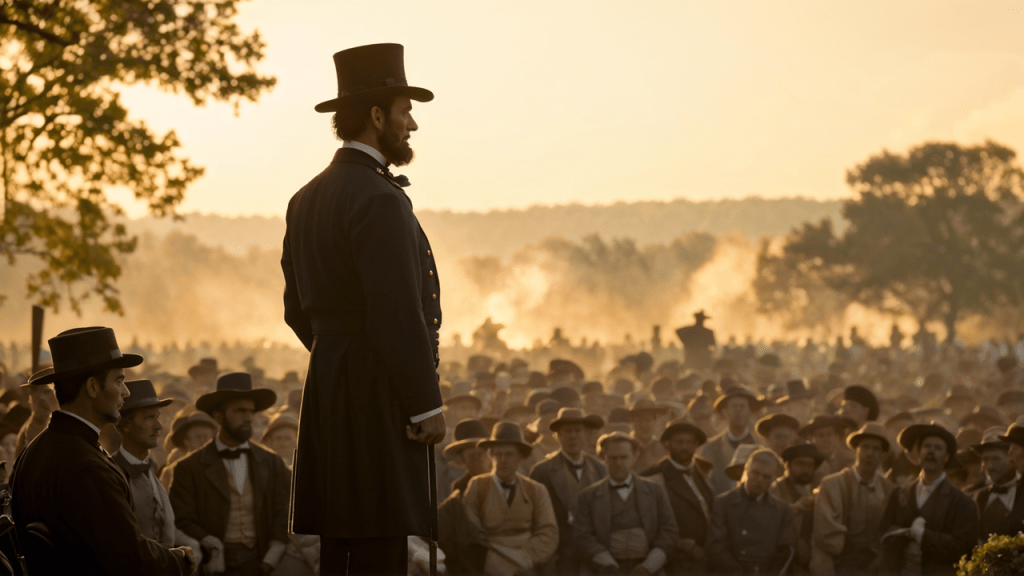
On November 19, 1863, Abraham Lincoln delivered the Gettysburg Address at the dedication of the Soldiers’ National Cemetery in Gettysburg, Pennsylvania. Though brief, at just 272 words, this speech profoundly influenced the English language, particularly in political and rhetorical contexts. Lincoln’s choice of words, phrases, and themes left an enduring legacy that continues to resonate in English discourse.
Iconic Phrases and Enduring Language
One of the most memorable and impactful lines from the Gettysburg Address is “government of the people, by the people, for the people.” This phrase encapsulates the ideals of democracy and self-governance, embedding these principles deeply into English political vocabulary. The structure and cadence of the phrase also set a rhetorical standard, often echoed in speeches and writings advocating democracy and human rights.
Other phrases, such as “a new birth of freedom” and “all men are created equal,” emphasized themes of equality and liberty. These words reinforced key ideas from the Declaration of Independence and cemented them as central to American identity, influencing the global perception of democracy and justice.
Rhetorical Legacy
The Gettysburg Address is a masterclass in conciseness and clarity, with Lincoln’s ability to convey profound ideas in minimal words becoming a benchmark for public speaking. The speech demonstrated the power of repetition, parallelism, and poetic rhythm, techniques that have become staples of effective rhetoric in the English language. Terms like “dedicate,” “consecrate,” and “hallow” were imbued with new weight and significance, reflecting Lincoln’s solemnity and moral purpose.
Lincoln’s use of plain but powerful language made the Gettysburg Address widely accessible, ensuring its ideals could be understood and embraced by people across social and educational divides. This accessibility contributed to the enduring influence of the speech in shaping how English speakers articulate ideas of justice and national unity.
Themes of National Identity
The Gettysburg Address emphasized the idea of the United States as a single, enduring nation, bound together by shared principles. The speech popularized words and phrases like “nation,” “liberty,” “freedom,” and “equality” as defining characteristics of the American identity. Lincoln’s framing of the Civil War as a test of these principles ensured that such language would remain central to discussions of American democracy and unity.
Moral and Philosophical Vocabulary
Lincoln’s words also enriched English with terms that convey moral and philosophical gravitas. Phrases such as “the great task remaining before us” and “these dead shall not have died in vain” imbued the language of sacrifice and duty with profound meaning. These expressions continue to be invoked in contexts that honor perseverance, responsibility, and collective purpose.
Global Impact on Political English
The Gettysburg Address transcended its immediate context to become a cornerstone of political speechwriting worldwide. Its themes and phrases have been adopted and adapted in movements advocating freedom, equality, and democracy. The speech elevated English political language by demonstrating how moral conviction and concise expression can inspire and mobilize.
Vocabulary of Remembrance
The Gettysburg Address also shaped the language of remembrance and memorialization. Words like “dedication,” “sacrifice,” and “resolve” became integral to ceremonies and speeches commemorating those who gave their lives for a cause. Lincoln’s framing of the battlefield as “hallowed ground” introduced a solemn tone that continues to influence how English speakers discuss places of historical and emotional significance.
Legacy in the English Language
Abraham Lincoln’s Gettysburg Address left an indelible mark on the English lexicon, particularly in the realms of politics, rhetoric, and moral discourse. By blending simplicity with profound meaning, Lincoln ensured that his words would endure as both a model of eloquence and a touchstone for ideals of democracy, equality, and national unity.
The speech’s brevity and depth demonstrated the enduring power of carefully chosen words, shaping how English speakers articulate the most profound aspects of human governance and aspiration.
Originally published on November 19, 2024, on The-English-Nook.com.
 What Happened on This Day?
Leave a comment