
November 20, 1945
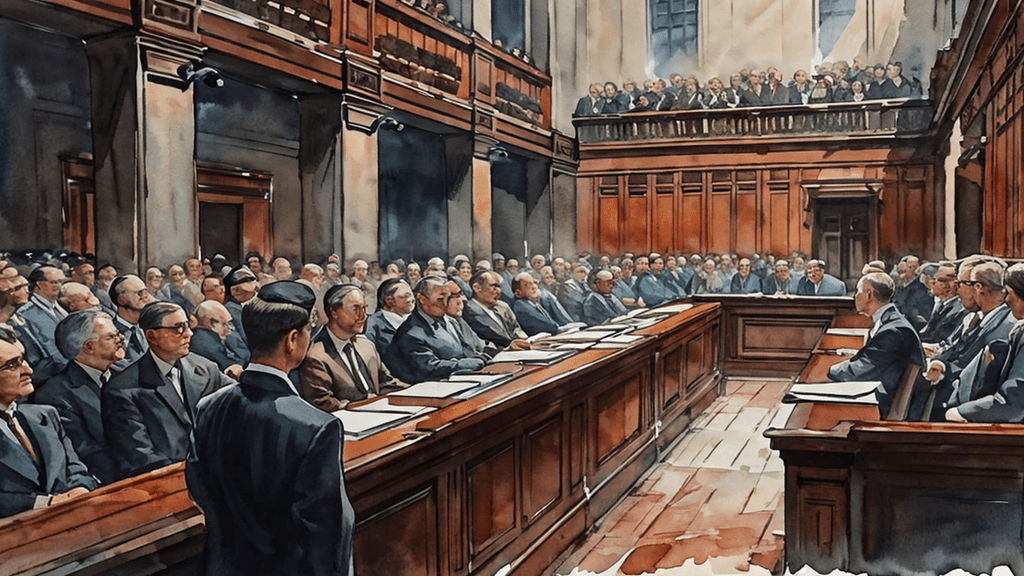
On November 20, 1945, the Nuremberg Trials commenced in Nuremberg, Germany, marking a pivotal moment in world history and the English language’s legal and moral lexicon. These landmark trials prosecuted high-ranking Nazi officials for atrocities committed during World War II, introducing key legal and ethical terms that continue to shape discussions of human rights, international law, and justice in English-speaking societies.
Key Terms Coined and Popularized
The trials introduced and institutionalized a vocabulary essential to the prosecution of war crimes and human rights violations. Phrases such as:
- “Crimes against humanity”
- “War crimes”
- “Genocide”
- “Aggression”
became cornerstones of the language of international justice. These terms not only defined the charges levied against the defendants but also became part of the broader English lexicon, influencing legal discourse, ethical debates, and public understanding of accountability.
Crystallizing the Language of Accountability
The term “crimes against humanity” was used to describe acts of murder, enslavement, extermination, and persecution targeting civilian populations on a massive scale. This term has since become central to human rights law, highlighting the universal moral obligation to protect individuals from systematic abuse. Similarly, “genocide,” a term coined by Polish lawyer Raphael Lemkin, gained widespread recognition during the trials, encapsulating the intentional destruction of racial, ethnic, or religious groups.
The trials also expanded English legal language with phrases such as “command responsibility” and “joint criminal enterprise,” emphasizing leadership accountability and collaborative culpability for atrocities.
Shaping Post-War Legal Vocabulary
The trials contributed significantly to the creation and adoption of international legal standards, influencing subsequent United Nations initiatives, such as the Universal Declaration of Human Rights (1948) and the Geneva Conventions. Terms and concepts originating from Nuremberg shaped the English-speaking world’s approach to justice, with words like “tribunal” and “verdict” gaining global resonance in discussions of fairness and reparation.
Introducing Moral and Ethical Language
The Nuremberg Trials went beyond legal jargon to influence moral and philosophical discussions in English. Words like “atrocity,” “perpetrator,” and “reconciliation” became tools for articulating the profound human costs of war and the challenges of rebuilding societies. The trials also reinforced the use of terms such as “justice,” “accountability,” and “remembrance,” establishing their place in the language of post-conflict societies.
Impact on Everyday English
Beyond legal and political spheres, the language of the Nuremberg Trials filtered into everyday English. Expressions like “never again” became slogans of moral resolve, representing a collective commitment to preventing future atrocities. Discussions of morality, law, and governance now frequently draw on the vocabulary and principles established during the trials.
Cultural Legacy and Continued Influence
The Nuremberg Trials not only held individuals accountable for unprecedented crimes but also demonstrated the power of words and principles to uphold justice on a global scale. The trial transcripts and proceedings became educational resources, introducing terms like “testimony,” “prosecution,” and “evidence” into wider public awareness. These contributions shaped how English speakers engage with themes of historical accountability, ethical governance, and global responsibility.
A Lasting Contribution to English
The Nuremberg Trials created a vocabulary that endures in English, forming the foundation for modern discussions of human rights, war, and morality. By defining new standards for justice and coining universally recognized legal terms, the trials profoundly influenced the English-speaking world’s ability to articulate ideas of fairness, accountability, and the rule of law. These terms remain essential for addressing the complexities of global conflict and reconciliation, ensuring the language of justice continues to evolve with the challenges of the modern world.
Originally published on November 20, 2024, on The-English-Nook.com.
 What Happened on This Day?
Leave a comment