
November 21, 1620
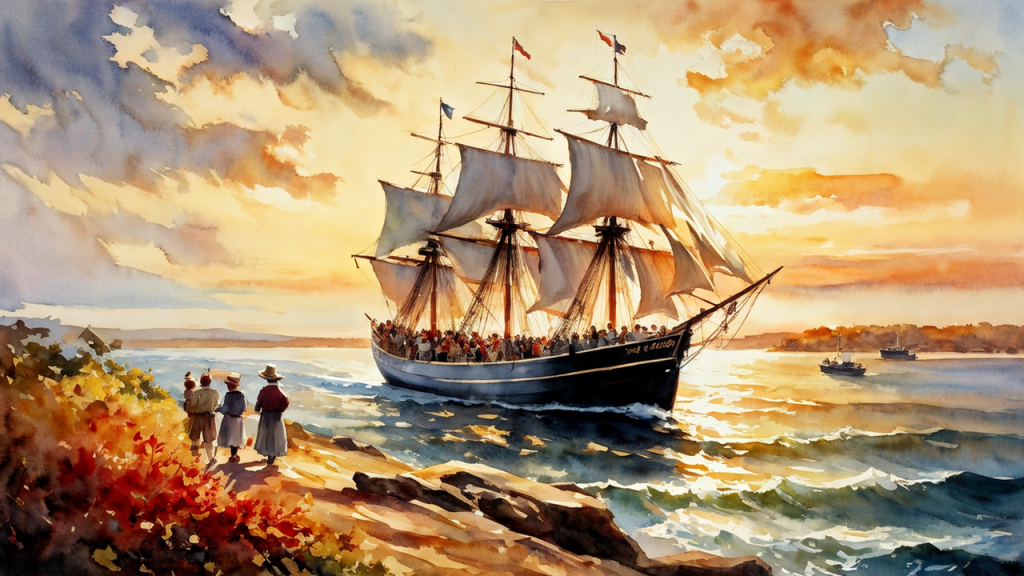
On November 21, 1620, the Mayflower reached the shores of Cape Cod, bringing a group of English Pilgrims to the New World. This event marked the beginning of Plymouth Colony, a cornerstone of early American history and a significant moment in the evolution of American English. The arrival of the Mayflower not only introduced a new chapter of settlement and cultural exchange but also shaped a distinct linguistic identity, blending traditional English with terms rooted in the Pilgrims’ experiences and interactions with indigenous peoples.
Key Terms Introduced by the Mayflower Landing
The language associated with the Mayflower journey and the founding of Plymouth Colony became deeply ingrained in American cultural and linguistic heritage, introducing or popularizing terms such as:
- “Pilgrim”: Originally meaning a traveler or seeker, this term came to signify the English settlers who sought religious freedom, forever tied to the Mayflower story.
- “Thanksgiving”: Although the concept of harvest festivals existed in England, the term became distinctly American, symbolizing gratitude, survival, and communal feasting, linked to the Pilgrims’ shared meal with the Wampanoag people.
- “Self-governance” and “compact”: Inspired by the Mayflower Compact, the Pilgrims’ agreement established principles of governance and cooperation. These terms became foundational in the lexicon of American democracy.
Blending of Languages – Indigenous Influence
The Pilgrims’ interactions with the Wampanoag Nation and other indigenous peoples introduced native words to American English, enriching its vocabulary. Terms such as:
- “Squash,” “maize,” and “powwow”
- Names like “Massachusetts” and “Narragansett”
highlight the contributions of indigenous languages to the settlers’ lexicon. These words reflected the Pilgrims’ dependence on Native American agricultural practices, survival knowledge, and cultural exchange.
Shaping American Ideals and Expressions
The Mayflower landing solidified several enduring themes and expressions in American English, including:
- “Religious freedom”: This term became synonymous with the Pilgrims’ journey, shaping how Americans discuss their values of liberty and faith.
- “Pilgrim’s journey”: An idiom signifying a profound or transformative personal quest, rooted in the settlers’ experiences.
- “New World”: Although in use prior to the Mayflower, this term gained deeper resonance as a descriptor of hope, opportunity, and challenge tied to the settlers’ migration.
The early settlers’ experiences in Plymouth Colony also contributed phrases emphasizing resilience and cooperation, such as “united we stand” and the ethic of mutual support that would permeate American identity.
The Mayflower Compact – A Linguistic Legacy
The Mayflower Compact, signed before disembarkation, was a critical document not just politically but also linguistically. It established a framework of self-rule, emphasizing unity and shared purpose, and introduced terms like “civil body politic” into discussions of governance. These ideas and their language would later influence American constitutional thought, reinforcing principles of democracy and collaboration.
From Colonial Roots to Modern English
The Mayflower landing and the establishment of Plymouth Colony initiated a long-term evolution of American English, differentiating it from its British counterpart. The settlers’ experiences of hardship, cultural integration, and governance brought a uniquely American perspective to the language, which was reflected in their:
- Adaptation of English terms to fit new landscapes and experiences, such as “log cabin” and “frontier.”
- Incorporation of agrarian vocabulary, influenced by indigenous agriculture and the settlers’ rural lifestyle.
- Development of festive and ceremonial language, particularly surrounding Thanksgiving and colonial traditions.
Cultural and Linguistic Endurance
Today, the Mayflower landing is commemorated as a seminal moment in American history and language, with its associated vocabulary continuing to shape how Americans articulate their cultural identity. Words like “Pilgrim” and “Thanksgiving” carry historical and emotional weight, symbolizing both the trials of early settlers and the ideals of perseverance and gratitude.
The linguistic legacy of the Mayflower remains evident in the everyday vocabulary of American English, reflecting a fusion of tradition, innovation, and cultural exchange that began on the shores of Cape Cod.
Originally published on November 21, 2024, on The-English-Nook.com.
 What Happened on This Day?
Leave a comment