
November 26, 1922
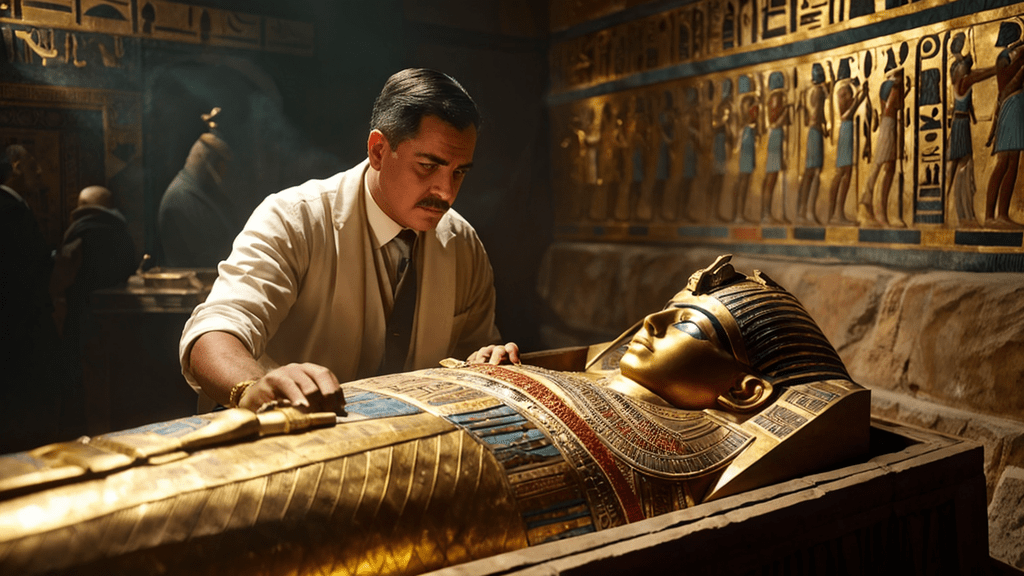
On November 26, 1922, British archaeologist Howard Carter became the first person in over three millennia to glimpse the contents of the sealed tomb of King Tutankhamun, one of ancient Egypt’s most enigmatic pharaohs. As Carter peered into the tomb, Lord Carnarvon, his patron, reportedly asked, “Can you see anything?” Carter’s legendary response, “Yes, wonderful things,” marked a pivotal moment not only in archaeology but also in global culture and language.
This unprecedented discovery in the Valley of the Kings captured the world’s imagination, introducing English vocabulary that reflected the treasures and mysteries of ancient Egypt. Terms like “pharaoh,” “sarcophagus,” “hieroglyph,” “mummy,” and “canopic jars” became commonplace in English discussions about history, exploration, and mythology. The tomb’s richness and the dramatic circumstances of its unveiling inspired a wave of interest that profoundly shaped how English speakers describe concepts of the ancient and mysterious.
Impact on the English Language
The discovery of Tutankhamun’s tomb added significant words and phrases to the English lexicon, especially those related to archaeology and Egyptology:
- “Pharaoh”: While already part of English, the term gained renewed prominence as the world marveled at Tutankhamun’s story and his status as a boy king. It became a shorthand for ancient Egyptian royalty and power.
- “Sarcophagus”: The richly adorned stone coffin containing the pharaoh’s body brought this term into public consciousness, highlighting the artistry and rituals of ancient burials.
- “Hieroglyph”: The tomb’s intricate carvings and inscriptions drew attention to ancient Egyptian writing systems, making “hieroglyph” a symbol of deciphering the past.
- “Curse of the Pharaohs”: Following the untimely deaths of individuals associated with the tomb’s excavation, media outlets sensationalized the idea of a pharaoh’s curse, embedding the phrase into popular culture as a metaphor for unforeseen consequences or superstition.
Other terms like “tomb raider,” “scarab,” “Anubis” (the jackal-headed god of mummification), and “Ra” (the sun god) also became more widely known, enriching English with references to Egyptian mythology and archaeology.
Cultural Fascination and the Rise of Tutmania
The discovery sparked “Tutmania”, a cultural phenomenon that swept the Western world during the 1920s and 1930s. English-language newspapers, novels, and films embraced the mystique of ancient Egypt, introducing terms that blended archaeology with fantasy. Phrases such as “hidden treasures,” “sealed chambers,” and “royal tomb” became part of storytelling, symbolizing the allure of undiscovered worlds.
Ancient Egyptian motifs influenced fashion, jewelry, and architecture, introducing decorative terms like “scarab amulets” and “ankh” (the ancient Egyptian symbol for life) into English. In literature, the tomb’s discovery inspired novels and pulp fiction stories, solidifying terms associated with adventure and mystery.
Broader Contributions to English Vocabulary
The fascination with Egyptology following Carter’s find popularized many specialized terms, expanding English vocabulary in the realms of science, history, and pop culture:
- “Archaeology”: Carter’s meticulous approach to excavation set a standard for modern archaeological methods, cementing this term in public consciousness.
- “Valley of the Kings”: This geographical term became synonymous with pharaonic burial sites, symbolizing the grandeur of ancient Egypt.
- “Canopic jars”: Referring to the vessels used to store embalmed organs, this term became a staple in discussions of ancient funerary practices.
- “Golden mask”: The iconic image of Tutankhamun’s funerary mask brought this term into English as a symbol of opulence and artistry.
Legacy in Media and Storytelling
The enduring legacy of King Tutankhamun’s tomb is reflected in its continued impact on English-language media. Films such as The Mummy and documentaries about ancient Egypt often draw from the imagery and terminology popularized by this discovery. Phrases like “the boy king,” “ancient curses,” and “eternal treasures” remain evocative, shaping how English speakers describe archaeological wonders.
Additionally, the tomb’s discovery contributed to scientific discussions in fields such as anthropology and conservation. Words like “preservation,” “artifacts,” and “excavation” gained broader usage, reflecting the challenges of studying and protecting ancient relics.
A Linguistic Treasure Trove
The discovery of King Tutankhamun’s tomb on November 26, 1922, was far more than an archaeological milestone—it was a linguistic and cultural treasure trove. The vocabulary it introduced, from “pharaoh” to “curse of the pharaohs,” continues to enrich English discourse, symbolizing exploration, history, and the enduring allure of ancient civilizations. This moment in history not only unlocked the secrets of the past but also expanded the ways in which we communicate about discovery, mystery, and the human quest to understand the ancient world.
Originally published on November 26, 2024, on The-English-Nook.com.
 What Happened on This Day?
Leave a comment