
February 1, 1884
The First Step in a Monumental Linguistic Journey
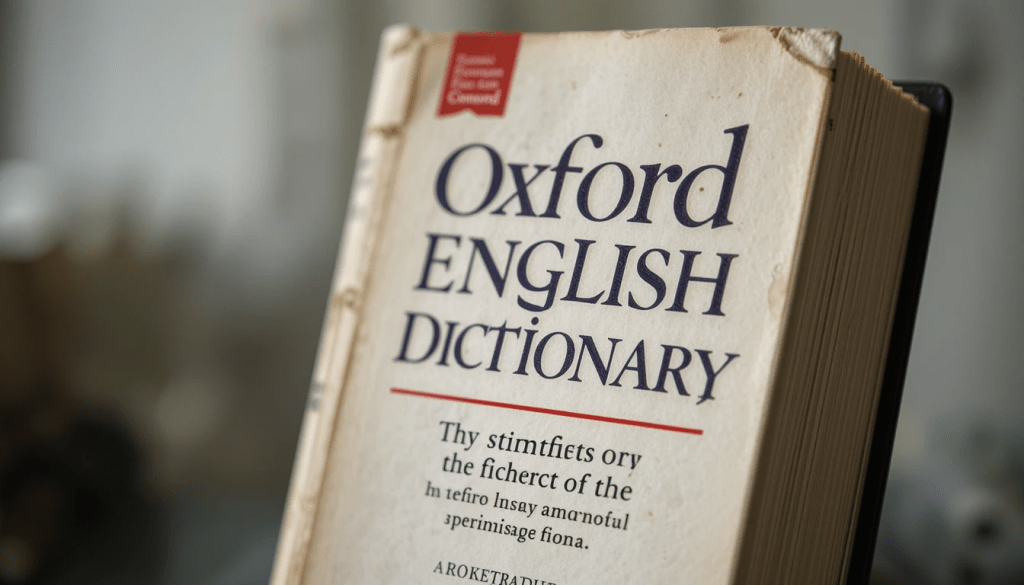
On February 1, 1884, the Oxford English Dictionary (OED) published its first volume, covering words from A to Ant. This monumental project aimed to create the most comprehensive and authoritative record of the English language, a goal that would take decades to fully achieve. The OED’s meticulous documentation of word origins, meanings, and usage transformed linguistic study, standardizing how English words were defined, recorded, and understood. More than just a dictionary, it became a living chronicle of the evolution of English, tracing changes in vocabulary, pronunciation, and meaning over centuries.
At a time when English was expanding rapidly due to industrialization, scientific discoveries, and colonial expansion, the OED provided an essential reference for scholars, writers, and the general public. Today, it remains one of the most respected linguistic resources, influencing everything from academic research to everyday language use.
Key Linguistic Contributions of the OED
The OED introduced several groundbreaking innovations in lexicography:
- Historical Documentation of Words – Unlike previous dictionaries, which simply defined words, the OED traced their etymology and historical usage through citations from literature, newspapers, and letters. This method provided insights into how words evolved over time.
- Standardized Definitions – The dictionary helped establish consistent definitions, preventing misinterpretations and ensuring clarity in legal, academic, and literary contexts.
- Inclusion of Vernacular and Regional Words – The OED did not limit itself to “proper” English but also recorded dialect words, slang, and technical jargon, recognizing the richness and diversity of the language.
- Ongoing Updates and Expansions – Unlike earlier dictionaries that remained static, the OED was designed to grow continuously, with new words and meanings added as the language evolved.
Words and Phrases Popularized Through the OED
The OED’s comprehensive documentation gave recognition and legitimacy to many words and phrases, some of which might have otherwise been lost to history. Among the linguistic categories it shaped were:
- Scientific and Technical Terms – Words like “bacteria”, “telephone”, and “electricity” gained standardized definitions, reflecting the rapid technological advancements of the time.
- Loanwords and Global Influence – The dictionary recognized the impact of other languages on English, cataloging words borrowed from French, Latin, German, Hindi, and beyond, such as “bungalow” (Hindi), “piano” (Italian), and “entrepreneur” (French).
- Newly Coined Words – As English evolved, the OED recorded emerging words from literature, science, and everyday speech, ensuring their definitions were preserved.
- Slang and Informal Expressions – While earlier dictionaries often ignored colloquialisms, the OED documented terms like “blimey”, “gobbledygook”, and “kerfuffle”, recognizing their role in shaping modern English.
Impact on Literature, Education, and Linguistic Study
The publication of the OED revolutionized the way English was studied, taught, and understood:
- Writers and Poets – The OED provided authors with an unparalleled resource for precise language, influencing the works of writers like James Joyce, Virginia Woolf, and T.S. Eliot, who often played with word meanings and etymologies.
- Education and Scholarship – The dictionary became a cornerstone of English education, used in universities and schools to teach vocabulary, grammar, and the history of the language.
- Legal and Official Documents – Standardized definitions helped avoid ambiguity in contracts, government policies, and court rulings, ensuring clarity in legal language.
- Linguistic Research – The OED became an essential tool for linguists, historians, and scholars studying the development of English, tracing how words entered and shifted in meaning over time.
Famous Quotes and Sayings About the OED and Language
Over the years, scholars and writers have recognized the OED’s immense influence:
- “When I use a word, it means just what I choose it to mean—neither more nor less.” – Lewis Carroll, Through the Looking-Glass (an early exploration of the power of word definitions, later reinforced by the OED).
- “The English language is the sea which receives tributaries from every region under heaven.” – Ralph Waldo Emerson (reflecting the OED’s recognition of English as a constantly evolving language).
- “Without the OED, we would be adrift in a sea of words without meaning.” – A sentiment echoed by many linguists and educators.
A Living Record of the English Language
The first volume of the Oxford English Dictionary, published on February 1, 1884, marked the beginning of one of the most ambitious linguistic projects in history. Over the decades, the OED grew into a definitive record of English, shaping the way we understand words, their meanings, and their histories.
From standardizing definitions to preserving historical usage, the OED has left an unparalleled impact on literature, education, and communication. More than just a dictionary, it is a living archive of human expression, continuing to evolve as English itself changes. Whether through documenting scientific discoveries, slang, or cultural shifts, the OED remains an essential guide to the words that define our world.
More than a dictionary—it’s the story of English, word by word!
Originally published on February 1, 2025, on The-English-Nook.com.
Visit my page to find out what happened on this day and learn the word of the day—you’ll find it here first and all in one place!
If you’re a language enthusiast, you’ll have access to a variety of resources, including interesting readings, vocabulary, and much more—not just for English, but also for Spanish. Come check it out!
 What Happened on This Day?
Leave a comment