
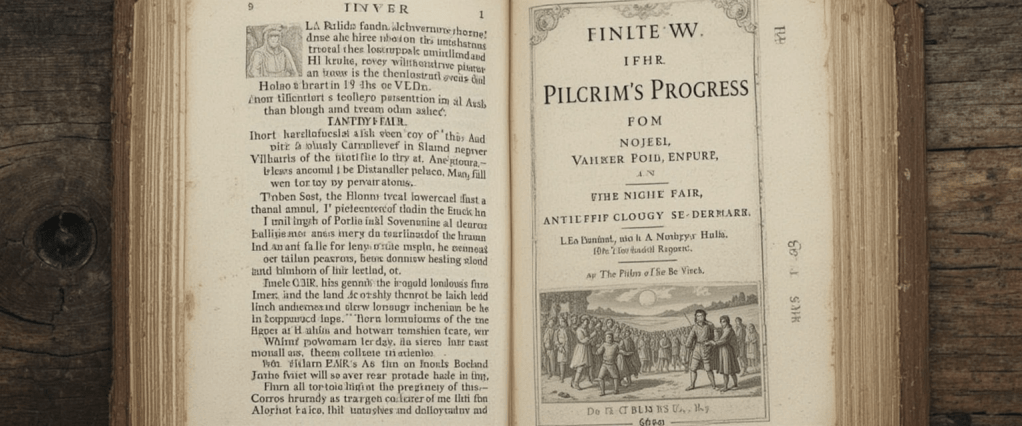
February 18, 1678
A Literary and Linguistic Landmark
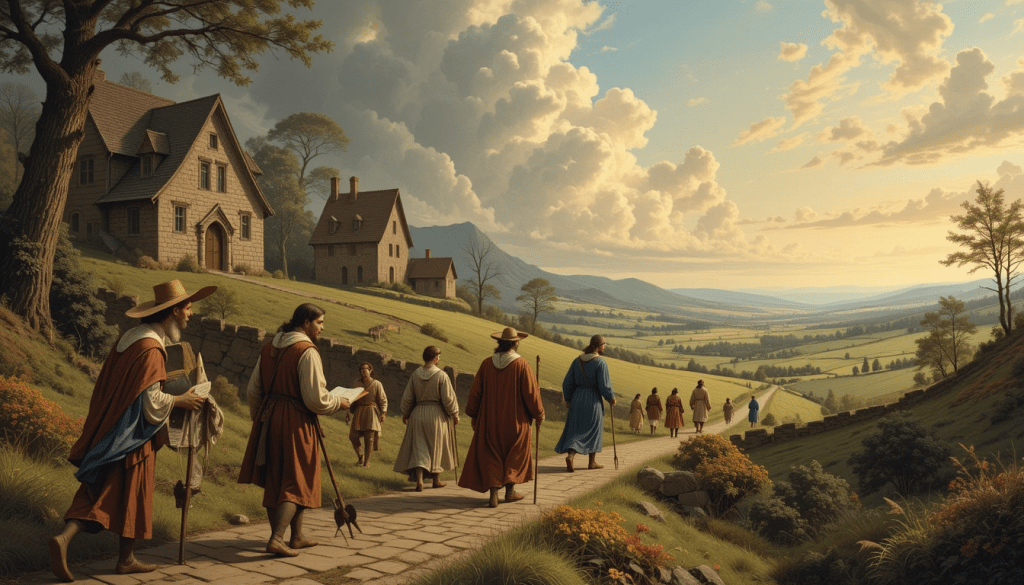
On February 18, 1678, John Bunyan published The Pilgrim’s Progress, a Christian allegory that became one of the most influential works in English literature. Written while Bunyan was imprisoned for preaching without a license, the book follows the journey of Christian, an everyman figure, as he navigates obstacles and temptations on his way to the Celestial City (Heaven).
The novel’s vivid allegorical storytelling, moral themes, and accessible prose made it one of the most widely read books in English history. For centuries, it was second only to the Bible in popularity among English-speaking readers. Its influence extended beyond literature and theology, shaping the English lexicon, idioms, and cultural expressions.
Influence on Allegory and Storytelling in English Literature
The Pilgrim’s Progress set the standard for allegorical writing in English, inspiring future works that used symbolic characters and settings to convey deeper moral and philosophical messages. It reinforced Christian literary traditions and influenced later English novelists and poets, including:
- C.S. Lewis: His Chronicles of Narnia adopted Bunyan’s tradition of Christian allegory, using symbolic journeys to illustrate spiritual growth and redemption.
- John Steinbeck: The title of his novel The Grapes of Wrath was inspired by themes in The Pilgrim’s Progress.
- Nathaniel Hawthorne: His short story The Celestial Railroad is a direct satire of Bunyan’s work, reflecting its continued literary impact.
Bunyan’s narrative structure—a protagonist on a spiritual journey facing trials and temptations—became a recurring motif in English storytelling, influencing novels, plays, and even modern fantasy literature.
Phrases and Idioms Introduced into English
Bunyan’s book contributed several enduring phrases to the English language, many of which have taken on broader, secular meanings:
- “Vanity Fair” – Originally a metaphor for worldly temptations, this phrase now refers to a place or culture obsessed with materialism and superficiality. It became the title of William Makepeace Thackeray’s novel Vanity Fair (1847–48) and is widely used in journalism, fashion, and social commentary.
- “The Slough of Despond” – In Bunyan’s allegory, this was a bog that trapped believers in despair and doubt. Today, the phrase describes a state of depression, struggle, or hopelessness.
- “The Celestial City” – A term Bunyan used to represent Heaven, which continues to be used in religious and literary contexts.
- “A burden on one’s back” – The protagonist Christian begins his journey weighed down by the burden of sin. This phrase has since become a common way to describe guilt, responsibility, or personal struggles.
- “Doubting Castle and Giant Despair” – In the book, these symbolize pessimism and hopelessness. The name Giant Despair is still used metaphorically to describe crippling doubt or discouragement.
These expressions, drawn from Bunyan’s vivid imagery, have entered both literary and everyday English, demonstrating the book’s lasting linguistic and cultural influence.
Impact on Religious and Moral Themes in English Prose
Bunyan’s work reinforced religious themes in English literature and moral philosophy, contributing to the continued use of Biblical allusions and moral symbolism in English writing. The Pilgrim’s Progress helped establish a tradition of spiritual autobiography and moral storytelling, influencing:
- The development of Protestant literature, particularly in Puritan and Evangelical writings.
- The language of sermons and religious tracts, many of which adopted Bunyan’s style of plain, direct storytelling to communicate spiritual lessons.
- Moralistic novels and didactic literature, which became popular in the 18th and 19th centuries.
Even in secular writing, the book’s themes of temptation, perseverance, and redemption continue to shape narratives about personal growth and moral choices.
A Lasting Legacy in the English Language
For over 300 years, The Pilgrim’s Progress has remained one of the most widely read and translated books in the world, influencing English-language literature, moral philosophy, and everyday expressions. Its impact can be seen in:
- Allegorical and symbolic storytelling, which continues to thrive in English literature and film.
- The persistence of its phrases and metaphors, which remain widely understood and used in English speech and writing.
- The role of religious narratives in shaping English prose, with echoes of Bunyan’s themes still found in contemporary works.
By blending rich allegory, simple yet powerful language, and universal moral struggles, The Pilgrim’s Progress ensured its place as a cornerstone of English literary and linguistic history, leaving an imprint on both faith-based and secular storytelling.
A literary journey that forever shaped the English language and imagination.
Originally published on February 18, 2025, on The-English-Nook.com.
Visit my page to find out ‘What Happened on this Day?‘ and learn ‘The Word of the Day‘—you’ll find it here first and all in one place!
If you’re a language enthusiast, you’ll have access to a variety of resources, including short stories in English and Spanish, interesting readings, vocabulary, and much more—not just for English, but also for Spanish. Come check it out!
 What Happened on This Day?
Leave a comment