

February 20, 1547
A Young King’s Lasting Impact on the English Language
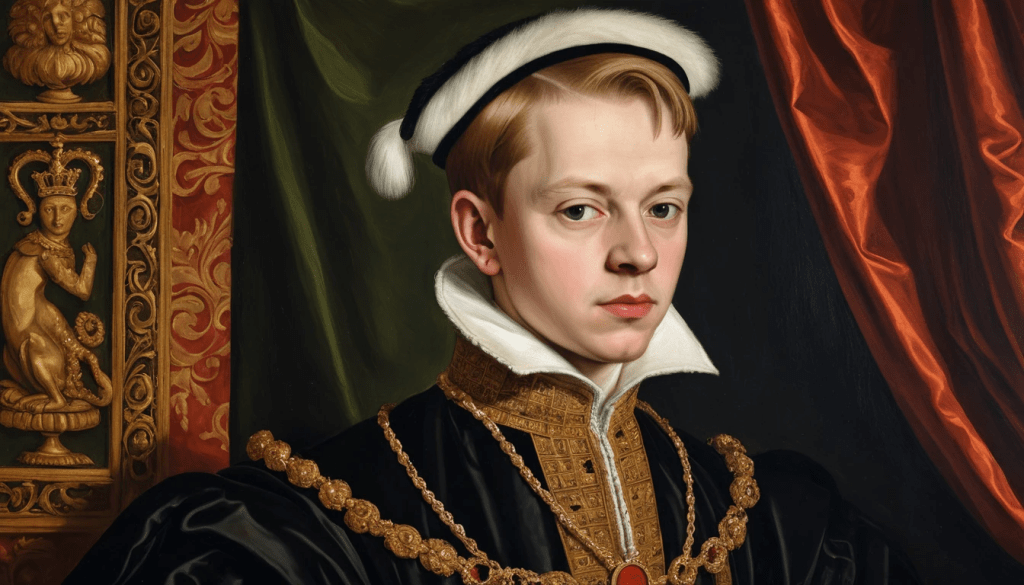
On February 20, 1547, Edward VI, the nine-year-old son of Henry VIII, was crowned King of England and Ireland. Though his reign was brief—lasting only six years until his death in 1553—it was marked by profound religious and linguistic transformations. Edward VI was the first Protestant king of England, and his reign saw the further implementation of the English Reformation, which had been initiated by his father. This period accelerated the use of the English language in religious services, replacing Latin in church liturgy, scripture, and official documents, thereby shaping the linguistic and cultural landscape of England.
Edward’s reign contributed significantly to the development of modern English religious vocabulary, the spread of English Bible translations, and the standardization of English as the language of worship and governance. These changes influenced not only religious discourse but also the evolution of English prose and formal speech.
Replacing Latin with English in Religious Worship
One of the most significant linguistic changes during Edward VI’s reign was the shift from Latin to English in church services. Under the guidance of Archbishop Thomas Cranmer, Edward’s government implemented Protestant reforms that included:
- The 1549 Book of Common Prayer, which replaced Latin liturgy with English, making religious texts more accessible to the common people.
- The promotion of English Bible translations, particularly the Great Bible, which became the standard text for public worship.
- The removal of many Catholic traditions and Latin phrases from services, reinforcing English as the language of religion.
This transition played a crucial role in shaping English religious vocabulary, introducing and popularizing phrases that are still widely used today, such as:
- “Dearly beloved, we are gathered here today…” (from the Book of Common Prayer’s marriage service).
- “Ashes to ashes, dust to dust” (from the funeral service).
- “Lead us not into temptation, but deliver us from evil” (from the Lord’s Prayer, as standardized in English).
The use of English in religious texts broadened literacy and comprehension, as people could now read, hear, and understand prayers and scripture in their native tongue. This move also contributed to the development of a more standardized form of English, influencing later versions of the Bible and formal writing styles.
Influence on the English Bible and Religious Terminology
Edward VI’s reign reinforced the importance of English Bible translations, particularly through the continued use of the Great Bible (1539), which had been commissioned by Henry VIII. This process laid the groundwork for later translations, including the King James Bible (1611), which would further shape the English language and idiomatic expressions.
Many terms and phrases that became common in English religious and secular speech during and after Edward’s reign include:
- “Covenant” – referring to a sacred agreement, widely used in both religious and legal contexts.
- “Salvation” – emphasizing the Protestant belief in faith alone as the path to redemption.
- “Congregation” – replacing the Catholic term “parish” in some Protestant teachings.
- “Testament” – as in the Old and New Testament, reinforcing Protestant reliance on scripture.
By cementing English as the language of faith, Edward VI’s reforms influenced both religious and everyday vocabulary, helping to standardize religious terminology that remains in common usage today.
The Role of Printing and Literacy in Spreading English
The increased use of English in religious services also contributed to rising literacy rates, as more people sought to read the Bible and religious texts in their own language. With the advent of printing presses, the Book of Common Prayer and English Bibles were widely distributed, making English the dominant language of religious instruction.
This period helped to:
- Standardize spelling and grammar in English religious texts.
- Expand the influence of formal, structured English prose in public life.
- Reinforce the idea that English, rather than Latin, was the language of authority and governance.
Edward VI’s reign thus played a crucial role in the transition from Latin to English as the official language of state and church affairs, setting a precedent for future linguistic developments.
Legacy: The Long-Term Impact on the English Language
Although Edward VI’s reign was short, his influence on English religious and linguistic traditions was profound. His promotion of English in religious worship set a lasting precedent that continued under Elizabeth I and was fully realized in the King James Bible (1611). The widespread use of English in church services, legal documents, and public discourse helped to solidify the language’s dominance in England and beyond.
Some of the lasting linguistic effects of Edward VI’s reign include:
- The continued use of the Book of Common Prayer, which shaped formal English prose and religious language.
- The establishment of English as the language of governance and religious instruction, reducing reliance on Latin.
- The foundation for later Bible translations, particularly the King James Version, which introduced countless phrases still used in modern English.
Edward VI’s reign may have been brief, but it played a vital role in shaping the English language, particularly in its religious, literary, and legal expressions. By replacing Latin with English in worship, he helped ensure that English became the language of faith, governance, and culture, influencing the way it was spoken, written, and understood for centuries to come.
A boy king’s legacy wasn’t just in law—it was in language!
Originally published on February 20, 2025, on The-English-Nook.com.
Visit my page to find out ‘What Happened on this Day?‘ and learn ‘The Word of the Day‘—you’ll find it here first and all in one place!
If you’re a language enthusiast, you’ll have access to a variety of resources, including short stories in English and Spanish, interesting readings, vocabulary, and much more—not just for English, but also for Spanish. Come check it out!
 What Happened on This Day?
Leave a comment