
February 25, 1836
Samuel Colt’s Revolver and Its Lasting Mark on Language
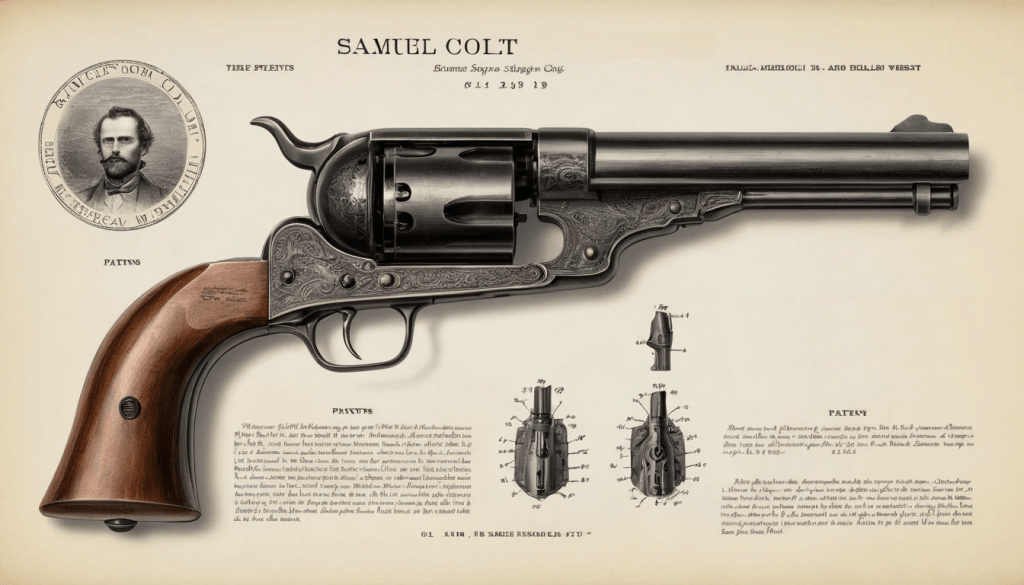
On February 25, 1836, Samuel Colt received a U.S. patent for his revolutionary revolving firearm, a design that allowed multiple shots to be fired without reloading. The Colt revolver quickly became an iconic weapon, widely used in military conflicts, frontier expansion, and law enforcement. More than just a technological innovation, Colt’s invention had a profound linguistic impact, introducing new words, phrases, and metaphors into the English language—many of which are still commonly used today.
The Linguistic Legacy of the Colt Revolver
Colt’s invention changed not only the firearms industry but also the way English speakers describe weapons, power, and conflict. Several terms and phrases originated from or were popularized by the Colt revolver, particularly in American English, shaping how firearms were discussed in everyday speech, literature, and popular culture.
Key Terms Introduced or Popularized by the Colt Revolver
- “Colt” – Though originally a surname, “Colt” became synonymous with revolvers in general, much like how “Xerox” refers to photocopying or “Kleenex” to tissues.
- “Six-shooter” – A term referring to Colt’s six-chambered revolver, which became an enduring symbol of the Old West and gunfighting culture.
- “Revolver” – Though other firearms had rotating mechanisms, Colt’s patent cemented “revolver” as a widely used term for multi-shot handguns.
- “Quick-draw” – Describing the ability to swiftly pull and fire a revolver, this term evolved into broader usage for fast reactions in competitive or professional settings.
- “Shootout” – While gunfights existed before, the prevalence of Colt revolvers in duels and battles led to the widespread use of “shootout” as a term for violent confrontations.
- “Peacemaker” – A nickname for the Colt Single Action Army revolver, this paradoxical term is still used metaphorically for figures or policies that enforce peace through force.
The Colt Revolver in American Culture and English Vernacular
Colt’s revolver became a defining feature of the American frontier, military history, and law enforcement, influencing English through literature, media, and everyday idioms. The rise of Western novels, dime-store adventure stories, and Hollywood films further embedded revolver-related language into popular speech.
Colt and the Mythology of the American West
The revolver was closely associated with cowboys, outlaws, sheriffs, and duels, leading to the spread of firearm-related idioms and metaphors in American English:
- “Lock, stock, and barrel” – Though originally from flintlock muskets, this phrase gained popularity in the revolver era, meaning something in its entirety.
- “Going off half-cocked” – Refers to a misfire when a revolver is only partially cocked; now used for acting impulsively or speaking without thinking.
- “Pack heat” – A slang term for carrying a firearm, originating from the revolver era but still widely used in English today.
- “Draw first” / “First to the draw” – Inspired by duels and quick-draw gunfights, meaning to react faster than an opponent.
- “A shot in the dark” – A term likely influenced by gunfighting culture, now used metaphorically for making a guess with little information.
- “Shoot from the hip” – Refers to firing a revolver quickly without aiming, now meaning to speak bluntly or act without hesitation.
Colt’s Influence on Global Firearm Terminology
While the Colt revolver is most commonly associated with American history, its influence extended to military, law enforcement, and language worldwide. Many firearm-related terms first popularized in English later influenced other languages, with Colt revolvers setting the standard for discussions about handguns, tactics, and gun culture.
- “Sidearm” – A general term for a handgun carried by soldiers or officers, originating from the Colt revolver’s military use.
- “Double-action” / “Single-action” – Technical terms referring to how revolvers fire, introduced during Colt’s era and still used in modern firearm descriptions.
- “Six-gun justice” – A phrase describing frontier law enforcement, where a sheriff’s Colt revolver symbolized law and order.
Even in non-English-speaking countries, Colt’s name became synonymous with firearms, influencing loanwords and slang in French, German, Russian, and Spanish.
The Revolver in Literature and Cinema: Cementing Its Place in English
From classic Western novels to Hollywood blockbusters, the Colt revolver’s legacy in English literature and film continues to thrive. Writers like Mark Twain, Zane Grey, and Louis L’Amour immortalized the six-shooter culture, while films like The Good, the Bad and the Ugly and True Grit reinforced gun-related vocabulary and idioms in English.
- Western Literature & Pulps – Early 20th-century dime novels glorified Colt revolvers, reinforcing firearm-related slang in English.
- Hollywood’s Golden Age – Actors like John Wayne, Clint Eastwood, and Gary Cooper helped Western gunfighting language become part of global pop culture.
- Modern Pop Culture – Even in contemporary works like Red Dead Redemption and Westworld, firearm terminology and Colt’s influence persist in English storytelling.
Conclusion
Samuel Colt’s patenting of the revolver on February 25, 1836 not only transformed firearm technology but also reshaped the English language. Through its role in war, law enforcement, frontier justice, and popular culture, the Colt revolver left an enduring mark on English vocabulary, idioms, and storytelling.
From phrases like “six-shooter” and “quick-draw” to idiomatic expressions like “shoot from the hip” and “going off half-cocked,” the revolver’s legacy lives on in everyday speech. Whether in historical discussions, Western fiction, or modern slang, Colt’s influence remains deeply embedded in how English speakers talk about power, speed, and conflict—proving that the impact of language, like the revolver itself, can be both precise and far-reaching.
Colt’s revolver didn’t just fire bullets—it shot new words into the English language!
Originally published on February 25, 2025, on The-English-Nook.com.
Visit my page to find out ‘What Happened on this Day?‘ and learn ‘The Word of the Day‘—you’ll find it here first and all in one place!
If you’re a language enthusiast, you’ll have access to a variety of resources, including short stories in English and Spanish, interesting readings, vocabulary, and much more—not just for English, but also for Spanish. Come check it out!
 What Happened on This Day?
Leave a comment