
March 5, 1946
How Churchill’s Speech Shaped Cold War Language
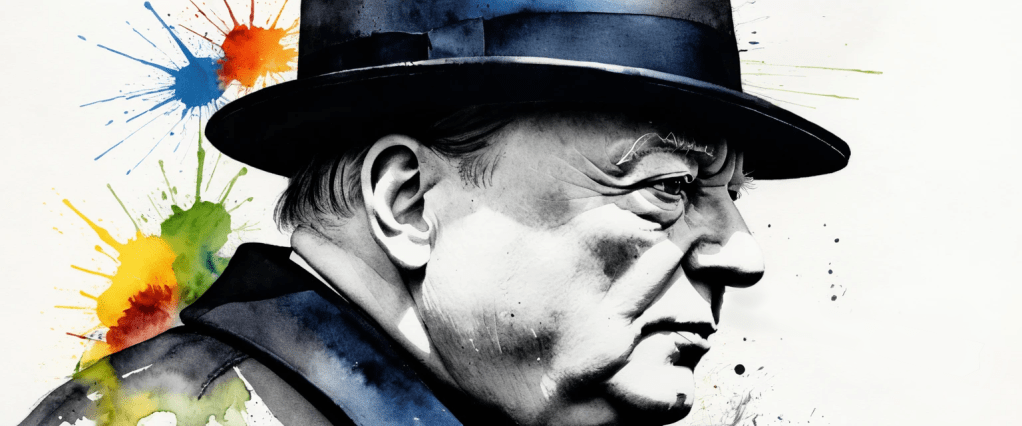
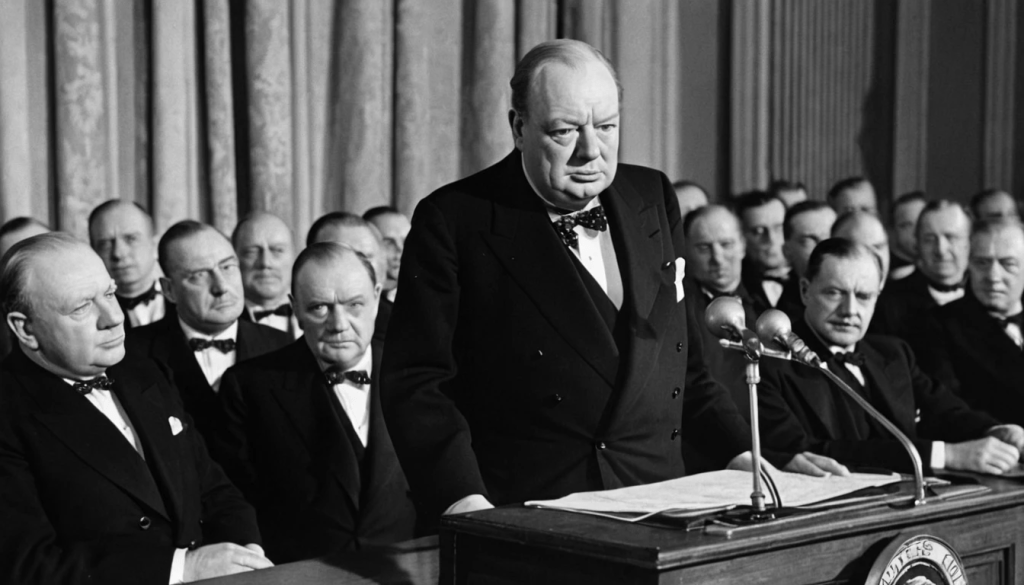
On this day in 1946, former British Prime Minister Winston Churchill delivered his historic “Iron Curtain” speech at Westminster College in Fulton, Missouri. Officially titled The Sinews of Peace, the speech introduced a powerful political metaphor that would shape the global understanding of post-World War II geopolitics. Churchill’s declaration that “an iron curtain has descended across the continent” became one of the most defining phrases of the Cold War era, influencing not only political discourse but also the English language itself.
This speech marked a turning point in the way people discussed international relations, contributing new vocabulary that framed the ideological struggle between the Western Bloc, led by the United States, and the Eastern Bloc, dominated by the Soviet Union. Over the following decades, terms like Cold War, containment, superpower, and ideological warfare became central to discussions in politics, journalism, and academia.
The Birth of Cold War Terminology
Churchill’s speech helped introduce and popularize several key terms that became essential in Cold War rhetoric:
“Iron Curtain” – A Defining Metaphor
- Churchill’s use of the phrase “iron curtain” created a lasting image of division and secrecy, describing the ideological and physical barrier separating Soviet-controlled Eastern Europe from the democratic nations of the West.
- The phrase was widely adopted in political discourse, media, and historical analysis, reinforcing the notion of a world split between two opposing ideologies.
- It influenced other metaphorical expressions in English, such as “bamboo curtain” (used to describe Communist China’s isolation from the West).
The Term “Cold War” Becomes Widespread
- While the phrase “Cold War” had been used in earlier contexts, Churchill’s speech helped solidify it as the standard term for the global conflict between the U.S. and the Soviet Union.
- The term described a state of political, military, and ideological tension without direct warfare, introducing a new way to discuss international relations.
- It led to the formation of related terms like “Cold War mentality”, still used today to describe lingering geopolitical rivalries.
Concepts of Power and Strategy
Churchill’s speech laid the groundwork for how English speakers discussed superpower competition, influencing political and academic vocabulary:
- Containment – A strategy aimed at preventing the spread of communism, which became a foundational principle of U.S. foreign policy during the Cold War.
- Superpower – A term describing nations with overwhelming military, economic, and political influence. The U.S. and the Soviet Union were labeled as superpowers, reinforcing the idea of global bipolarity.
- Arms race – A phrase describing the escalating military buildup between the U.S. and the USSR, particularly in nuclear weapons.
- Espionage – While already in use, this word became more prevalent in English as Cold War tensions fueled spy networks, leading to terms like “spy ring,” “double agent,” and “intelligence war.”
- Proxy war – Used to describe conflicts where the U.S. and USSR supported opposing sides without directly fighting each other (e.g., the Korean and Vietnam Wars).
Impact on Media and Everyday Language
Churchill’s speech not only influenced political language but also shaped English in journalism, literature, and popular culture.
Journalistic and Political Language
- The Cold War era saw a rise in terms like “East vs. West”, “behind the Iron Curtain”, and “Soviet sphere of influence,” which were commonly used in newspapers, speeches, and analysis.
- Phrases such as “nuclear deterrence” and “balance of power” became standard in discussions of military strategy.
- The speech contributed to the growth of rhetorical warfare, where ideological battles were fought through language, propaganda, and speeches rather than direct military engagement.
Cold War Terminology in Popular Culture
- Literature, films, and television embraced Cold War vocabulary, with spy novels by authors like John le Carré and movies like Dr. Strangelove embedding terms such as “mutual assured destruction (MAD)” into mainstream English.
- The rise of science fiction during this era often reflected Cold War anxieties, introducing terms like “doomsday scenario” and reinforcing the language of global crisis.
A Lasting Linguistic Legacy
Churchill’s Iron Curtain speech did more than define the Cold War—it reshaped the way English speakers discussed international conflicts, diplomacy, and ideological struggles. The terms introduced and popularized in the aftermath of this speech remain deeply embedded in political, historical, and journalistic discourse today.
Even after the Cold War ended in 1991, phrases like “superpower rivalry,” “Cold War tensions,” and “containment policy” continue to be used in discussions about international relations, demonstrating how language evolves alongside global history. Churchill’s words, spoken on March 5, 1946, echo through time, proving that language is not just a tool of communication but also a reflection of power, ideology, and the shaping of world events.
When Churchill spoke of curtains, he rewrote the language of conflict for generations to come.
Originally published on March 5, 2025, on The-English-Nook.com.
Visit my page to find out ‘What Happened on this Day?‘ and learn ‘The Word of the Day‘—you’ll find it here first and all in one place!
If you’re a language enthusiast, you’ll have access to a variety of resources, including short stories in English and Spanish, interesting readings, vocabulary, and much more—not just for English, but also for Spanish. Come check it out!
 What Happened on This Day?
Leave a comment