
March 6, 1853
How Italian Opera Enriched English Vocabulary
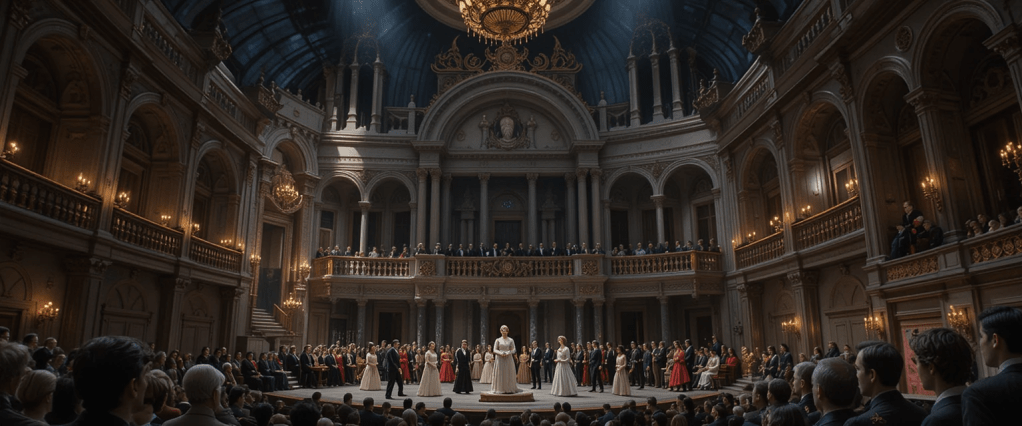
On this day in 1853, Giuseppe Verdi’s opera La Traviata premiered at the Teatro La Fenice in Venice. Although composed and performed in Italian, its influence extended far beyond the opera house, leaving a lasting imprint on the English language, particularly in the realm of music, theater, and literary expression. La Traviata, meaning “The Fallen Woman,” explores themes of love, sacrifice, and redemption—universal ideas that have resonated in English literature, drama, and popular culture.
Beyond its artistic impact, the opera played a role in the broader influence of Italian opera terminology on the English language. Words like diva, bravissimo, soprano, aria, and libretto became widely adopted in English, particularly in discussions of music, performance, and artistic excellence.
Italian Opera Terminology in English
Opera has long been an art form dominated by the Italian language, and with La Traviata’s international success, many of its musical and theatrical terms became standard in English. These words are now commonplace in artistic and everyday discourse:
Musical Terms
- Aria – A solo vocal piece in an opera, often highlighting the character’s emotions. Aria is now used metaphorically to describe any dramatic solo performance.
- Soprano, Mezzo-Soprano, Tenor, Baritone, Bass – These vocal classifications, essential in opera, became standard in English to describe voice types across various musical genres.
- Libretto – The text or script of an opera. The word is now also used figuratively for the script of musicals and theatrical productions.
- Bravissimo – A word of high praise, often shouted by audiences to commend an exceptional performance. The shortened form “bravo” is now commonly used beyond music to acknowledge excellence.
Performance and Cultural Influence
- Diva – Originally referring to a leading female opera singer, diva has expanded in English to describe anyone—especially in entertainment—with a commanding presence or demanding nature.
- Maestro – Meaning “master” in Italian, this title was used for distinguished composers and conductors. It later became a general English term for any expert in a field.
- Bel canto – Meaning “beautiful singing,” this term refers to a particular vocal style in opera. In English, it is sometimes used to describe elegant or expressive singing in general.
Thematic and Literary Influence
The tragic love story of La Traviata—inspired by Alexandre Dumas fils’ novel La Dame aux Camélias—has left a mark on English literature and theater. The opera’s themes of forbidden love, societal expectations, and redemption have influenced countless English-language adaptations and retellings.
- The phrase “fallen woman”, though predating the opera, became more associated with tragic heroines like Violetta Valéry, La Traviata’s protagonist.
- The romanticized depiction of illness and sacrifice in La Traviata shaped later English literary works, particularly in 19th-century novels and plays.
- The story’s themes of class distinction, morality, and redemption have inspired characters and plots in English-language films, novels, and musicals.
A Lasting Linguistic and Cultural Legacy
Even beyond La Traviata, the premiere of Verdi’s masterpiece contributed to the growing influence of Italian musical terminology in the English language. Today, many of these words have expanded beyond their operatic origins, shaping how English speakers discuss music, performance, and artistic brilliance.
Whether through the passionate arias, the commanding presence of a diva, or the triumphant exclamation of “bravo!”, the echoes of La Traviata and Italian opera remain deeply embedded in English, reflecting the enduring power of music to shape language and culture.
From the stage to everyday speech—Verdi’s music still speaks.

Originally published on March 6, 2025, on The-English-Nook.com.
Visit my page to find out ‘What Happened on this Day?‘ and learn ‘The Word of the Day‘—you’ll find it here first and all in one place!
If you’re a language enthusiast, you’ll have access to a variety of resources, including short stories in English and Spanish, interesting readings, vocabulary, and much more—not just for English, but also for Spanish. Come check it out!
 What Happened on This Day?
Leave a comment