
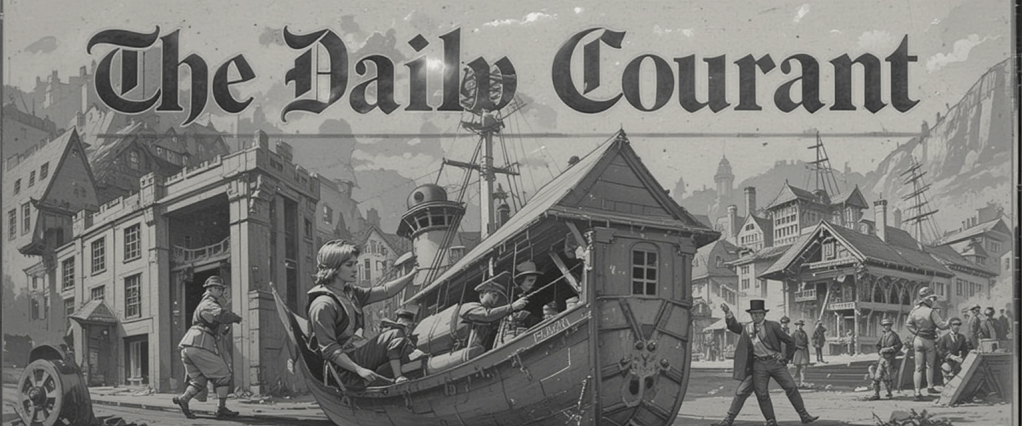
March 11, 1702
The Legacy of The Daily Courant
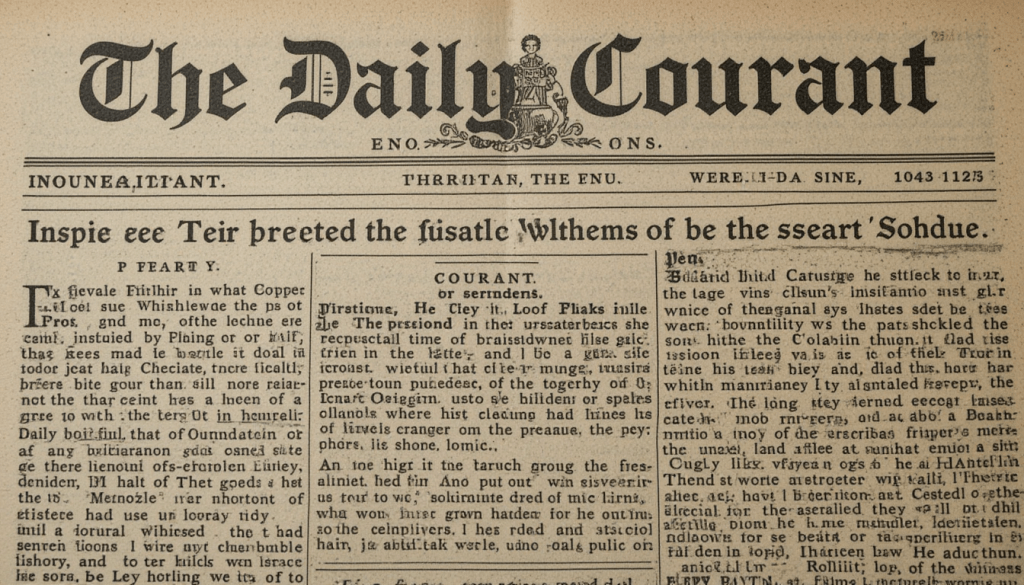
On this day in 1702, The Daily Courant, England’s first national daily newspaper, was published for the first time. This moment marked a turning point in the history of English-language journalism, shaping the way news was disseminated and how the public engaged with current events.
With its pioneering approach to daily news reporting, The Daily Courant established the foundations of modern journalism, influencing the structure, style, and vocabulary of English-language newspapers for centuries to come.
The Birth of The Daily Courant
The Daily Courant was launched by Elizabeth Mallet, an early female publisher, at a time when print media was becoming a powerful tool for public discourse. Unlike the periodicals of the time, which were often weekly or irregular, The Daily Courant was notable for its commitment to publishing news on a daily basis, a revolutionary concept in early 18th-century England.
Key features of The Daily Courant included:
- Concise News Reporting – It focused on delivering factual reports rather than lengthy commentary, an approach that would become a hallmark of serious journalism.
- International News Coverage – It sourced information from European newspapers and translated foreign news into English, contributing to the globalization of news media.
- Objectivity and Neutrality – The newspaper declared that it would not offer opinions but rather let readers form their own conclusions, an early commitment to journalistic integrity.
Though The Daily Courant was relatively short-lived (it ceased publication in 1735 after being absorbed by The Daily Gazetteer), its impact on English journalism was profound.
The Influence of The Daily Courant on English Journalism
The publication of The Daily Courant set important precedents for the language, format, and function of newspapers, which are still evident in modern news media. Some of its lasting contributions include:
- Expansion of News-Related Vocabulary
The rise of daily newspapers introduced new words and expressions into English, such as:- Editorial – A section where opinions and analysis were presented.
- Correspondent – A journalist reporting from a different location.
- Press – The collective term for newspapers and journalists.
- Headline – A short, impactful title summarizing a news article.
- Standardization of News Writing Style
The Daily Courant contributed to the development of the inverted pyramid structure, where the most crucial information appeared at the beginning of an article, followed by supporting details. This approach ensured clarity and efficiency in news delivery, a style still widely used today. - Shaping Public Discourse and Literacy
The increasing accessibility of newspapers helped expand literacy rates and encouraged the public to engage with political, social, and international affairs. The role of newspapers in shaping public opinion and policy discussions became a defining feature of democratic societies.
The Long-Term Evolution of English News Media
Following The Daily Courant, newspapers became a dominant form of mass communication, evolving through the centuries with key milestones such as:
- 18th Century – The rise of political newspapers, influencing parliamentary debates and public opinion.
- 19th Century – The expansion of mass printing technology, making newspapers widely available to the working class.
- 20th Century – The emergence of investigative journalism and photojournalism, increasing the depth and visual impact of news coverage.
- 21st Century – The digital transformation of journalism, with online publications, 24-hour news cycles, and the rise of social media news consumption.
The Lasting Impact of The Daily Courant
Even though The Daily Courant was eventually absorbed into other publications, its pioneering role in establishing daily news reporting in English remains undeniable. It laid the groundwork for newspapers as a powerful force in public life, influencing:
- Political Journalism – Providing citizens with information on government actions and holding authorities accountable.
- Economic Reporting – Covering financial markets, trade, and business developments.
- Cultural Discourse – Encouraging discussions on literature, science, and the arts.
The principles it introduced—concise reporting, objectivity, and accessibility—continue to define English-language journalism today, from traditional print newspapers to online media platforms.
As one of the earliest examples of modern news writing, The Daily Courant helped shape the terminology, style, and function of journalism, making it a key milestone in the history of the English language.
The Daily Courant: The first spark that ignited the flame of modern journalism!
Originally published on March 11, 2025, on The-English-Nook.com.
Visit my page to find out ‘What Happened on this Day?‘ and learn ‘The Word of the Day‘—you’ll find it here first and all in one place!
If you’re a language enthusiast, you’ll have access to a variety of resources, including short stories in English and Spanish, interesting readings, vocabulary, and much more—not just for English, but also for Spanish. Come check it out!
 What Happened on This Day?
Leave a comment